Showing posts with label Jane Taylor. Show all posts

Friday, March 28, 2008


SALON DU CHANVRE

On 26 and 27 April 2008, the town of Noyal sur Vilaine (northern France, 10 km from Rennes) will host a hemp expo. It is focused on European vendors. This year they are coming from over a dozen countries, including the UK, which will be represented by Jane Taylor of Positive News and Jane Pasquill of The House of Hemp There is to be found in the town a hemp museum. Not far off also to be found are fields of hemp, much like the one depicted left.

Contact details: lesnoyales@aol.com

Tel: +33 2 99 04 -09 91

Monday, January 21, 2008


LONDON HEMP SUMMIT

They came, they saw, and they were quite impressed with the new hemp fabrics by Jane Pasquill (of the House of Hemp) and Katie Knill, along with the book Building with Hemp (see review on this blog by clicking on labels), John Hanson's treefree paper and a bamboo bicycle; or for the last, maybe bamboozled!


It was riden by Nicola Giuggiola, CEO of ECO, the new shop to open at 213 Chiswick High Road later this month, which is partly owned by Colin Firth. Also present were Jane Taylor of Positive News, whose pen was clicking away furiously as potential stories came up; Cathy Chevalier, the artist; Bobby Pugh of The Hemp Shop whose grasp of facts about hemp gave depth to the meeting - always causing Jane Taylor's pen to scribble away; Jilly Cholmondeley who will be selling her 100% hemp bed sheets in ECO; and Candice Meskin from Quintessential in Cornwall, whose shop has been around for some 17 years; and our hosts, Nick and Cindy Mackintosh.

Several things were decided, including the sending of letters to publishers in the UK to ask them to start a project to get hemp paper for the newspaper industry. Nicola talked of hosting salons at his shop, in which some 20 environmentalists could put forth their ideas whilst the press took note. Hopefully there will be meetings like this all over the world. But of course, you are all welcome to come to London. All roads do seem to lead to the capital, where a number of street names reflect the hemp heritage of which we are proud.

Wednesday, August 23, 2006


WOMEN IN HEMP
Hemp has been a staple crop for thousands of years, at one time the world's most traded commodity. In some ways it has a very macho fell to it, especially as it was the material of the navy, with up to 200,000 lbs. of it on a British man-0'-war in the 19th century.
Women have featured prominently in hemp going back ages to Cambri Formosa, a British princess who taught women to sow and weave hemp in 373 BC. Catherine de Medici was known to wear hemp, Queen Victoria used hemp medicine, and Mary Todd, Abraham Lincoln's wife, came from a hemp growing family in Kentucky.
In more recent times women have been at the forefront of the hemp industry's renaissance; Mari Kane and Candi Penn in California kick started the US industry, which went from nothing to hundreds of millions in revenues in less than twenty years...you've come a long way baby.
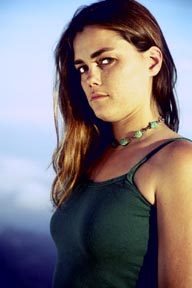
Pictured above is Mina Hegaard of Minawear, whose Santa Monica, California based company has been going strong for the last 7 years.
In the UK the hemp movement has its share of women as well, including Candice Meskin of Quintessential in Cornwall, Gail Dunsbee of Hempish in Wales, and Jane and Tania Blonder who run The House of Hemp in Cornwall, designer Bushra Sarker of The Hemp Trading Co. in London, and Jane Taylor of Positive News, who does not run a business but is very instrumental behind the scenes organising events and networking. Jane's efforts reach as far as Africa, where she has helped to get a hemp project started in Kenya.
Today hemp is not used much for ropes, its products tend to be more for the health and fashion markets, where a feminine touch can be quite welcome.

Saturday, August 05, 2006

HEMP IN ESSEX
Yesterday, 4 August, Dru Lawson of the Hemp Trading Co. (www.thtc.co.uk) gave me a ride out to Rochford in Essex to view a hemp harvest, to which Sue Riddlestone and Emily Stott of BioRegional had kindly invited us. We were joined with researchers from Leeds University and Cranfield University and Jane Taylor of Positive News.
Three varieties, Santhika, Fedora and Chameleon stood about 8 feet (2.6metres) high, waving their green buds in the wind. Living emerald is how James Lane Allen described hemp in 1900, and this lived up to his words; Chameleon, in my opinion, in its lovely chartreuse tone, even exceeded them.
The plots were grown to test green decortication techniques and study stem cell structure with a view to facilitating a UK hemp textile industry. The green fibres, stripped from the inner hurds, were quite wet in this state and had to be pressed between two rollers to remove moisture. Further processes will be needed to rend them into cloth.
At present the hemp textile industry is centred in China and Romania. Italy was for some time renowned for producing the finest fibres, grown in the Piedmont region. Hemp is grown in Italy now for Giorgio Armani.
There are economic reasons for developing a hemp textile industry in any country, but there are also ecological reasons, the main one being the fact that cotton, at present the number 1 textile fibre in the world, uses up water and requires pesticides. (see related posts on cotton on this blog with the word search feature).
Sue gave me a copy of a book, Bioregional Solutions: For Living on One Planet, writtten by herself and Pooran Desai (both founders of BioRegional). In it (Chapter 7, "Hemp, Clothes and Fair Trade"), there is a good account of cotton, which the authors assert, is the "world's most water-intensive crop."
Cotton is grown mainly in the US, Israel, Pakistan, Tanzania, and Uzbekistan. This last country is the fifth largest producer, supplying 90% of the UK's demand in the '90s. This industry has turned the Aral Sea and its surroundings into a disaster, shutting down the commercial fishing industry and devastating wildlife, including migratory birds. Local farms are unable to carry on, so there is a shortage of fresh, local produce. Such facts are brought out in their book and are quite enough to show that cotton is an unsustainable crop.
HRH Prince Charles, who graced the book with a foreword, takes an interest in the future of his country and writes: "In a world dominated by the short-term, the need for constructive thinking about our long-term future on this planet, based on wisdom and enduring values, has never been greater."
Hemp cultivation is one part of that wisdom, and it is good to see those lanky, emerald and chartreuse stalks swaying gently in the Essex wind.

Monday, June 05, 2006

HEMP SUMMIT IN LONDON

Wednesday, 31 May 2006 was the kick-off of a series of meetings on
hemp. Jane Taylor of Positive News brought together a number of people with
an interest in and knowledge of hemp. Tim Nimmo, in whose house the
meeting was held, is currently growing a crop of hemp in Kenya, now six weeks into
its cycle. Tim’s aim is to get hemp integrated into the national economy
and to reduce pollution. As Kenya consumes large quantities of charcoal, the
use of hemp for this would provide a necessary product while reducing the amount of deforestation currently taking place in the pursuit of wood for charcoal.
The hemp plant, however, provides much more valuable products than
charcoal, so he is looking into harvesting hemp for seed and possibly fibre as
well.

In his area sisal is a major crop, with 43,000 acres under cultivation.
As the price of sisal has been falling lately due to competition from synthetic fibres, the sisal plantation owners have been also looking into hemp as an alternative crop. Sisal has at times been referred to as hemp, but is a very different plant altogether, being a perennial monocot, mainly suited to arid regions; hemp is an annual dicot, usually harvested in 90-100 days.
One concern with growing hemp in many parts of Kenya is irrigation.

This issue and others will be studied by Tim, who is taking back to Kenya a
copy of The Cultivation of Hemp by Dr. Ivan Bocsa and Michael Karus.
As the issue of raising hemp in Africa was one of the main themes at
the summit, it was appropriate to have Chris Sanders of the Cannabis
Coalition (UK) on hand. Chris has been developing an idea of promoting a hemp aid
event, having spent the last year researching the legality of hemp
cultivation in Africa. It appears that many countries do not allow this
plant or are unwilling to discuss it. It is known that hemp for
marijuana is grown in many places, thus it would stand to reason that hemp as an
industrial plant could also be grown.

There have been field trials conducted by the government of South Africa
some years ago, but their interest seems to have dwindled. Chris found
that they had purchased a number of German machines for processing hemp,
but that the present whereabouts of these machines are unknown.
Marc Deeley and Sam Heslop both wrote theses on hemp and the environment
in the late 1990s, and they were able to contribute much in the way of
figures relative to hemp’s ecological value. Part of the plan in cultivating
hemp in Africa is a carbon neutrality payment, for which there needs to be
information about the amount of carbon and carbon dioxide that hemp
takes from the atmosphere.

Vedora, a farmer from Uganda, spoke on the feasibility of growing hemp
in that nation, where he has been given access to 300 square miles of land
near Lake Victoria. He discussed the possible uses of hemp in his part of
the world. Like Tim, he saw it as a supplier of charcoal, and had already
in his possession a mobile device for converting cellulose to charcoal. A
discussion of the sale of the other parts of the plant included seed
and oil, with the cake from the pressing most likely being used to feed
cattle.

It was advised that he peel the outer bark for paper pulp, a
possibility in his case as he is near a large paper mill. While it may not process
100% hemp pulp, it may well be that a hemp blend could be developed. With a
ready market for this in the West, he could create an export. It was
mentioned that elephants do not eat hemp, a positive factor for African farmers
as these creatures do quite a lot of harm to other crops.

From the advertising world Simon Gargette sat in, taking notes with a
view to the promotion of hemp events in the future. Carlo and Rebekita, also
involved in public relations projects, came along with much the same
purpose. Their expertise will be needed in the creation of events and
awareness. Most of the speakers are from or reside in the UK, and so a
discussion of Hempcore and its policies was much to be expected.
Basically, this company has the monopoly on seed sales in the UK, where
individuals must obtain a Home Office licence in order to grow hemp. Hempcore
provides just over a dozen approved varieties of seeds, but there is demand for
varieties not on the list. As this was not of immediate use to Tim or
Vedora, the issue of procuring seeds turned to international seedbanks,
with Kenyon Gibson giving information on where to acquire seed. Much is
currently produced in the Soviet Union and the Ukraine, but there is a new firm,
Ecofibres, in Australia, which is working on seed varieties; being
closer to Africa in climate, they may be more inclined to produce drought
resistant varieties. Also present was Joe Mellen, a long-time ecological
activist, and Cindy Mackintosh, a co-author with Kenyon of the historical monograph,
Hemp for Victory: History and Qualities of the World’s Most Useful Plant. (She and her husaband Nick have helped this work along over the years and have made its publication possible by forming Whitaker Publishing).

While this information comes just as Hemp for Victory rolls off the
press, it will not be included in that work, but is certainly a chapter in
hemp history. Hemp projects in Africa are especially welcome, and any
information relative to hemp farming on that continent and/or hemp
cultivation in arid lands would be welcome. The next meeting is
tentatively scheduled for 28 June, 2006 in London, the exact venue TBD.

For further information on Hemp Aid/Hemp in Africa please contact
Kenyon Gibson at: cannabissatival@hotmail.com