Showing posts with label The Hemp Trading Company. Show all posts

Wednesday, July 09, 2008


BEST MAN FOR THE JOB:
CYNTHIA McKINNEY
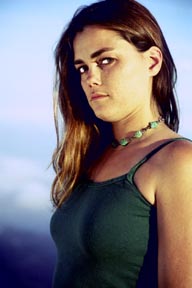
The pale knight in the thrall of the smiling Cynthia is Gav Lawson of The Hemp Trading Company, who presented her with hemp shirts to take back to the US. Good job she got them, as they may never have let her on the plane with the orange jump suit. She is posing outside the US Embassy in London as part of her whirlwind tour in September 2007. Imagine what it would be like if she got in as president! Absolute honesty - hundreds of congressmen running for cover as she asked them to account for not just millions, or even billions, but trillions of missing dollars!
And of course she is hip to the value of hemp, so we would not have the stupid DEA suppressing the rights of US citizens. So if you are a US citizen, go out and get this woman in the White House. Otherwise, things will get a lot worse, and we don't want that to happen.

Tuesday, June 10, 2008

PARTIAL OBSERVER
Nick Davies of the Guardian wrote movingly of the sister paper in a chapter in his book Flat Earth News; he titled it "The Blinded Observer." It is a litany of sins of the worst kind, and one wonders how anyone can still go out and buy this paper, taking part in the destruction of millions of trees each year to produce this pulp of fiction and fantasy.
By chance, I came across a leftover copy of the Observer Magazine in the launderette. On the cover is the new trendy model who wants everyone to think she is green indeed, so her first name is Eco, just in case one does not get the message. Everything seems to be named green or eco these days, and Katherine "E" Hamnett seems to be leading this trend. She is of course featured in this, I will get to Hamnett in just a bit.
Going page by page one finds incredible irony, it makes one want to scream. After flipping over the cover, we see a picture of the rejected mayor Ken Livingstone with a bicycle held over his head. It is not green, but red, as in Red Ken. But we get the graphic, Ken is supposed to be an eco-warrior. One might just note there are reasons he lost the election, one of which may be that he never listened as the pigeons he starved got sick and became a threat to public health. Flipping overleaf, we then find a double spread for a large car, the kind that takes up precious parking space, the kind that Ken in one of his brighter moments wanted to tax to death. One wonders then if he notices the juxtaposition of him and his red bike with the sleek silver coloured monster he sought to restrict. Previously I noted on this very blog the hypocrisy of these 'lefty-greeny' papers printing so many of these ads, and briefly, Media Watch and George Monbiot made some noise; obviously, no one noticed.
One does not have to flip many pages before another double page spread for yet another leviathan comes to light, this time for a Hyundai 4x4. And it is justified by having some award, maybe for the least polluting 4x4. Who gives these awards?Maybe it is Lucy Siegle, who is giving them out on the next page. Yes, the same Lucy Siegle who called me one night after somebody gave out my number without permission. After protesting, too much methinks, that she really was not so much in support of cotton, and that she read my blog every day and was delighted with my book, I took off some comments made about her, even though my eyewitness stands by his tesimony and pointed me to others who were there and could back up his story. After asking Siegle to back herself up about her claim that she too takes some issue with cotton and Kathine "E" Hamnett, I got the feeling I had fallen for a high pitched con job. Soft hearted bloke I can be, but not a total fool, so the time has come to call her bluff. If she reads this every day, then let her respond - weeks have gone by and she has failed to susbstantiate her claims as I asked. She can post a comment here; but how many times have we written in to the Observer and been ignored when we presented evidence about hemp and Omega 3 oil, hemp and its value as biofuel, hemp and its place in fashion? Not once. So allowing an Observer reporter to reply on my furom is in effect turning the other cheek.
Back to turning pages, I find no evidence at all that Lucy Siegle was honest with me. The awards seem to feature more and more cotton. And the way they work is that companies with lots of money can advertise in such papers and get to the attention of the reader, who in turn votes - based thereby on the amount of money a firm has to attract attention. Observer readers vote for Observer advertisers, like, doh. Turning yet another page in this sham popularity contest for rich kids, we see another toy for them - a Mercedes Benz. So far not one ad for a G Wiz or even a red bike. Just lots of expensice gas guzzlers which use up our resources and drive up the price of a barrel, causing massive economic hardship. Thank you very much indeed Lucy Siegle and the Observer.
And who is Lucy Siegle's pick of eco-politician? Red Ken, pictured on p. 23 with a bottle of champagne. Some of the winners though totally deserve their prize, and I am glad to see common sense prevailed with Tanya Ewing and her wireless Ewgeco, an instrument that measures energy consumption. But where is The Hemp Shop - which Woody Harrelson praised as the best stocked hemp shop he had ever seen - has Lucy Siegle seen it once or even mentioned it? Or Pure Sativa, which manufactures really strong and well designed luggage here in London? Or the exquisite multi-coloured creations of House of Hemp? Most or all of the fashion and textile coverage is on cotton, but then we get to some really good reporting on this once we get past Lucy Siegle. Dan McDougall gives us a fact only article on this weed's growth in Egypt, where child labour is the norm. A large part of this labour involves picking bollworms, and this takes place in the heat of the day. These plants are often drenched in pesticides, and no surprise that "accurate health studies are thin on the ground here."
The children often get no school, only the lash on the back from a foreman. But for all the hard work, there is less and less money. Part of this is due to US subsidies to US cotton farmers, which has occasioned a sharp drop in prices causing Egyptian farmers to lose money in a season. There is also the problem of cotton being overcultivated so there is a glut at times on the market, and whilst I make many arguments against cotton farming, economic reasons alone ought to bring common sense to the equation. McDougall rightly informs us "cotton has a long and chequered history." This history is not getting any better - it went from one form of slavery to another. Now that we have GM crops, the farmers are at the mercy of the seed companies, and I will not enter at large upon so well known a subject here as my readers, Lucy Siegle and Katherine "E" Hamnett included, must already know well the horrors of this.
The article is excellent, but again the strange juxtaposition of a 4x4 add lends an eerie sense of hypocrisy to this. McDougall goes on to talk about food riots, such as the ones in Haiti, but then tells us that there were similar or worse such disturbances in Egypt - at least 60 dead. One source of friction is water use from the Nile, and cotton is thirsty. In a hot country it is a greedy plant like the monster plant in Little Shop of Horrors. This of course causes "economic hardship and growing resentment in the west." Quoting Hamdi Wabid, he writes: "It is becoming apparent that cotton is not an economical crop. Now it's just hurting people - and perhaps most tellingly the environment - badly, and many families are going under."
What the article does not tell us is what to do to change this. A crop that does not attract bollworms and many other pests that cotton does, one which uses less water and can be grown for many uses - that is a solution. I would like to present not only the dark clouds but also the bright sunshine, but it is going to take people like Siegle and Hamnett to take on board facts and not just go and support more cotton farming. OK, Hamnett claims hers is organic, but in reality this uses even more water, and how do we get the bollworms and other insects off ths organic plants? Do we whip these kids to work harder and explain that it is better because it is getting written up in the Observer with lots of trendy people?
Turning the page again, I am face to face with a Lexus, its sleek black body coming out of a background of grey clouds. This is what drives the Observer, and I am sure Lucy Siegle, and the board of directors, are not unaware. Overleaf is brighter, an image of the blonde haired blue eyed Eco Herzigova - whose name I did in green just in case anyone does not notice that she is ECO - which one might just dare to question as she is advertising lots of cotton dresses and has ties to Al Gore. Oh she is happy indeed, probably not thinking at all about how much the cotton attire is depleting the water. Just stick an organic label on it and it's kosher, kind of like a Michael Sophocles chicken. And they are not cheap, a white cotton shirt worn by Eco goes for £314 at Harvey Nichols. And the Stella McCartney floral dress (I can only imagine a whore who smokes organic crack wearing it) goes for £645 at Matches. Page after page of this woman with the happy clappy organic smile has made me indeed depressed. But a good story about a family that went off grid for a month does have substance, and I am glad to see their more sensible faces, not the silly grins from Eco. Then it gets better, Dan Pearson talks sensibly about gardening in London. Here is someone with more than just a smile to get by - he studied at Kew, spent a year at Jerusalem Botanic Garden, worked with Miriam Rothschild, and toiled away in NY on the Lower East Side, where, incidentally, I spent my years, correcting my teacher's spelling at PS 64. Old habits die hard.
Sadly, however, a flip of the page takes me away from such a good bit of botanical ruminations back to the world of Gossypium promotion. A spread with the "top 5 Ethical outfits" looks suspiciously like an infomercial for the top 5 spenders in "eco"-fashion advertising - and these top 5 ethical outfits are not cheap. A sleeveless dress by Peopletree goes for £165 - it is black, quite suitable or a funeral, though cut above the knees. And of course, there is a Katherine "E" Hamnett T shirt, grey with a large slogan in block letters - this goes for £40. Cotton, of course. There is no hemp on this page. In fact there is no hemp at all in this 'ethical' issue. American Apparel, another spender on the ad scene is here, and Stella McCartney is ubiquitous - three out of five of the shoes are her creations - no price given, dare we ask?
Next page spread features Jocelyn Whipple, who does not mention hemp - even though she worked at hemp company for years in LA and is betrothed to Dru Lawson of The Hemp Trading Co. Or was it edited out?
Then on to Katherine "E" Hamnett and her £40 T shirts. Am I being too cynical, or is she ripping us off? Either she is making a killing on profits or else organic cotton is just not feasible. By the way, she reminds me of that very authoritarian teacher at PS 64 whose spelling I used to correct. Few people like it when I do that, but if we are going to have food to eat and not just trends to enthuse over, we need such hardcore reality. Nice to make expensive organic cotton outfits and then give them lots of awards in these lefty papers, but we need water - we need food - we need facts. And there are not being heard when I am nice, so I have to shout and hope someone hears. Mr. Nice Guy gets taken advantage of by the likes of Lucy Siegle, so no more of this game. It has to be reality, and I am not hampered by 4x4 companies, American Apparel, happy clappy organic crack smokers or any other nonsense. This blog is for the fact, the whole facts, and nothing but the facts. If you do not like what I say, and you have facts, then by all means, speak up - comment is free, as the Guardian and Observer like to tell us.
At present the press is working hard to keep the likes of me out of discussion, they prefer the rich and famous who keep wearing cotton. There are those in the press who are on the ball - Andrew Gilligan, Genevieve Roberts, Nat Hentoff, plenty of people who have done a good job, but this pseudo eco brigade is not among them.

Thursday, January 17, 2008

REVIEW OF ECO CHIC

The last review was not that positive, scathing might have been the word, and I am afraid this one is not going to be laudatory. However, Matilda Lee does go a lot further than the hapless Tamsin Blanchard - she has an index and cites her sources, which gives this some credibility.

Ms. Lee works at the Ecologist, which is a much more serious publication than the Independent, where Blanchard toiled away watching catwalks and size zero models. The former publication is very well researched, and went to the trouble to seek me out last year to give me a half page colour advert for the hemp eco bag - free! They were not just a bunch of mercenaries, but genuinely committed eco-journalists. At one time, they even printed part of an issue on John Hanson's Treefree hemp paper.

Their ethos does not seem to have rubbed off on Ms. Lee however. Nor, I take it, has she taken on board any of what I had to say when I had a conversation with her about hemp - she basically snubbed her nose at it and seemed offended - many Americans working in the eco movement do not really want any competition for US based businesses, so they serve as gatekeepers; Lee is from the Homeland, which does not even allow its citizens to grow hemp at all.

Mention of hemp in her book is limited, not surprising when Katherine Hamnett writes the foreword. Hamnett was exposed to hemp but decided to promote environmentally destructive cotton instead, now raising organic cotton which depletes the water in third world countries, even more so than non-organic cotton. Discussion of hemp is limited to pp. 122, 125-7, 186 & 210. All of this does start with a positive note, as Lee states that a UK hemp industry would decrease the transport of fabric to the UK. This statement, however, demands more information supplied, as the move to initiate a UK hemp textile industry is not an easy one. Further discussion of the UK hemp industry on pp. 125-127 fails to mention the use of hemp seed in the statistics, and then we are led to believe that BioRegional is in a project with Hemcore to cultivate hemp for fabric on 1,214 hectares - which would be, by Lee's previous data, 60+% of the total UK harvest. There is also the statement that there is no mill in the UK with experience with spinning, knitting or weaving hemp - again - Lee needs to do more checking. Huddersfield is mentioned as a place for a future BioRegional project, but could well have been given space for the very beautiful hemp fabrics being created there by Katie Knill, who for some reason was not at all consulted in this book. Get your facts right! Going back to BioRegional, they did indeed run field trials, twice in the last 10 years, but each trial involved 10 acres or so, and neither has produced much fibre. Let me here shed some light on this - I came along to view the second field trial, and saw that they really were not getting this together - so I asked if they had read any books about retting and production of fibre. They then just shrugged their shoulders, and I suspect that the reading list I gave them has been thrown away. They are far from cultivating 1,214 acres of anything, and far from producing fibre, though their efforts did not go completely in vain, they produced research reports, one of which was written up in the Journal of Industrial Hemp. Lee does not appear to have read any of this. Sadly, what happens is that misinformation gets repeated and repeated, and I will no doubt be hearing more and more of this airy fairy tale, repeated with great authority as people take Lee and some clap happy fashion editors as gospel.

I do like Lee's choice of words on occasion, she does succeed in making me laugh, as when she asserts: "...there is an issue of contaminating the spinning mills with hemp fibres."

The last mention of hemp is on p. 210, where she starts off by mentioning the Anya Hindmarch bag, along with the Onya bag - which she perhaps fails to realise is plastic. No mention of the eco hemp bag that her magazine so graciously promoted for me - she did not have far to go to find out about this one!

Another aspect of her book that is poorly researched is the resouce guide, she omits such vendors as The Hemp Shop, Sativa, Minawear, GeoMio. Omission of The Hemp Shop in particular shows a callous lack of regard for the history of the eco movement - it has been around the longest of any existing hemp shops in the UK and the proprietor, Bobby Pugh, not only was a founder of the hemp movement here but was also a hemp farmer; it was he who manufactured the hemp eco bags that the Ecologist promoted gratis as a real gesture of their stance on the environment. But I guess Lee was out of the office that month.

On the way are two more books in this genre, including one with the same main title as Lee's, and the way things are going, I do not expect to be writing ecstatic praise. The trouble with the eco movement is that there is no end of celebrities and self promoting fools, but those who do the research are often ignored, and this may have something to do with the budget of the cotton industry. The eco movement is much like an army where none of the recruits want to do basic training, but are eager to shoot off weapons in all directions. I recommend that Lee go back to boot camp and take agriculture 101 and science 101 before she writes a book on textiles.


REVIEW OF GREEN IS THE NEW BLACK

This is one of many books published recently which purport to tell us the truth about eco-fashion. The author, Tamsin Blanchard, was fashion editor of the Independent, and with that much information I might have guessed how shallow this thing would be. There are lots of cutesy touches to the layout, but that does not make for substance; the style does not intone much depth either.

The book dwells on cotton, without so much as a single mention of the water needs of cotton, or the fact that organic cotton needs yet more water, thus destroying the livelihoods of more farmers worldwide - or at least in areas that Ms. Blanchard does not reside or visit. She lives in the UK, where cotton has never been farmed, and travels to Paris, NY and other fashion hotspots. No cotton plantations there either, just lots of mad fashionistas destroying the planet with their excess.

So is this book some form of atonement? From the remarks in the introduction, and the foreword by Lily Cole, it does seem that way. If so, it only adds the sins of omission to the sins of comission. The multitude of happy-clappy words here do not go far towards helping the environmental movement at all. And, as some might say is an unforgivable sin, there is no index, and do not expect any source notes. The resource guides serve to promote the businesses of certain parties, such as those who advertise in the Independent or the Telegraph (where the author now works). Katherine Hamnett is praised to high heaven, whilst others are ignored. Again, this might have to do with how much money they spent on papers and their high-flying reviewers.

Hemp is not totally ignored, however, there is mention of it on pp. 16,42,115,155,213,220 & 221. Generally, there is a negative tone towards hemp, which makes it strange that on p. 155 she claims it is her favourite fabric. Is there an editor in the house? She does at least mention The Hemp Shop, but then completely omits this venue in the resource guide - neither does she mention The Hemp Trading Company, Minawear, Sativa, or many other hemp businesses. Enamore, Equa, Patagonia and Howies are given some space, but all of these deal in cotton/silk and other fibres as well.

While Blanchard rather dismisses hemp as a designer fabric, she makes some concession to it as a tough option for luggage, but not much mention of it as bag material, despite the fact that there is a bag war on in London, and that hemp bags have made news upstaging the Anya Hindmach bag - there was even a piece in the Independent in April 2007 about what a disgrace the Anya bag was, but I guess Blanchard does not bother to read what is going on around her.

Ethical silk is mentioned, but again, ignorance is shown here, as she completely omits mention of ethical silk makers other than herself - and does not explain how her farming methods are in any way ethical when she uses artificial mulberry leaves to start with, and then allows the moths to hatch here in the UK where she claims there is not the proper food for them. But the subsequent starvation of the larvae is of no more concern to her than the starvation of the people whose land has been used for cotton, organic or otherwise.

Sad, but not unlike so many other Jane-come-latelies to the eco movement. These new recruits need to go to boot camp and learn some basic facts before they write a book.

Wednesday, September 19, 2007


THE GANGRENE PARTY

The image left needs no intrduction, at least not on this site. However, it has taken years of explaining hemp to the UK Green Party to get them to take heed. The closest I got to any cooperation on the matter was a chat with their drugs spokesperson, Shane Collins, and that was somewhat between zero and sod all. I met the Greens again last Sunday at Brockwell Park in South London, where I was working as a PR person for Cynthia McKinney. They wanted to be in the picture with her, but they did not seem to know what that picture was. All the while I was curious about what was going to occur, as she was proposed by the US Green Party to be their presidential candidate. I worried that the UK Greens were not going to impress her. Sian Berry was nowhere in sight, Caroline Lucas, their MEP, did not show up, and there was no sign of Jenny Jones of the Greater London Assembly. The last time I talked with Jones, she was defending Tony Blair, and I have since considered her a born loser. Maybe it was best she did not show up. Among those who did, I cannot say anyone was very impressed. When we got into a discussion about hemp, which ought to be a top priority for the UK Greens, they told us basically we could get involved in their internal politics and maybe they would pay it some attention. I held my tongue, given that I was McKinney's host.

The next day, she dropped a bombshell in London, as she announced she was withdrawing her nomination from the party. In the next 48 hours or so, this was covered by her hometown paper in Atlanta, which noted that the Greens did not know of it first, and claimed they did not get the letter. I am not surprised. If they are so stupid they do not really do anything for hemp, they do not deserve to be called the Green Party. In fact, the GOP does more for hemp than this sorry party. Not that I am about to go out an vote for many of them either.

Whether McKinney withdrew her nomination because the scales fell from her eyes in London or not I do not claim to know. But I am happy she did withdraw, as she can now concentrate much more working with more well organised parties and individuals. As to hemp, she took the time to find out about it and is now back in the US with 3 hemp T shirts courtesy of Gav Lawson of The Hemp Trading Company. He hung out with her outside the US Embassy as she wore an orange jump suit in protest at the treatment of Guantanamo Bay prisoners. And, as one might guess, there was no sign of the Green Party.

Tuesday, August 07, 2007


DRESS CODE

The Big Green Gathering this year was better than ever, and lots of us were wearing outfits made from hemp, bamboo, and other natural fibres. After my talk a botanist told me about his interest in nettles, ouch!, but yes, they too can produce fine threads. Someone else there makes living silk, having gone to India to train silkworms to make threads without being killed.

I was able to wear all green, with a tie-dye from Minawear, trousers from Braintree UK, a shirt from THTC and a backpack from Sativa. The Hemp Shop's 100% organic eco bag, as featured in the Ecologist and Positive News, was also in hand.

Hemp and other fibres such as jute and ramie are gaining ground, though sadly, most people still wear mass produced cotton which is killing people in India, China, Uzbekistan, Egypt, the US, etc. A new website dedicated to information on all of these has just started in London and is well worth taking a look at - http://www.hempandnaturalfibres.ning.com/

We love to publish images of anyone's sartorial choiced in natural fibres, send in any to me at cotingas@hotmail.com and we will gladly publish them on the site, with a link to the manufacturer if you wish.


Friday, September 01, 2006


LETTER FROM GEORGINA DOWNS IN THE INDEPENDENT

In a previous post (8 June, 2006) there is mention of Georgina Downs, the woman who took on the government over the issue of pesticide spraying. For some reason, this was a very unlicensed business, and it was making people sick. Downs was persistent and got the Secretary of the Environment to take action. In today's letters section of the Independent she weighs in with her view of the legislation: "There are serious flaws throughout the existing regulations, particularly the lack of protection for people in the countryside from cropspraying."

Perhaps Downs expects the government to care for the people in the countryside, which has been ruled from London by a government that cares very much - for profits made by non-British corporations. Just ask the Carlyle Group about how kind Tony Blair has been to give them £335m worth of Quinetic stock for only £40. Someone made a mistake, accidentally on purpose, or was just very kind, but not to the people in the countryside who make our bread and butter. There are only so many hours in the day, and when they are spent in selling off British assets to George Bush, there is not a lot of time left for UK citizens.

Which, as Downs points out, can be illegal - as pesticides are not supposed to be approved for use until risk assessments have been undertaken to provide evidence that there will not be a health risk; her letter makes it clear that "there has never been an adequate risk assessment for the longterm exposure for those who live, work or go to school near sprayed fields."

She is not speaking out of her own opinion here, she goes on to note: "At least three official reports have heavily criticised the existing monitoring system for pesticides, the Select Committee on Agriculture report in 1987, the British Medical Association report in 1990 and more recently the Royal Commission report, all of which have concluded that none of the government agencies involved with pesticides had made any serious attempt to gather data on the chronic effects of pesticides on human health."

So what does the government say about it? That a 'robust system' is in place. Yeah, right. Translated into English that means "bugger off and leave us alone to suck up to pesticide companies." Which is what many ministers will do if left alone. That is why I do not leave them alone, I make it a point now to contact them every day. Some are responsive, some OK, some have hostile press secretaries who would really like me to go to hell. I will be posting the responses here in the near future and talking publicly about it as well.

Part of the way to alleviate pesticide spraying is to sow hemp, for which, according to a Defra report made in 2005, there are no listed pesticides. The photo above, (taken by Dru Lawson of The Hemp Trading Co.) is of a field harvested in Essex on 4 August, and it was then noted that no pesticides were used and neither were there any infestations. That same report, kindly sent to me by Mark Quinlan at Defra, recommended hemp for this reason and for reasons of biodiversity.

Continual pressure on Defra officials to get them to do their job will be of great benefit to everyone, and I encourage all to follow Downs' example. The switchboard number for Parliament is 020 7219 3000, which gets one through to Lords and Commons.

~you don't get what you expect, you get what you inspect~

Wednesday, August 30, 2006


HEMP MAKES FRONT PAGE
OF THE NEW YORK TIMES
The storm brewing in California over hemp legislation has been a story carried here and there for months now, but on Monday, 28 August, it hit the front page of the Grey Lady in the Big Apple. Patricia Leigh Brown did a first rate scoop, and her leading character, a cotton farmer named Charles Meyer, described by her as having a "flinty Clint Eastwood demeanour", blows away the stereotype of the hemp activist as some kind of slacker with an attic full of grow lights. Meyer supports the war in Iraq and thinks if you are unwilling to recite the pledge of allegiance, well, it's love it or leave...hasta la vista as far as Meyer is concerned. And Meyer may be saying that to Governor Terminator soon if Arnie does not go along with Meyer's belief that hemp out to be grown in America, maybe right next to the apple pie farm.
As Brown points out, this is not the first time a state has passed a bill calling for hemp cultivation to be legal. Each time there were roadblocks, from gubernatorial vetos to DEA paperwork.
If this is front page news in New York, it is THE issue in California these days. For many hemp entrepeneurs there, John Roulac, Mina Hegaard, Larry Serbin and Marie Mills, this means a lot; they could buy hemp grown in America. But not if Arnie says nein, or whatever it is that tough guys say in the movies when they refuse to allow Americans to exercise their rights. Brown makes note of the fact that both George Washington and Thomas Jefferson grew hemp. The image above, taken in England in August 2006 by Dru Lawson of The Hemp Trading Co., was a common sight in colonial America, (well, maybe the tractor was not quite a part of the scene); Kentucky became the prime grower through most of the nineteenth century, taking over from the thirteen colonies after industrialisation took root in the north.
If the California hemp bill goes forward, Kentucky and other states may well be producing once again. That means income and jobs for the USA. Unless Arnie does the wrong thing...

Wednesday, August 23, 2006


WOMEN IN HEMP
Hemp has been a staple crop for thousands of years, at one time the world's most traded commodity. In some ways it has a very macho fell to it, especially as it was the material of the navy, with up to 200,000 lbs. of it on a British man-0'-war in the 19th century.
Women have featured prominently in hemp going back ages to Cambri Formosa, a British princess who taught women to sow and weave hemp in 373 BC. Catherine de Medici was known to wear hemp, Queen Victoria used hemp medicine, and Mary Todd, Abraham Lincoln's wife, came from a hemp growing family in Kentucky.
In more recent times women have been at the forefront of the hemp industry's renaissance; Mari Kane and Candi Penn in California kick started the US industry, which went from nothing to hundreds of millions in revenues in less than twenty years...you've come a long way baby.
Pictured above is Mina Hegaard of Minawear, whose Santa Monica, California based company has been going strong for the last 7 years.
In the UK the hemp movement has its share of women as well, including Candice Meskin of Quintessential in Cornwall, Gail Dunsbee of Hempish in Wales, and Jane and Tania Blonder who run The House of Hemp in Cornwall, designer Bushra Sarker of The Hemp Trading Co. in London, and Jane Taylor of Positive News, who does not run a business but is very instrumental behind the scenes organising events and networking. Jane's efforts reach as far as Africa, where she has helped to get a hemp project started in Kenya.
Today hemp is not used much for ropes, its products tend to be more for the health and fashion markets, where a feminine touch can be quite welcome.

Saturday, August 05, 2006

HEMP IN ESSEX
Yesterday, 4 August, Dru Lawson of the Hemp Trading Co. (www.thtc.co.uk) gave me a ride out to Rochford in Essex to view a hemp harvest, to which Sue Riddlestone and Emily Stott of BioRegional had kindly invited us. We were joined with researchers from Leeds University and Cranfield University and Jane Taylor of Positive News.
Three varieties, Santhika, Fedora and Chameleon stood about 8 feet (2.6metres) high, waving their green buds in the wind. Living emerald is how James Lane Allen described hemp in 1900, and this lived up to his words; Chameleon, in my opinion, in its lovely chartreuse tone, even exceeded them.
The plots were grown to test green decortication techniques and study stem cell structure with a view to facilitating a UK hemp textile industry. The green fibres, stripped from the inner hurds, were quite wet in this state and had to be pressed between two rollers to remove moisture. Further processes will be needed to rend them into cloth.
At present the hemp textile industry is centred in China and Romania. Italy was for some time renowned for producing the finest fibres, grown in the Piedmont region. Hemp is grown in Italy now for Giorgio Armani.
There are economic reasons for developing a hemp textile industry in any country, but there are also ecological reasons, the main one being the fact that cotton, at present the number 1 textile fibre in the world, uses up water and requires pesticides. (see related posts on cotton on this blog with the word search feature).
Sue gave me a copy of a book, Bioregional Solutions: For Living on One Planet, writtten by herself and Pooran Desai (both founders of BioRegional). In it (Chapter 7, "Hemp, Clothes and Fair Trade"), there is a good account of cotton, which the authors assert, is the "world's most water-intensive crop."
Cotton is grown mainly in the US, Israel, Pakistan, Tanzania, and Uzbekistan. This last country is the fifth largest producer, supplying 90% of the UK's demand in the '90s. This industry has turned the Aral Sea and its surroundings into a disaster, shutting down the commercial fishing industry and devastating wildlife, including migratory birds. Local farms are unable to carry on, so there is a shortage of fresh, local produce. Such facts are brought out in their book and are quite enough to show that cotton is an unsustainable crop.
HRH Prince Charles, who graced the book with a foreword, takes an interest in the future of his country and writes: "In a world dominated by the short-term, the need for constructive thinking about our long-term future on this planet, based on wisdom and enduring values, has never been greater."
Hemp cultivation is one part of that wisdom, and it is good to see those lanky, emerald and chartreuse stalks swaying gently in the Essex wind.