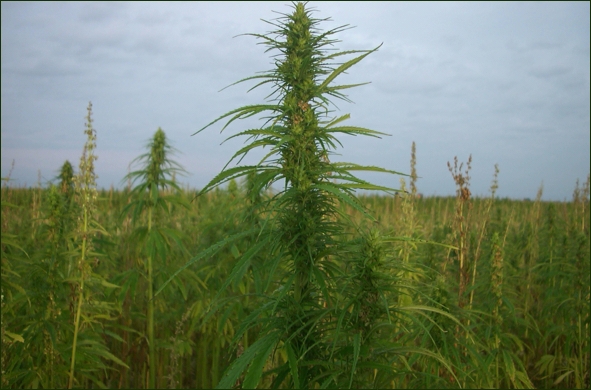
Showing posts with label Hemp for Victory. Show all posts

Monday, June 06, 2016

10 years on for Hemp for Victory

Yesterday marked the 10 year anniversary of this blog, with a first post about hemp events in London.
725 posts later, it has covered hemp oil analysis, politics, hemp businesses, hemp events, hemp news, hemp books, etc etc and some off-the-topic posts as well.

In that time period hemp awareness has grown, the book "Hemp for Victory" was published, and hemp is now legal in many US states.

We hope that the next two years will bring about hemp manufacturing in the UK and the US on a large scale basis. China presently leads the world in hemp cultivation and production, as it did in 2006. Canada is catching up but is still mainly cultivating hemp for seeds - but a New York businessman named Gardner McBride is set to change that with large amounts of acreage of hemp in Ontario. He sells both seeds and fibre, and is looking to increase the quality of his product with a view to researching more applications with the possibility of growing hemp for textile fibres in the future.

So we'll see...I would expect that in the next two years hemp will advance as much as it did in the last ten. To help that process and get a petition to the White House, you can assist us in that goal by clicking on the 'About Us' page at www.minawear.com

Thank you all for a decade of work. All you comments and emails are appreciated.

One thing we are working on is a 2nd ed. of  "Hemp for Victory", and so any new information to add to that book is most welcome. Progess is slow, but steady. Lots more work to be done.


Kenyon Gibson

Hemp History Week 6 June- 12 June


Hemp History Week in Victoria, TX!

hemp history week
hemp history week
During Hemp History Week June 6th through the 12th of 2016,  hemp activists will come together to co-create events around the country to promote education, awareness and activism.
From Hawaii to North Dakota, Vermont, and Kentucky things are heating up for the legalization of hemp farming.  So far at least 26 states have successfully introduced hemp legislation and at least 6 are growing test plots.

June 9th at 7 PM in Victoria, TX where Minawear Luxury Hemp Loungewear is based, the Guerrilla Gourmet restaurant will be hosting a Hemp History Week event.  See the movie Bringing It Home about the modern hemp industry while sampling Chef James Canter's hemp menu items.  At 7:15 join the Skype conversation with the creator of the Cannabis Car, Bruce Dietzen.

Along with free product samples from Manitoba Harvest,  and Dr. Bronner's Magic Soaps, attendees will also be eligible for a chance to win a copy of Hemp for Victory, browse the hemp library, check out other hemp uses and products, and shop one of a kind tie dyes from Minawear Luxury Hemp Loungewear.

The best way to support the legalization of hemp farming in the United States is to purchase and use hemp products as often as you can, and tell every one you know about this plant and all of it's 25,000 applications.

We will discuss the current legislature while making available several petitions to sign.

Sign today!  Legalize Hemp Farming

Participate in Hemp History Week by creating your own event,  educating yourselves, and using hemp in one of it's 25,000 applications in your every day lives!


Guerrilla Gourmet
311 E. Constitution St. Victoria, TX
June 9th, 2016 7 PM to 10 PM
  • Admission by donation to pay for the Screening
  • Monday, June 15, 2015

    Hemp to be sown in Kentucky legally

    I was just asked by a friend in Canada about what the hemp movement is doing in the US. Lots of stories about medical marijuana, and that is going state-by-state - about 16 states now have legal cannabis for patients, with varying degrees in the quality of the administration. In 2012 Mina Hegaard - www.minawear.com - started a petition to the White House to make industrial hemp legal again, and soon afterwards the feds did just that, but allowing the states to set their own agenda.  So far only two states have made it legal, Colorado and Kentucky. And while a crop of 60 acres was sown in Colorado, in advance of it being legal, and in what may have been the catalyst for the lifting of the ban, there has been little mention of its cultivation elsewhere in the US.

    Ironically, not 10 seconds after I replied to the Canute, I saw the following:

    LOUISVILLE, Ky. —Locust Grove, the 18th century home of the sister and brother-in-law of George Rogers Clark and William Clark, is growing industrial hemp.

    The seeds were planted last week at the site by its gardener, Sarah Sutherland. Locust Grove says the crop was grown by George Washington and Thomas Jefferson.

    Locust Grove is participating in the hemp pilot program administered by the Kentucky Agriculture Department and plans a Hemp Festival on Aug. 9.

    The festival will feature a Hemp Village, where products may be purchased, a Hemp Cafe with foods made from hemp oil and seeds, rope and paper-making demonstrations and a question-and-answer session with experts about the future of hemp in Kentucky. A World War II-era documentary, "Hemp for Victory," and a new film, "Bringing It Home," will be shown.


    Tuesday, February 17, 2015

    Letter to Texas paper about hemp in Texas

    This is a letter published in the Victoria Advocate on 7 February, 2014, from Mina Hegaard, owner of Minawear, who lives in Victoria:


    Editor, the Advocate:
    I am a clothing designer here in Victoria, and the main material used in my clothing, Minawear Luxury Hemp Loungewear, is hemp and organic cotton. The reason I only design with hemp and organic cotton is that I believe our environment is in grave danger of becoming severely imbalanced by the overuse of chemicals, which affects humans on many levels - whether it be a rise in illnesses from water contamination or air and soil pollutants.
    Unlike conventional cotton that requires one-third of a pound of chemicals per T-shirt, hemp is grown without the use of harmful chemicals, and that is profitable to farmers as well as beneficial to the health of the planet.
    Hemp has more than 25,000 applications, including fuel, textiles, building materials, food, paper, batteries and more.
    Texas recently introduced a HB 84 (R) to legalize hemp farming on the state level, while H.R. 525, the Industrial Hemp Farming Act of 2015, was introduced by Representative Thomas Massie, of Kentucky, on Jan. 21 to allow American farmers to once again grow hemp to the extent that it is allowed under state laws.
    Forty-two states have introduced pro-hemp legislation and twenty-eight have passed pro-hemp legislation as a resolution, hemp study bill or other.
    In order to legalize growing industrial hemp, we need to first educate ourselves, and then take action. Please visit votehemp.com/write_congress.html and follow the links to find your legislators and send them email letters.
    There are also many informative publications available including "Hemp For Victory," a book that my brother wrote about the uses, history, processes and financials of hemp. Woody Harrelson wrote the foreword, and I wrote the textile chapter. See link at minawear.com/shop/general/hemp-for-victory-by-kenyon-gibson.
    Thank you for taking the time to educate yourself.
    Mina Hegaard, Victoria

    Wednesday, January 14, 2015

    Hemp article in Your True Colours

    This is the article I wrote that appeared in the latest issue of Your True Colours Magazine:

    http://www.yourtruecolours.biz


    Hemp is today a hard to get item. The consumer that once purchased items made from it now can get  clothes made from cotton, paper made from trees, medicine  made from manmade chemicals, and oil sourced from fish livers. Textiles, paper, medicine and edible oils are but a few of the products that hemp provides; it is a simple-to-grow plant that can be cultivated on all continents save the Antarctic. Part of the whole enigma is that hemp is a plant of great varietal variability, lending itself even to experimentation as the great Russian plant geneticist Vavilov proclaimed. Thus it can produce tall slender stems with high cellulose fibre, or it can grow short and branched with many flowers which can contain high levels of THC and other cannabinoids. These compounds make some strains valuable to medicine and also appealing to marijuana smokers; most strains do not provide much in the way of medicine of drugs, but there is such a volume of literature on the marijuana culture that the general public at times associates all hemp with marijuana. There is also a large body of literature on hemp as an industrial plant, spanning centuries.
     
    In the not too distant past, entire nations, empires to wit, depended on its availability; Russia, the chief supplier in the 17th-19th centuries, sold to both the British and the American navies.  Britain and America themselves grew at that time no small amount, and both nation's legislators expressed alarm at the rate of expenditure on foreign hemp for their military. The superior quality and price of Russian hemp, however, ensured that Western powers relied on Russia's. Thus it was once the world's most traded commodity and cultivated nearly worldwide not only for its commercial value, but for the fact that many of its products, in addition to rope and sails, were necessary to survival; Thomas Jefferson, for instance, exhorted it be grown for the wealth and defense of the colonies. Over a century after his advice, the United States was eager to cultivate this crop and produced a film in WWII titled "Hemp for Victory." The threat to rope supplies in the Pacific prompted the legislature to make sure that American farmers were able and willing to plant hemp.

    With the advent of metal ships running on steam and petroleum sails became almost obsolete, and abaca from the Philippines replaced hempen cordage on modern ships. Despite a dramatic downturn in demand in the maritime industry, this plant continued to be grown into the 20th century, providing a range of products from paper to food. It excelled in both of these categories, as its long and strong fibres interlocked perfectly for long lasting paper (the oldest existing fragment of paper is 2,000 years old and contains hemp) and its Omega 3,6 & 9 rich seeds full of all essential amino acids were excellent for food. Farmers also found the plant not only easy to grow in most countries of the world, but it acted as a natural pesticide (with one US cotton farmer sowing it on one third of his land at a time to rid the soil of pests).

    Many changes in the law, however, in the 1930s to the 1960s in the US and other nations made hemp illegal, as these laws mistakenly lumped all forms of Cannabis sativa
    in with high THC producing strains known as marijuana. A few nations continued to cultivate hemp; mainly China, which today profits from its policy. Western nations have
    had a reawakening due to activists who struggled to make hemp not only legal but in some countries a subsidized species. These efforts have largely paid off, and there is presently a thriving hemp textile and hemp oil industry.

    All of which might bode well for the US, as hemp, which was such a part of its history that the first US flag was made of it, can be grown in all 50 states. However, the present status of hemp is prohibitive, even with the recent ruling at the federal level that states may decide for themselves whether to allow its cultivation. So far, only two states have made cultivation legal: Colorado and Kentucky. Both were largely responsible for the change in the federal law, with farmers in the former sowing 60 acres of hemp in a field before the change; thus challenged, Washington lawmakers saw the gauntlet on the ground and  conceded. Soon afterwards, a complex battle in the Kentucky House ensued, perhaps an epic note  in American history, with both  Republican senators, Rand Paul and Mitch McConnell, supporting the hemp issue in Washington, while a Democrat  worked hard to keep it illegal. The governor promptly signed the bill, allowing the Bluegrass state, which was in the 19th and into the 20th century the hemp-basket of America, to regain  its heritage. 
     
    While hemp is still illegal to cultivate in 48 states, and not yet produced in any quantity in Colorado or Kentucky, many American businesses manufacture hemp items, the largest sector being the hempseed oil industry, which sources its oil mainly from Canada, where farmers are profiting greatly from America's ban. A number of  other firms manufacture hemp clothing, such as Minawear in Texas, which started in 1998 in California when the hemp movement was still rather small. The years of manufacturing hempen apparel by this and other companies has brought hemp to the awareness of the general public and has helped to restore the crop to legality in the US.
     
    Another outfit in the same state  working in this field is Canvasland, which makes artist's canvas - which are not only archival quality but true to original material; the use of hemp for canvas is of such  longstanding practice that the very word 'canvas' derives from 'cannabis'; canape in Italian, chanvre in French. Hemp was a major crop in many Renaissance countries, including Italy and the Netherlands. Not only was the textile used in art, but also the oil, which is clear and long-lasting. This last mentioned use of hemp is one that is not yet available on a commercial level, but is being researched by artists with a view to only bottling hemp oil as an art supply but also in finding the best variety among the thousands of varieties of hemp for this purpose, with the possibility that in the future it will replace linseed and safflower oils, both of which are prone to some degree of yellowing. 
     
    From the innovative to the well established, hemp has many uses, making it  an essential part of the economy, as well as being a top choice ecologically, given the fact that it needs less water than cotton and also far less pesticides. Since there  is no real reason not to cultivate it, and every reason to do so, it is the challenge of this present generation to reverse the mistakes of our predecessors  and restore hemp to its place in our fields and the marketplace, hopefully succeeding and earning the respect of future generations.
     
    Kenyon Gibson
    Author of "Hemp for Victory: History & Qualities of the World's Most Useful Plant"

    Monday, October 27, 2014

    Progress for hemp in North Carolina


    We have been following on this site states' progress in making hemp legal; there has been little progress, despite the federal ban being lifted. Mainly a handful of southern and western states are fighting for their rights. This just in from North Carolina:           
     
    Posted: Thursday, October 23, 2014 12:27 am | Updated: 12:29 am, Thu Oct 23, 2014.
    NC State students are advocating for the legalization of hemp, arguing that the misunderstood dichotomy between hemp and marijuana has inhibited the U.S.A. from receiving the benefits from mass-producing hemp. 
    The Raleigh Hemp Society screened the award-winning documentary, “Bringing It Home,” which emphasizes the benefits that hemp can have on our society and the struggle to get it legalized in the US on Sunday in the Witherspoon Student Cinema.
    About 30 students attended the screening to hear the film’s message that hemp’s benefits are being ignored by American society due to the fundamental mischaracterization that the hemp plant is the same as recreational marijuana. 
    “You can smoke a field of hemp, and you would die of CO2 poisoning before you got high,” said Andrew Klein, a senior in natural resources policy and administration and founder of the Raleigh Hemp Society. “Hemp and marijuana are both cannabis sativa, but the point is that they are completely different. It’s like comparing a house cat to a lion.” 
    The documentary presented one of the Drug Enforcement Administration’a (DEA), arguments against hemp, stating recreational marijuana can be hidden among hemp stalks because the plants look similar.
    Hemp supporters, however, argue this is unlikely due to the special, climate-controlled conditions needed to produce “smoker’s” marijuana.
    Hemp is widely produced in 31 other industrial countries including France, China and the U.K. 
    The THC content of industrial hemp is 0.3 percent or lower, which, according to the documentary, is too low a level to be psychoactive in the body. It is significantly less than the THC content found in recreational cannabis, which stands at about 40 percent.
    Historically, this misconception has been a major factor in hemp’s illegal status in the U.S., dating back to 1970 when President Richard Nixon first declared it a Class I drug along with recreational marijuana and heroin, among others.
    While interning for the Virginia Hemp Company this past summer, Klein said he spent a significant amount of time lobbying in Washington D.C. where he ran into the problems with this misconception frequently. 
    “I talked mostly with staffers, but most agriculture reps said that [the politicians they represent] are anti-marijuana,” Klein said. “This shows that, for many politicians, the fear of politically associating with marijuana keeps them from seeing the benefits of hemp.”
    Before it was declared illegal, the U.S. government promoted hemp to help the U.S. win WWII with the “Hemp for Victory” propaganda campaign, which encouraged farmers to produce hemp to make rope, cloth and cordage for military use. Hemp was also the first material ever used to make cloth in 800 B.C. China, according to the documentary. 
    Klein and his staff members set up a table showing off some of the varied ways that hemp can not only provide a greener alternative to common products but even improve on them. The table had hemp cooking oil, which has more omega-3 than traditional oil, hemp paper, which can be produced four times more efficiently than paper from trees, the different hemp fibers used in clothing, which can be produced with less water than cotton, and raw hemp, which can be made into a concrete substitute. 
    The use of hemp to make concrete, or “hempcrete,” has particularly interesting prospects for the U.S. as a whole, according to the documentary. 
    Not only could it provide thousands of new jobs due to building renovations and new building construction, but it can improve quality of life for homeowners. 
    According to the documentary, hempcrete is a carbon negative material, which means that it actually absorbs CO2 in the air as well as filters out other pollutants. The construction process could also made safer by the use of hempcrete, as it does not require workers to wear masks or gloves because it is nontoxic. Power tools would also be unnecessary when using hemp, which would eliminate loud noise and wires on construction sites. 
    “Hempcrete wall construction is not complicated, but there is a learning curve in working with low temperatures and wet conditions,” Linda Booker said, co-producer, director and editor of “Bringing It Home.”
    When Booker and her co-producer Blaire Johnson began filming in November 2010, Booker was new to the history of hemp.
    In 2011, Booker and Johnson attended the Hemp Building Symposium in Granada, Spain where they were able to meet with global hemp business leaders which changed her perspective on this issue. 
    “I was skeptical like a lot of people,” Booker said. “I realized that we need a good film to educate people about this.” 
    President Barack Obama signed the Farm Bill in February, which made hemp legal for research and academic uses, which is a step towards legalization. However, hemp is still illegal to grow without a DEA issued permit. 
    The DEA has only issued three of these permits since 1970, according to the documentary released in 2013.
    “Until we take hemp out of the substance one narcotic classification, the DEA will still have jurisdiction over seed imports for research,” Booker said. 
    Booker said DEA pressure forces higher prices for legal hemp products because they have to be imported. 
    Andrew Klein said he is working to inform people about hemp close to home. 
    “The future is working with businesses, farmers and political leaders to formulate policy to help legalize hemp in NC,” Klein said. “The long-term future of the hemp society is to get passionate, intelligent students jobs in the hemp markets.”  

    Friday, August 08, 2014

    Article on hemp in Virginia

    Last year the Virginia legislature started to vote on the law to allow Virginians their constitutional right to grow hemp - as did so many of its famous sons, some of them former US presidents. Today this article appears in the Daily Progress of Charlottesville, VA, titled "Will Hemp be a cash crop again for Virginia?"

    __________________________________________________________________________________

    Hemp is not marijuana.


    It looks like marijuana.


    It’s related to marijuana.


    But it’s not marijuana.


    It’s a plant fiber so useful that it can be used in making things from auto parts to yarn. Not quite A to Z, but close enough.
    A hemp car? Really? Apparently so. “Hemp fibers have higher strength to weight ratios than steel and can also be considerably cheaper to manufacture,” reports Alan Crosky of the School of Material Science and Engineering at the University of New South Wales in Australia. He and other researchers are working on using hemp fiber to replace plastic in some car parts. The result could be a car that has more fuel efficiency because it weighs so much less, but is still just as strong.
    So why aren’t American farmers rushing out to plant hemp and cash in on this miracle plant?
    Umm, because it’s kind of illegal.
    In Colonial times, Virginia required farmers to plant hemp because it was deemed so useful. Rope, clothes, sails for ships — all could be made from hemp. Thomas Jefferson penned the first drafts of the Declaration of Independence on hemp paper. In World War II, the federal government promoted “Hemp for Victory!” Growing hemp for use in making industrial fiber was considered patriotic.
    Then came another war — the War on Drugs. Hemp got lumped in with marijuana (same cannabis species, but different genetics and vastly different psychotropic potential) and was effectively banned.
    The feds do allow hemp farming, as long as your state has a law allowing it and regulating it. Lately, there’s been a campaign to do just that.
    However, the push to legalize hemp isn’t coming from drug-addled hippies. It’s coming from people who see hemp as a potential cash crop to replace tobacco — or no crops at all. At the national level, Senate Republican Leader Mitch McConnell of Kentucky is pro-hemp, and he’d never be mistaken for a pot smoker.
    In Virginia, one of the main hemp advocates is Jim Politis, a former Republican member of the Montgomery County Board of Supervisors. He sees it as a pro-economic development measure for struggling rural areas. Another Republican, Del. Joseph Yost of Pearisburg, has already filed a bill for next year’s General Assembly to create the Virginia Industrial Hemp Farming Act.
    The main objections to hemp come from law enforcement, which argues that it’s easy to confuse the two plants. The counter-argument is that alcohol looks pretty much the same but authorities do a good job of distinguishing between a craft brewery and a moonshine still.
    So let’s say again: Hemp is not marijuana.
    But if Yost’s bill passes, it could be a cash crop again.
    Adapted from the Roanoke Times.

    Monday, April 07, 2014

    Book Review on Hempista

    Here's the latest review of Hemp for Victory - from www.hemista.com


    Hemp For Victory – published in 2006 by Kenyon Gibson, Nick and Cindy Mackintosh, Woody Harrelson, Mina Hegaard and Sam Heslop. $29.95 at MinaWear!
    When my friend Mina at MinaWear told me she was sending me one of the most amazing and authoritative books ever published about hemp to review for my readers here at Hempista, I was totally thrilled to have the opportunity to share this book with you today!
    Hemp For Victory is a 280 page volume of history, science and uses of the hemp plant and is an encyclopedic treasure trove of information about the plant. The book has hundreds of black & white reproductions of historical images and documents dating back to when hemp was part of everyday life. Yes, sometime before the drug war was invented in the 20th century, hemp was just a plant! But, it was a special plant that had an important role in ancient and pre-20th century society for food, fiber and medicinal purposes.
    This book is what I would call the ultimate educational volume and almanac of hemp. And I would highly recommend this for educators and teachers that are seeking unique and relevant material for Earth Day educational units. Students often hear about “marijuana” from their DARE lectures and sessions which typically paint the cannabis plant in a negative light, completely ignoring the environmental and health advantages of the hemp plant. Hemp For Victory is a great resource for Earth Day.

    Monday, July 22, 2013

    Vermont sets guidelines for growing hemp

    Farmer John Vitko picks strawberries in Warren, Vt.,
    Photo credit: AP | Farmer John Vitko picks strawberries in Warren, Vt., who says he would like to grow hemp to feed his chickens. (June 24, 2013)


    WAITSFIELD, Vt. - Some Vermont farmers want to plant hemp now that the state has a law setting up rules to grow the plant, a cousin of marijuana that's more suitable for making sandals than getting high.
    But federal law forbids growing hemp without a permit, so farmers could be risking the farm if they decide to grow the plant that the Drug Enforcement Agency basically considers marijuana.
    Hemp and marijuana share the same species — cannabis sativa — but hemp has a negligible content of THC, the psychoactive compound in marijuana. Under federal law, all cannabis plants fall under the marijuana label, regardless of THC content.
    To grow marijuana for industrial purposes or research, a grower must register with the DEA and meet specific security requirements, such as installing costly fencing for a field of hemp.
    A national nonprofit group is pushing to change current law and move regulation of hemp farming from the DEA to the state. In the meantime, the group, Vote Hemp, does not recommend growing hemp while state and federal laws conflict.
    "It's literally betting the farm," said Tom Murphy, national outreach coordinator for the group. Farmers who grow it, or even conspire to grow it and import the seeds face jail time and the forfeiture of their land, he said. But it's unclear how seriously the DEA will enforce it.
    Murphy said he's heard that people have planted hemp on leased land in Colorado.
    "Now if somebody chooses to do it as civil disobedience, knowing full well what's going to happen, then that's on them," he said.
    So far, 19 states have passed hemp legislation, including nine that allow its production. Eight states have passed bills calling for the study of hemp, while three states passed bills setting up commissions or authorizing the study of it, according to Vote Hemp.
    The states hope to nudge the federal government to change its law.
    John Vitko would like to grow hemp on his Vermont farm to use as feed for his chickens now that Vermont has passed a law setting up rules to grow it. He doesn't know where to find any seed and knows he would be breaking federal law if he finds some and grows a small amount of the plant.
    With the cost of feed continually rising, he said hemp provides an economical way to feed and provide bedding for his 100 birds, whose eggs are used in the custard-based ice cream he sells to restaurants and in a dessert shop in Waitsfield.
    "It's one of the few things that are manageable for a small farmer to handle," he said of hemp, which doesn't require large equipment to plant and harvest like corn does.
    "It's complete protein," he said. "It has all their amino acids. It's a seed which birds like."
    Hemp has been grown in the U.S. in the past to make rope, fabric and even the paper that used to draft the Declaration of Independence. The country even launched a "Hemp for Victory" campaign during World War II as supplies for other overseas fibers dwindled.
    Now most hemp products in the U.S. are imported from Canada, China and Europe and some farmers think the U.S. is missing out on a lucrative crop.
    U.S. Rep. Jared Polis of Colorado was granted a request to fly an American flag made of hemp over the capitol in Washington on the Fourth of July. He held the flag during the U.S. House debate in over a hemp amendment to the farm bill that he introduced with Republican Rep. Thomas Massie of Kentucky and Democratic Rep. Earl Blumenauer of Oregon. The measure would have allowed colleges and universities to grow hemp for research in states where its cultivation is permitted. The amendment passed but the farm bill failed.
    "Support for our recent farm bill amendment demonstrated that there is growing consensus to revisit the antiquated drug laws that now keep U.S. farmers from participating in the $300 million hemp retail market," Blumenauer said. "A hemp flag flown over the Capitol on the Fourth of July is a powerful symbol of this reform movement."
    The figure Blumenauer referenced comes from a Congressional Research Service report that says the industry estimates that U.S. retail sales of hemp-based products may exceed $300 million per year.
    The bill that Democratic Vermont Gov. Peter Shumlin signed into law last month is intended to push the federal government to change its law after Canada reintroduced industrial hemp in the late 1990s.
    "The reason we want to push for a change is that hemp is potentially a valuable crop," said Democratic Rep. Caroline Partridge, chairwoman of the Vermont House Committee on Agriculture and Forest Products. "People want to grow it. Hemp oil is a valuable product, and there's so much of the hemp plant that can be used for very, very productive purposes,"
    The Vermont law sets up procedures and policies for growing hemp. A grower must register with the state agriculture secretary and provide a statement that seeds used do not exceed a certain concentration of THC.
    The grower also must allow the hemp crops to be inspected and tested at the discretion of the Agriculture Agency, which warns growers that cultivating and possessing hemp in Vermont is a violation of federal law.
    It's too late this growing season in Vermont for Vitko to grow hemp, but he hopes to plant just an acre of the plant next spring if the rules are worked out.
    "I'm going to be a little farmer that's growing hemp, they've got bigger problems than me," he said of the DEA.

    Tuesday, June 18, 2013

    Maine passes Hemp Bill and nullifies unconstitutional federal ban

    John Lambert from the 10th Ammendment Center reports on progress in Maine:


    Last Wednesday, the Maine House of Representatives passed LD525 (Industrial Hemp) which allows hemp cultivation in the state of Maine, effectively nullifying unconstitutional federal acts which ban the same. The bill is a simple amendment to previous hemp farming laws removing a requirement that federal permission must first be acquired before production is authorized. The final vote on LD525 was 24-10 (roll call here).
    The amendment simply states:
    3. Application. A person desiring to grow industrial hemp for commercial purposes shall apply to the commissioner for a license on a form prescribed by the commissioner. The application must include the name and address of the applicant, the legal description of the land area to be used for the production of industrial hemp and a map, an aerial photograph or global positioning coordinates sufficient for locating the production fields.
    4. License issued. Upon review and approval of an application, the commissioner shall notify the applicant and request that the application fee determined under subsection 7 be submitted. Upon receipt of the appropriate fee, the commissioner shall issue a license, which is valid for a period of one year and only for the site or sites specified in the license.
    The bill now has moved to the Maine State Senate where Senator Emily Cain made a motion to have the bill placed on the Special Appropriations Table. In Maine, the Special Appropriations Table is where funding of the bill is determined. If the bill is properly funded, it moves forward. However, this is also the one of those legislative road blocks that is often used to kill bills. If the Senate fails to fund a bill, it will die here. So putting pressure on Maine State Senators is crucial for the advancement of this bill. If passed, Maine would become the 2nd state in the country to nullify the unconstitutional federal ban on hemp farming and production. Just this month, Colorado’s Governor Hickenloooper signed a bill making his state the first.
    ACTION ITEMS
    1. Contact your STATE SENATE representative. Strongly, but respectfully, let them know that you want a YES vote on LD525. This bill is important for Maine farmers, it’s important for jobs, and it’s important for the economy.
    Contact info here
    2. Share this information widely. Please pass this along to your friends and family. Also share it with any and all grassroots groups you’re in contact with around the state. Please encourage them to email this information to their members and supporters.
    ADDITIONAL READING AND RESOURCES
    The federal Controlled Substance Act included hemp as a Schedule I drug in 1970. The feds consider growing it without a DEA issued permit a crime. The feds have only issued one such permit, to Hawaii, back in 1999. It has since expired. This has created a de-fact federal ban on growing the plant. And as a result, the United States is the world’s #1 importer of hemp, while China and Canada are the top 2 exporters. Some supporters say that nullifying this federal ban would be a huge win for jobs, for American farmers, and for the economy.
    LD 525 seeks to nullify the unconstitutional federal ban on the production hemp. The federal government lacks the constitutional authority to regulate the production of hemp, or any agricultural product, within a state’s borders, and LD525 rests on solid ground.
    HEMP OVERVIEW AND USE
    Industrial hemp is not marijuana, but an industrial agricultural product used for a wide variety of purposes, including the manufacture of cordage of varying tensile strength, durable clothing and nutritional products. During World War II, the United States military relied heavily on hemp products, which resulted in the famous campaign and government-produced film, “Hemp for Victory!“
    Even though soil, climate and agricultural capabilities could make the United States a massive producer of industrial hemp, today no hemp is grown for public sale, use and consumption within the United States. China is the world’s greatest producer and the United States is the #1 importer of hemp and hemp products in the world.
    Since the enactment of the unconstitutional federal controlled-substances act in 1970, the Drug Enforcement Agency has prevented the production of hemp within the United States. Many hemp supporters feel that the DEA has been used as an “attack dog” of sorts to prevent competition with major industries where American-grown hemp products would create serious market competition: Cotton, Paper/Lumber, Oil, and others.

    Friday, June 14, 2013

    California Hemp Bill passes state senate

    After a veto from Governor Jerry Brown in 2011, another hemp legalization bil unanimously passed the California Senate on Tuesday, June 4.
    SB 566 was written to acquiesce Governor Brown’s out-of-touch constitutional ignorance. Under the current bill, hemp production would only begin once California receives permission from the federal government.
    “We feel confident that California will finally have an industrial hemp law later this year ensuring that California farmers are ready and able to cultivate hemp upon federal approval,” Patrick Goggin, California legal counsel for the industry group Vote Hemp said.
    Should SB 566 be construed as some mechanism to make the federal government act? Hardly. But it does indicate the growing support for hemp production, not only in California, but across the United States. According StopTheDrugWar.org, domestic retail sales of hemp food and body care products reached $156 million last year, and the Hemp Industries Association estimates that all hemp products sales, including clothing, auto parts, and building materials, totaled at least $500 million. The continued federal prohibition makes no sense constitutionally or economically.
    In a February 2011 Facebook post, Dr. David Bronner, president of the Escondido-based company Dr. Bronner’s Magic Soaps said, “Dr. Bronner’s currently purchases twenty tons of hemp oil each year from Canada. We look forward to the day that we can meet our supply needs from hemp produced right here in our home state.”
    Simply legalizing intrastate production and sale of hemp products would create a boon for companies like Dr. Bronner’s Magic Soaps.

    Tuesday, May 28, 2013

    Hemp for Victory Screening in Colorado

    The Colorado Hemp Network is announcing the “Hemp for Victory” Party on Tuesday, May 28 in Denver. The Party will celebrate the signing of Senate Bill 13-241, sponsored by Gail Schwartz (D-Snowmass Village), which creates the Colorado Industrial Hemp Program. The bill will allow Colorado farmers to grow up to 10 acres of industrial hemp (cannabis that contains less than 0.3% THC).
    Senator Lloyd Casey introduced the first industrial hemp bill in the nation in Colorado in 1995. Casey is now 86 years old and will be the guest of honor at the signing of SB 241 (now called the “Casey Bill” in his honor). Colorado Governor John Hickenlooper is scheduled to sign the bill on Tues., May 28.
    ***HEMP FOR VICTORY PARTY***
    Featuring former state Senator Lloyd Casey
    Date: Tuesday, May 28, 2013
    Time: 1:00-300pm
    Where: Casselman’s Bar and Venue
    2620 Walnut St., Denver, Colorado
    http://casselmans.com/
    This Event is Free and Open to the Public.
    SCHEDULE
    1:00pm: Lunch with Casey Casselman’s full lunch and drink menu will be available for purchase
    2:00pm: Speeches
    - Sen. Lloyd Casey, retired, introduced first state industrial hemp bill in US in 1995
    - Representatives for the office of Sen. Gail Schwartz (D-Snowmass), the primary sponsor of the 2013 bill
    - Lynda Parker, Colorado Hemp Association (www.NewAgHempEconomy.com)
    - Many other representatives who participated in the 1995 and the 2013 industrial hemp bills
    *** THE SPEECHES WILL BE BROADCAST LIVE ONLINE AT 2:00PM MDT***
    http://www.ustream.tv/channel/colorado420
    3:00pm: Showing of “Hemp for Victory”, a 1942 USDA film that promoted hemp for the World War II effort
    BACKGROUND
    In 1995 and 1996, agents of the federal Drug Enforcement Administration testified in person against Senator Casey’s industrial hemp bills, intimidating the state legislature into killing the bills each year by telling them they would be in violation of federal law if they voted in favor of hemp. Click here to read Senator Casey’s classic tell-off letter to the DEA:
    http://www.colorado420.com/hemp#dea
    Casey is excited to return to Colorado to celebrate the signing of the bill. In an email to the Colorado Hemp Network before he left his home in Ohio for the Colorado visit, Casey wrote: “As I was getting ready for my trip, I asked myself, ‘What the hell are you doing? You’re damned near 87 years old.’ Then I remind myself I promised the DEA I’d live to know our Colorado farmers were planting industrial hemp. I wouldn’t want to break my promise.”
    Senator Casey, a World War II veteran, remembers that hemp was the fiber of choice for the miles of line needed by the Navy. In 1942, the US Department of Agriculture produced a film called “Hemp for Victory” that encouraged farmers to grow hemp for the war effort. This film will be shown at the Hemp for Victory Party.
    “People always said Casey was ahead of his time,” said Laura Kriho, who was an aide to Senator Casey in 1995 and 1996 and a member of the Colorado Hemp Initiative Project. “Now we know just how far ahead of his time he was — 18 years to be exact.”
    Anyone who is excited about hemp in Colorado or who would like to meet Senator Casey is encouraged to attend.
    WORKING PRESS: Receive 1 FREE DRINK courtesy of the Cannabis Press Association.
    SUPPORT HEMP ADVOCATES — BUY CASEY’S BOOK:
    “Family First: A Father’s Legacy”
    http://www.lloydcasey.com

    Hemp for Victory screening in Vermont

    NEWS RELEASE — Rural Vermont
    May 24, 2013
    CONTACT
    Robb Kidd (802) 505-1540
    robb@ruralvermont.org
    Event in Brattleboro will celebrate passage of Vermont’s new Hemp law and include a screening of the classic film “Hemp for Victory”
    Montpelier – Rural Vermont, in conjunction with the national hemp advocacy group Vote Hemp, will be hosting a Hemp Victory Celebration on June 5, 2013 from 5:30pm – 9:00pm at the Hooker-Dunham Theater & Gallery located at 139 Main Street, #407 in Brattleboro, Vermont.
    The event will include two special viewings of the short 1942 USDA propaganda film “Hemp for Victory” at 5:45pm and again at 8:30pm. In addition to the film presentations, we will feature Vermont legislative updates by Rural Vermont Organizer Robb Kidd and national legislative updates by Vermont resident and Vote Hemp Co-Founder/Board Member Eric Lineback. Guest appearances by Vermont farmers and policy leaders, as well as free samples of hemp product samples, are also planned for the evening.
    The Hemp Victory Celebration is part of the National Hemp History Week campaign, and this year we will be highlighting the positive work that Vermonters have done to contribute to this widespread effort to restore hemp as an agricultural crop for Vermont. At this time we are optimistic that Governor Shumlin will sign the recently-passed hemp bill (S.157) which provides a simple, commonsense regulatory structure for growing hemp in Vermont. “With Senator Leahy’s recent pledge of support for a hemp amendment to the federal Farm Bill, Vermont is cultivating a ‘hemp renaissance’ with its strong leadership on the issue,” states Robb Kidd of Rural Vermont.
    “In this currently tough and challenging economic climate, allowing our farmers to once again produce hemp is a smart move for Vermont. We have the opportunity to be leaders in this exciting and promising emerging ‘green’ industry,” adds Eric Lineback of Vote Hemp.
    Will Allen, farm manager of Cedar Circle Farms in East Thetford, already has plans to purchase a nearby tract of land and begin growing hemp as soon as the law is enacted. “Hemp gives farmers another quality crop to grow in rotation, producing renewable raw materials both to sell and process in the field,” Allen says.

    Thursday, April 25, 2013

    Hemp plants under cultivation in Colorado

    Brandon Rittiman on 9NEWS in Colorado reports on the latest on hemp:
     
    DENVER - The Colorado Senate recently did what the voters asked, passing SB241.


    That vote was unanimous, but the bill still needs to pass the House.

    In a warehouse North of Denver in Lafayette, 9NEWS toured a small operation growing about a dozen hemp plants.

    The plants are Cannabis sativa, the same species as some marijuana plants, but this would be the marijuana equivalent of non-alcoholic beer.

    When grown to produce an intoxicating drug, the plant's weight is typically five to 15 percent THC. By definition, industrial hemp must contain less than 0.3 percent of the drug.

    "It'd be like smoking cabbage," Erik Hunter with non-profit group HempCleans said. "You'd get a taste in your mouth and nothing else. You wouldn't get high."

    Because of the trace amounts of THC, hemp remains illegal to grow under federal law.

    That wasn't always the case.

    A 1942 film title "Hemp for Victory" was produced by the US Department of Agriculture to encourage farmers to grow more hemp crops for the war effort.

    The stalks of hemp plants contain fibers that are useful in textiles and rope.

    Without textile mills geared for hemp production, Colorado's first hemp crops will likely be harvested for hemp seeds.

    Seeds can be pressed for oil, used whole in food, or ground into meal. The THC is eliminated in processing.

    "Nobody has ever failed a drug test from eating hemp seeds," Hunter said.

    There have been concerns that the low amount of THC in hemp could be concentrated into a drug-grade material, or that hemp crops could be used to disguise fields of drug-grade marijuana.

    The bill working through Colorado's legislature would require hemp farmers to register and pay a fee with the state to cover mandatory sampling of plants. Farmers would also need to show they have an agreement with an in-state processor who will take the crops.

    Sunday, March 24, 2013

    Vermont hemp debate positive

    Vermont Considers Legal Hemp. So far this year several states are at this stage, or beyond, but the federal government still opposes hemp and must be lobbied. Please remember to sign the petition to the White House at www.minawear.com/about-us/
    Below is an article by Mat McDermott:


    Image via Hemp Report

    For decades Vermont has draped its political feet on either side of the proverbial fence, with one leg being highly progressive and the other highly conservative. If there's one thing that unites the two, it's a sense of craggy individualism and independence. Most recently, that unlikely union manifested in 29 towns voting to oppose tar sands exports, the state enacting a ban on fracking, and two attempts to mandate labeling of GMO ingredients.

    And now, a proposed bill (H.490) would, if passed, see industrial hemp cultivation legalized and regulated in the state beginning this July 1. This flouts federal law, of course, which has long forbidden hemp farming, with the DEA apparently unwilling to differentiate between hemp and its cousin, marijuana, costing the nation potentially millions in revenue. Curiously, it's also now legal to import into the United States finished hemp products, from clothing to seed.

    Which brings us back to H.490. The bill is being spearheaded by Teo Zagar, a documentary filmmaker now representing the towns of Barnard, Hartford and Pomfret, following the resignation of former Rep. Mark Mitchell in 2011. I had a chance to speak with Zagar* about the motivations for not waiting around for the Feds to approve hemp, the bill's chance of success, and whether Vermont might be joining Washington and Colorado with marijuana legalization anytime soon.

    MOTHERBOARD: Since Vermont already had a bill that would regulate hemp production, once the Feds legalized it, why are you introducing this bill--which strips out that delaying language--now?

    When I joined the legislature last year, my first day driving to Montpelier, I'm on 89 heading north, not knowing what to expect. I didn't know what committee I'd be on. When I get there, the Speaker calls me into his office and says, "You're on Agriculture." I was surprised, but I was really pleasantly surprised because there's a lot new agriculture in my town. It's been totally transformed by that.

    I go into the Ag committee room. There's this poster, from World War II, which says, "Grow Hemp for the War". I asked the committee chair what the deal is, in Vermont, with hemp. Obviously it's illegal federally, so no one does it, but we have a precedent with medical marijuana going around federal laws. So why isn't hemp being grown?

    It's just such a commonsense thing to do. You'd think it shouldn't take a lot of work to let it through [at the Federal level]. But I have no faith in that process, that it'll have any good outcome for the state of Vermont, or any other state for that matter. Our relationship with the Feds is challenging, and complicated, and often gets in the way of us being able to do the things that the vast majority of Vermonters want to do and think is right.

    I'm not an expert in hemp. I just know that it can be used for so many different things, that it's more environmentally friendly in terms of how it's grown and processed than the alternatives, and—the big reason why it has some chance of success here in Vermont—is because of the economic potential, the jobs.

    Hemp for Victory! (1942) called for a sizable bounty increase--50,000 total acres--of hemp for 1943, a 14,000-acre bumper crop over 1942, for everything from shoes to naval tow-lines
    Do you think bill represents a chance for Vermont's oftentimes split political personality to unite? It seems to me there should be.

    I definitely do. If a good bill comes to the floor, there will be support. It's such common sense. It's completely irrational that it was prohibited in the first place. Our Vice-chair of the Agriculture Committee is a Republican; the Chair is a Democrat. I don't want to speak for them, but there will be Republican support, because it's common sense. It's a no-brainer. It'd be good for Vermont. We have all these deficits and shortfalls in our funding. We're trying to patch things up, going about it in really potentially dangerous ways by raising taxes on certain things. This would have such a positive effect.

    OK, so let's assume the bill passes. What do you expect the federal reaction to be?

    I think a much greater precedent has been set with medical marijuana. I'm not equating marijuana with hemp, though they're already linked in many people's minds. Hemp is a much less controversial issue. It's far more controversial that it's prohibited in the first place. Turning that around, once there's momentum behind it, will happen. And it'll happen quickly.

    The real question is who will be the first one? Who will put themselves out there? Because you're facing possible forfeiture of your land rights, if the Feds choose to follow the rules that are in place.

    Let's muddy the waters a bit. Should this pass, what are the chances that Vermont will go down the road that Washington State and Colorado have taken, and legalize marijuana?

    There was actually a bill put forward that I signed onto (H.499).

    Decriminalization is the first step. That's been in the works for a few years. It was held up last year; it looks like it might have a chance this year. But, the decriminalization issue is controversial enough. There's not enough of a clear political sense of it for there to be enough support for it in the state. The legalization? We can't talk about that until we have some consensus on decriminalization, and have the support of the Vermont people. It's a hugely complicated issue. There's a lot of unknowns. It's common sense. It's another common sense thing.

    Who will be the first one? Who will put themselves out there?

    The legalization bill, which was really controversial for me to sign--unless you read it, you'd just think I want there to be a free-for-all for drugs, which is the exact opposite. The bill calls for the regulation and taxation of marijuana.

    What's happened in other places is that once you end the prohibition of marijuana, once you remove it from a black market that causes far more harm in society--because it shares a market with more harmful drugs, the money going to less savory characters, the Mexican drug cartels and maybe terrorists--if you end prohibition and just regulate it, you're probably going to have a net-positive result, if it's done right. There'd be an age restriction, so it'd still be illegal for kids. It'd probably reduce access for kids, if it's regulated appropriately. But I don't see that happening for years.

    Tuesday, March 19, 2013

    US Army arrests General George Washington, send him to Purgatory

    General George Washington is in BIG trouble! The US Army is now banning soldiers from using anything with hemp in it. Hemp is legal. So how is this ban legal? The Uniform Code of Military Justice (UCMJ) does not ban hemp. So how can this be applied? They ought to remember the Hemp for Victory film in WWII, or the fact that the US Armny fed hemp to its carrier pigeons (as noted by Capt. Wendell Levi who wrote The Pigeon).


    The United State Army has recently released an article on their website urging people away from the alcoholic drink Purgatory, a vodka. Not caring about the fact that it’s a strong alcoholic drink, which is entirely fine for soldiers to take part in, the Army instead takes issue with the fact that this particular vodka is made with 20% hemp seeds. The product is sold legally throughout the U.S.; it goes through a stringent process to ensure that it contains no amount of THC. Like other hemp products, there’s nothing illegal about the drink on the federal level.
    However, the Army doesn’t care, stating: “What must be stressed among military personnel is that even though Purgatory Vodka is said to be free of THC, and even though hemp byproducts are not illegal in the civilian world, this gives zero justification to those in the military…It is the ‘prohibited use’ that soldiers need to remember.”
    The article points to AR600-85, the “Army Substance Abuse Program”, which explicitly disallows the use of hemp products by soldiers, including any of its derivatives: “this regulation prohibits Soldiers from using hemp or products containing hemp oil.”
    This is brainwashing at its absolutely worst. There’s no reason for them to deny soldiers the use of hemp products any more than they would object to their use of aloe vera. Even among this ridiculous prohibition on cannabis, it’s entirely legal to possess and use hemp products – as long as you don’t cultivate the actual plant.
    The only reason that can be seen for the Army continuing to push this archaic portion of their rules, is to try and sway their soldier’s opinion on hemp and cannabis policies. When you consider how incredible of a protein hemp seeds can be, denying our soldiers even the ability to consume hemp seeds or hemp seed oil is absurd.
    As many know, it wasn’t too long ago that our government was promoting the propaganda video “Hemp for Victory“, which laid out how important it was for Americans to get behind hemp as an industrial commodity. The government even gave draft deferments to farmers willing to grow hemp, and handed out hemp seeds themselves.
    As citizens, we should be speaking out on behalf of our soldiers: The U.S. Army has absolutely no right or justification to deny soldiers the use of a crop that, indicated by congressional research, has a legal market in this country of over 25,000 various products, ranging from foods to clothing.

    Monday, February 04, 2013

    The fall of Chris Huhne

    Today UK MP Chris Huhne is all over the papers, for lying. This one comes as no surprise; I met Huhne years ago at a Lib Dem hustings in London, when he very lamely lost. After the event, I cornered him and embarrassed him badly about the streak of illegal abductions of UK citizens, some of whom had not committed a crime but were being extradited at the behest of the Carlyle Group; Ian Norris who was kidnapped with the help of UK thugs and sent to a dungeon abroad, after having committed no crime. Carlyle had bought an interest in his company and wanted to do him in. The UK body politic and the press betrayed him - even the Independent, after sending Genevieve Roberts to interview him at the offices of White & Case - dropped the story due to some intervention.  Previous posts on this blog have explained how idiotic this has been, and I encourage the reader to get a hold of this information before Carlyle backed goons squads invade your country.


    Another British victim of these vicious attacks had tried to warn the Pentagon about its lack of security and was turned on by a group of thugs, publicly wishing him to fry. The Lib Dems lost face badly as Huhne tried in vain to sound concerned, I pounded home my points as the cameras rolled and he was never so happy to get away.
    Since he was the Lib Dem environment spokesperson for some time, he was sent a copy of Hemp for Victory, which he never seems to have read. His colleagues Lord Rea and Baroness Jenny Tonge were receptive though, so I am not bashing the Lib Dems; just Huhne, who deserves to be bashed, for his lack of concern about UK citizens, lack of concern about the UK economy - one notes he deserves this soundly as he was an economic journalist for the Guardian - and now, for out-and-out lying.

    So his political career is over. Good riddance, Mr Huhne. Let the Lib Dems get a hold of someone who is honest and informed and they can win back some respect.

    Wednesday, January 02, 2013

    Is Delaware a feudal/police state?

    The state of Delaware has been for centuries the stronghold of the Du Pont Corporation, about which I wrote in Hemp for Victory. I would say that that company has left its mark on that state, and not for any good. Gerald Colby Zilg gives a account of it which reads like a feudal state from the Middle Ages, ruled over by one rich family. Much has changed, however, what with such exposes - though his book was destroyed and had to be repinted - but situations like that of Dr Issa's still make us wonder about that state. Who is Dr Issa, one might ask?  Dr. Jahi Issa  was formerly employed by DSU as a professor of  American History and Africana Studies. On August 17, 2012, Dr. Issa was fired by the HBCU for reasons attributed to an arrest he received on campus during a rally organized by the school’s students. They demonstrated a peaceful rally, which was organized to protest the recent firings of  favored black professors at DSU. After the melee, Delaware State Attorney Beau Biden’s offices filed Class A misdemeanors against the former professor.

    And I would not even have heard of it myself had it not been sent to me by Cynthia McKinney, who supplied the link below:

    http://www.youtube.com/watch?v=D1YuJzYnetM&feature=player_embedded
    As can be seen,  the students were protesting University policy and the professor joined them.  This was the University's response.  Now, the professor is in court with the state claiming that HE was the one who did the attacking!!!  His court case is State of Delaware v. Jahi U. Issa (1203000747) 

    The Attorney General of Delaware is Beau Biden, Joe Biden's son!

     Dr Issa  now alks on a cane due to his injuries from the police.

    Saturday, December 22, 2012

    News on hemp in Kentucky

    There has been discussion in Kentucky lately about growing industrial hemp, and whilst this is historically a hemp growing state, and one that badly needs the industry, there are those who oppose the notion. The Kentucky State Police recently decided to go against the economic and historic interests of the state with the usual unscientific argument that hemp and marijuana are indistinguishable. Charles Walker, of Henderson, writing on 12 December - rebuts that in Evansville Courier and Press, stating:

    "The recent front page article on industrial hemp quoted the KSP commissioner regarding the inability to distinguish cannabis sativa grown as hemp and that cultivated for flower harvest.

    There are plenty of pictures from the "Hemp for Victory" campaign of World War II that depict hemp fields. Hemp cannabis is sown densely. Hemp cannabis grows tall with little branching. Hemp cannabis sown for seed production is sown less densely than that grown for fiber, but still much more densely than that cultivated for flowers.
    Any flower cannabis cultivated near other varieties will be pollinated, which is counterproductive for that crop. Hemp cannabis is easily distinguished (whether grown for fiber or seed) from cannabis grown for a medicinal or recreational use crop.
    Hemp cannabis contains a very low level of the psychoactive compound THC but a high level of the non-psychoactive cannabidiol. Hemp helped build this country. Cannabis helped cloth the working class. Hemp seed oil is more nutritious than any other seed oil.
    Cannabidiol (CBD) has been shown to have medicinal properties. The Department of Health and Human Services holds a patent on the cannabinoids found in cannabis (including THC) for medicinal properties, including anti-tumor effects. Cannabinoids kill cancer cells.
    Claiming industrial hemp cultivation will provide an opportunity for people to cultivate "marijuana" is either ignorance or deliberate obfuscation. The commissioner says cannabis is a gateway drug. The No. 1 gateway drug in this country is alcohol. That is fact.
    The overwhelming majority of cannabis users do not go on to use other drugs. The opposite is true. Cannabis helps people break alcohol and opiate addiction.
    Cannabis prohibition is a failure because cannabis is not a dangerous drug. Rather, it is as Judge Francis Young stated, " ... the most beneficial plant known to mankind. ..." Prohibition protects corporate profit, not people. "

    Walker is right, and is supported by fellow Kentuckian Woody Harrelson, who planted hemp seeds there only to be arrested. The blue grass state is presently in the midst of a terrible recession and is ruled by the tobacco industry, which forces farmers to grow tobacco at a loss - if hemp was available to them they could get out from under this monopoly. Please support the citizens of this state in their struggle to be free and prosperous by writing to the police and legislature and demanding that hemp be made legal. Presently we are fomatting a petition for this to be the case in all 50 states, for which we hope to get 25,000 signatures and then send to the White House. We encourage the same actoin on the state level in the US and anywhere else in the world where industrial hemp is still illegal to cultivate.


    Wednesday, December 19, 2012

    Events and petitions and sales at Ruth's Foods


    Just in from Ruth's Foods, actions, news and sales!

    I was happy to see this company doing so much for hemp - check out all the events here - especially her petitions against GMO - about which we dedicated an entire chapter in the book - which did not endear us to at least one major bookshop which then refused to carry Hemp for Victory ...
    But that's how it works. And I was not sad to hear that the company, Borders, went out of business.
    Hemp for Victory will be available on line next year, as the publishers in London are working on that right now with Mina Hegaard of Minawear - whose company is working on their own petition,this one to make hemp legal again in the US - we are talking to Dr Ron Paul and former Congresswoman Cynthia McKinney about that - if you are interested in helping in any way, or could plan an event related to that - please contace us at cannabissatival@hotmail.com -
    or go to the www.minawear.com site! Let's make it a New Year's Resolution
    to be active on this.
    So here's to 2013 and prosperity for all in the Hemp World, scroll below to see what Ruth's Foods has been doing:

    Ruth's community nutritionista Marni Wasserman is expanding her Fully Nourished business! Arriving this Spring 2013 Torontonians will be able to explore delicious knowledge first hand in Marni's midtown cooking studio.
    Offering:

    Cooking Classes

    Workshops

    Live Food Demonstrations

    Market Retail items (organic food, specialty appliances, eco products)

    Personal Consultations and Lifestyle Programs

    Event and party space!

    This project has another 46 days to raise awareness and support on Indigogo! Interested in all the details and possibly contributing? Visit: http://www.indiegogo.com/marniwasserman?c=home

    Ruth's community nutritionista Ella Isakov of www.YoginiPath.com is offering an early bird special: $50 off a Winter Weekend Raw Food & Yoga Retreat this January in northern Ontario when you book by Dec 25th and participants receive yummy Ruths Foods too! Learn more and sign up here: http://www.yoginipath.com/prana-retreats--jan2013.html
    GMO's: Our Right to Know ...
    Petitions for your consideration, review / sign / share as applicab Via JustLabelIt.org

    Tell US Congress to dump the biotech rider in the Farm Bill (that would allow GMOs regardless of other law) http://salsa3.salsalabs.com/o/50202/p/dia/action/public/?action_KEY=9012

    Via Institute for Responsible Technology:
    Sign petition to tell US Congress to support the right to know

    http://www.thepetitionsite.com/takeaction/448/913/868/?z00m=20411632

    Write the Canadian government to avoid Legalizing Contamination from Unapproved GMO Foods: Low Level Presence (LLP). Take this action & more @ www.CBAN.ca
    Mamavation has a GMO Aware Kitchen Cabinet Challenge to help you find GMOs ... check out their easy CheatSheet!

    Washington State: LabelItWA.org is gathering signatures (due by 31Dec12) for an initiative to the Washington State legislature to establish mandatory labeling of foods produced through genetic engineering.

    Prop 37 in California: votes from Nov 6th are still coming in, with the final tally due by December 14th. Watch the updates here and here.
     Good News: Kenya has implemented a GMO ban

    GMO news: learn more & take action here ... Canada: CBAN.ca/; US: JustLabelIt.org; and North America: ResponsibleTechnology.org
    NonGMOProject.org.GreenMedInfo.com is also a trusted reference.

    HEMP News ...

    U.S. Rep. Thomas Massie is co-sponsoring legislation that would require the federal government to honor state laws allowing production of industrial hemp: read the article!
    Kentucky's Agriculture Commissioner wants everyone to know he's making legalizing hemp his number one priority in 2013: check out the article & video!
    Learn more, take action, sign, and check out awesome ways you can support VoteHemp here: VoteHemp.com.

    Lotus announces hemp based 'green' car: watch the video!

    30% off Hemp Oil through Thu Dec 13th (Eastern Time, while supplies last)!
    OK: Why Hemp Oil?

    It is a great vegan source of Essential Fatty Acids (EFA's): Omega 3, 6 & 9 & GLA. These keep your skin and hair beautiful, help to lower blood pressure, and keeps your joints flexible. EFAs are the main component of your brain, so they help with mental focus and development: critical for people of all ages.
    And with the weather getting colder, keep warm by taking about a tablespoon of hemp oil per day, in salad dressing, over rice or pasta or on its own.
    Our hemp is certified organic, and expeller pressed at low temperatures to maintain maximum integrity and taste. Stay moisturized from the inside out with this delicious oil!
    Don't heat this oil up too much - it will destroy the health benefits. As well as salad dressings, you can use it as a finishing oil, pour into sauces and soups at serving time, and it makes a wicked pesto, together with our SoftHemp, or use it to make raw vegan hemp mayo!
    Today only we're offering a great value on our certified organic oil: enter the code 121212 for 30% off your choice of: single bottles, half or full cases - click here to buy now.
    Miss it? Don't worry, just come back next Wednesday for another fabulous special.
    And remember we offer FREE SHIPPING on orders over $100 after the discount!

    Have a great week!
    Health and Happiness!
    Check us out, like, follow, share & learn more here ...
    www.RuthsFoods.com