Showing posts with label Vermont. Show all posts

Tuesday, July 30, 2013

Grow Hemp or Die: News from Vermont

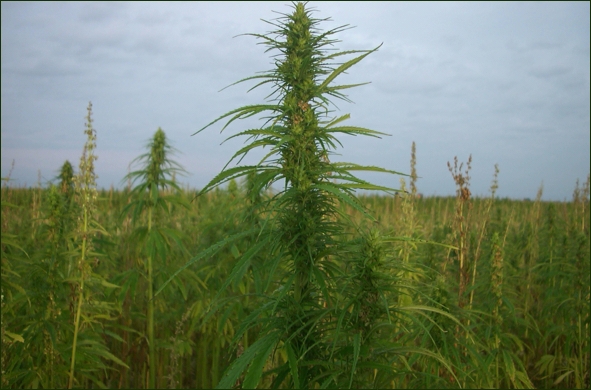
Vermont...Kentucky...Colorado...and 12 other states are now causing DC some trouble. Hemp, which was part of American life for centuries, is set to make more waves as American haters in DC try to confuse the issue so that Americans will not have raw materials and create jobs. Many senators and congressmen are in this anti-American league and will lie and act stupid to jerk Americans around. It is an ongoing saga, this is like inning 34,578 of the game. Enough to cause a revolution!
But at least it is good news, Vermont  (Live Free of Die) is standing up for America and for hemp.
This in from Lisa Rathke at the Associated Press:

WAITSFIELD, Vt. — Some Vermont farmers want to plant hemp, now that the state has a law setting up rules to grow the plant, a cousin of marijuana that’s more suitable for making sandals than getting high. But federal law forbids growing hemp without a permit, so farmers could be risking the farm if they decide to grow the plant that the Drug Enforcement Agency basically considers marijuana. Hemp and marijuana share the same species — cannabis sativa — but hemp has a negligible content of THC, the psychoactive compound in marijuana. Under federal law, all cannabis plants fall under the marijuana label, regardless of THC content. To grow marijuana for industrial purposes or research, a grower must register with the DEA and meet specific security requirements, such as installing costly fencing for a field of hemp. A national nonprofit group is pushing to change current law and move regulation of hemp farming from the DEA to the state. In the meantime, the group, Vote Hemp, does not recommend growing hemp while state and federal laws conflict. “It’s literally betting the farm,” says Tom Murphy, national outreach coordinator for the group. Farmers who grow it, or even conspire to grow it and import the seeds face jail time and the forfeiture of their land, he says. But it’s unclear how seriously the DEA will enforce it. Murphy says he’s heard that people have planted hemp on leased land in Colorado. “Now if somebody chooses to do it as civil disobedience, knowing full well what’s going to happen, then that’s on them,” he says. So far, 19 states have passed hemp legislation, including nine that allow its production. Eight states have passed bills calling for the study of hemp, while three states passed bills setting up commissions or authorizing the study of it, according to Vote Hemp. The states hope to nudge the federal government to change its law. John Vitko would like to grow hemp on his Vermont farm to use as feed for his chickens, now that Vermont has passed a law setting up rules to grow it. He doesn’t know where to find seed and knows he would be breaking federal law if he finds some and grows a small amount of the plant. With the cost of feed continually rising, he says hemp provides an economical way to feed and provide bedding for his 100 birds, whose eggs are used in the custard-based ice cream he sells to restaurants and in a dessert shop in Waitsfield, Vt. “It’s one of the few things that are manageable for a small farmer to handle,” he says of hemp, which doesn’t require large equipment to plant and harvest like corn does. “It’s complete protein,” he says. “It has all their amino acids. It’s a seed which birds like.” Hemp has been grown in the U.S. in the past to make rope, fabric and even the paper was used to draft the Declaration of Independence. Missing outNow most hemp products in the U.S. are imported from Canada, China and Europe and some farmers think the U.S. is missing out on a lucrative crop. U.S. Rep. Jared Polis of Colorado was granted a request to fly an American flag made of hemp over the capitol in Washington on the Fourth of July. He held the flag during the U.S. House debate in a hemp amendment to the farm bill that he introduced with Republican Rep. Thomas Massie of Kentucky and Democratic Rep. Earl Blumenauer of Oregon.The measure would have allowed colleges and universities to grow hemp for research in states where its cultivation is permitted. The amendment passed but the farm bill failed. “Support for our recent farm bill amendment demonstrated that there is growing consensus to revisit the antiquated drug laws that now keep U.S. farmers from participating in the $300 million hemp retail market,” Blumenauer says. “A hemp flag flown over the Capitol on the Fourth of July is a powerful symbol of this reform movement.” The bill that Democratic Vermont Gov. Peter Shumlin signed into law last month is intended to push the federal government to change its law after Canada reintroduced industrial hemp in the late 1990s. “The reason we want to push for a change is that hemp is potentially a valuable crop,” says Democratic Rep. Caroline Partridge, chairwoman of the Vermont House Committee on Agriculture and Forest Products. “People want to grow it. Hemp oil is a valuable product, and there’s so much of the hemp plant that can be used for very, very productive purposes.” - See more at: http://www.agweek.com/event/article/id/21329/#sthash.qsbyQ5fN.dpuf

Monday, July 22, 2013

Vermont sets guidelines for growing hemp

Farmer John Vitko picks strawberries in Warren, Vt.,
Photo credit: AP | Farmer John Vitko picks strawberries in Warren, Vt., who says he would like to grow hemp to feed his chickens. (June 24, 2013)


WAITSFIELD, Vt. - Some Vermont farmers want to plant hemp now that the state has a law setting up rules to grow the plant, a cousin of marijuana that's more suitable for making sandals than getting high.
But federal law forbids growing hemp without a permit, so farmers could be risking the farm if they decide to grow the plant that the Drug Enforcement Agency basically considers marijuana.
Hemp and marijuana share the same species — cannabis sativa — but hemp has a negligible content of THC, the psychoactive compound in marijuana. Under federal law, all cannabis plants fall under the marijuana label, regardless of THC content.
To grow marijuana for industrial purposes or research, a grower must register with the DEA and meet specific security requirements, such as installing costly fencing for a field of hemp.
A national nonprofit group is pushing to change current law and move regulation of hemp farming from the DEA to the state. In the meantime, the group, Vote Hemp, does not recommend growing hemp while state and federal laws conflict.
"It's literally betting the farm," said Tom Murphy, national outreach coordinator for the group. Farmers who grow it, or even conspire to grow it and import the seeds face jail time and the forfeiture of their land, he said. But it's unclear how seriously the DEA will enforce it.
Murphy said he's heard that people have planted hemp on leased land in Colorado.
"Now if somebody chooses to do it as civil disobedience, knowing full well what's going to happen, then that's on them," he said.
So far, 19 states have passed hemp legislation, including nine that allow its production. Eight states have passed bills calling for the study of hemp, while three states passed bills setting up commissions or authorizing the study of it, according to Vote Hemp.
The states hope to nudge the federal government to change its law.
John Vitko would like to grow hemp on his Vermont farm to use as feed for his chickens now that Vermont has passed a law setting up rules to grow it. He doesn't know where to find any seed and knows he would be breaking federal law if he finds some and grows a small amount of the plant.
With the cost of feed continually rising, he said hemp provides an economical way to feed and provide bedding for his 100 birds, whose eggs are used in the custard-based ice cream he sells to restaurants and in a dessert shop in Waitsfield.
"It's one of the few things that are manageable for a small farmer to handle," he said of hemp, which doesn't require large equipment to plant and harvest like corn does.
"It's complete protein," he said. "It has all their amino acids. It's a seed which birds like."
Hemp has been grown in the U.S. in the past to make rope, fabric and even the paper that used to draft the Declaration of Independence. The country even launched a "Hemp for Victory" campaign during World War II as supplies for other overseas fibers dwindled.
Now most hemp products in the U.S. are imported from Canada, China and Europe and some farmers think the U.S. is missing out on a lucrative crop.
U.S. Rep. Jared Polis of Colorado was granted a request to fly an American flag made of hemp over the capitol in Washington on the Fourth of July. He held the flag during the U.S. House debate in over a hemp amendment to the farm bill that he introduced with Republican Rep. Thomas Massie of Kentucky and Democratic Rep. Earl Blumenauer of Oregon. The measure would have allowed colleges and universities to grow hemp for research in states where its cultivation is permitted. The amendment passed but the farm bill failed.
"Support for our recent farm bill amendment demonstrated that there is growing consensus to revisit the antiquated drug laws that now keep U.S. farmers from participating in the $300 million hemp retail market," Blumenauer said. "A hemp flag flown over the Capitol on the Fourth of July is a powerful symbol of this reform movement."
The figure Blumenauer referenced comes from a Congressional Research Service report that says the industry estimates that U.S. retail sales of hemp-based products may exceed $300 million per year.
The bill that Democratic Vermont Gov. Peter Shumlin signed into law last month is intended to push the federal government to change its law after Canada reintroduced industrial hemp in the late 1990s.
"The reason we want to push for a change is that hemp is potentially a valuable crop," said Democratic Rep. Caroline Partridge, chairwoman of the Vermont House Committee on Agriculture and Forest Products. "People want to grow it. Hemp oil is a valuable product, and there's so much of the hemp plant that can be used for very, very productive purposes,"
The Vermont law sets up procedures and policies for growing hemp. A grower must register with the state agriculture secretary and provide a statement that seeds used do not exceed a certain concentration of THC.
The grower also must allow the hemp crops to be inspected and tested at the discretion of the Agriculture Agency, which warns growers that cultivating and possessing hemp in Vermont is a violation of federal law.
It's too late this growing season in Vermont for Vitko to grow hemp, but he hopes to plant just an acre of the plant next spring if the rules are worked out.
"I'm going to be a little farmer that's growing hemp, they've got bigger problems than me," he said of the DEA.

Tuesday, May 28, 2013

Hemp for Victory screening in Vermont

NEWS RELEASE — Rural Vermont
May 24, 2013
CONTACT
Robb Kidd (802) 505-1540
robb@ruralvermont.org
Event in Brattleboro will celebrate passage of Vermont’s new Hemp law and include a screening of the classic film “Hemp for Victory”
Montpelier – Rural Vermont, in conjunction with the national hemp advocacy group Vote Hemp, will be hosting a Hemp Victory Celebration on June 5, 2013 from 5:30pm – 9:00pm at the Hooker-Dunham Theater & Gallery located at 139 Main Street, #407 in Brattleboro, Vermont.
The event will include two special viewings of the short 1942 USDA propaganda film “Hemp for Victory” at 5:45pm and again at 8:30pm. In addition to the film presentations, we will feature Vermont legislative updates by Rural Vermont Organizer Robb Kidd and national legislative updates by Vermont resident and Vote Hemp Co-Founder/Board Member Eric Lineback. Guest appearances by Vermont farmers and policy leaders, as well as free samples of hemp product samples, are also planned for the evening.
The Hemp Victory Celebration is part of the National Hemp History Week campaign, and this year we will be highlighting the positive work that Vermonters have done to contribute to this widespread effort to restore hemp as an agricultural crop for Vermont. At this time we are optimistic that Governor Shumlin will sign the recently-passed hemp bill (S.157) which provides a simple, commonsense regulatory structure for growing hemp in Vermont. “With Senator Leahy’s recent pledge of support for a hemp amendment to the federal Farm Bill, Vermont is cultivating a ‘hemp renaissance’ with its strong leadership on the issue,” states Robb Kidd of Rural Vermont.
“In this currently tough and challenging economic climate, allowing our farmers to once again produce hemp is a smart move for Vermont. We have the opportunity to be leaders in this exciting and promising emerging ‘green’ industry,” adds Eric Lineback of Vote Hemp.
Will Allen, farm manager of Cedar Circle Farms in East Thetford, already has plans to purchase a nearby tract of land and begin growing hemp as soon as the law is enacted. “Hemp gives farmers another quality crop to grow in rotation, producing renewable raw materials both to sell and process in the field,” Allen says.

Wednesday, May 22, 2013

Patrick Leahy supports ammendment to Farming Bill that would permit hemp

WASHINGTON -- Judiciary Committee Chairman Patrick Leahy (D-Vt.) on Tuesday signaled to advocates that he would support an amendment to the farm bill that will legalize industrial hemp production, according to Tom Murphy of Vote Hemp. Leahy's office, he said, told the group Rural Vermont that he'd be backing the effort, and a Leahy aide confirmed his support to HuffPost.

Leahy's backing is a major boost, because his committee oversees the Drug Enforcement Administration, which has jurisdiction over hemp, despite the fact that it's not a drug. His support is also a critical momentum swing because he had previously objected to inserting the provision into the farm bill based on jurisdictional concerns. Senate Minority Leader Mitch McConnell (R-Ky.), a hemp backer, requested late last Monday night, the day before the farm bill came up for consideration, that Leahy grant a waiver of his jurisdiction, a request he declined. It was tough timing for McConnell: Leahy was in the midst of marking-up the historic immigration reform bill working its way through his panel.
In January, however, Leahy sent a strongly worded letter to the DEA asking why it had not been granting permits in recent years to hemp producers, and citing increased state support for domestically grown hemp. The DEA, in its reply, pointedly refused to refer to the plant as hemp, preferring cannabis or marijuana instead.
“Under the Controlled Substances Act (CSA), cannabis is a schedule I controlled substance regardless of its potency,” Eric J. Akers, the DEA’s deputy chief of congressional and public affairs, wrote in response, saying he believed the current regulations on hemp were adequate.
About eight people have applied to grow industrial hemp since 2000, he said, with half being approved and the rest denied because they had insufficient security.
The DEA is concerned that looser regulation of hemp would be “readily exploited by drug seekers,” including manufacturers of “hash oil,” Akers wrote.
The proposed amendment to the farm bill was introduced Monday by Sen. Ron Wyden (D-Ore.), and would exclude industrial hemp from classification as “marihuana,” removing it from the DEA’s purview.
It is cosponsored by McConnell, Sen. Rand Paul (R-Ky.) and Sen. Jeff Merkley (D-Ore.).
"For me, what's important is that people see, particularly in our state, there's someone buying it at Costco in Oregon," Wyden told HuffPost. "I adopted what I think is a modest position, which is if you can buy it at a store in Oregon, our farmers ought to be able to make some money growing it."
If the hemp measure can make it through the Senate, it stands a reasonable chance in the House, where Speaker John Boehner (R-Ohio) has expressed openness to it.

Tuesday, May 07, 2013

Vermont: Grow Hemp or Die

Rep. Carolyn Partridge, D-Windham, chair of the House Agriculture Committee. Photo by Andrew Stein
Last week, the House Agriculture and Forest Products Committee unanimously voted to create a state-sanctioned process to grow hemp, despite federal regulations essentially prohibiting the action.
Under the bill, hemp is defined as Cannabis Sativa with a tetrahydrocannabinol, or THC, concentration of 0.3 percent or less. The low-potency form of marijuana is touted in the bill for its long-standing market presence and strength in industries like textiles, clothing, bio-fuel, paper, cosmetics and more.
Rep. Teo Zagar, D-Barnard, supports the bill. “The governor likes to say we have an agricultural renaissance happening, and I think this bill could accelerate that,” Zagar said. “Hemp is an amazingly versatile, valuable and productive crop that could serve a number of needs in Vermont and give farmers a bunch of new tools.”
The House Agriculture Committee re-drafted S.157, which passed out of the Senate at the end of March. The bill would replace a Vermont statute that permits the growing of industrial hemp, but only when federal regulation permits it.
The new provision, however, runs afoul of federal regulations, and House members say Congress must step in to legalize hemp.
“We’ve got to send a message,” said Rep. Carolyn Partridge, D-Windham, who chairs the House Agriculture Committee. “This is the kind of message I think will mean something to the federal delegation, and Sen. Leahy’s committee has a hemp bill before them.”
In January, Sen. Patrick Leahy wrote to the Drug Enforcement Administration asking for information about the way in which the agency regulates hemp. Last week, Leahy received a response from Eric Akers, deputy chief of the DEA, reiterating that cannabis is an illegal, controlled substance.
“Under the Controlled Substances Act, cannabis is a Schedule I controlled substance regardless of potency,” Akers wrote. The DEA allows growers to register for the the legal cultivation of cannabis with a long list of requirements.
Akers wrote that he couldn’t tell the senator how many people had sought to cultivate cannabis for industrial purposes because the administration doesn’t track the information. Since 2000, three of eight applicants were granted permission to grow hemp, according to Akers, and one of the registrations is pending until “required security measures” are taken. The other four applicants were denied because they would not install the feds’ security measures.
“DEA believes the current regulatory framework governing these types of applications … remains adequate,” Akers concluded. “In this vein, please note that even those cannabis plants that have a relatively low THC concentration provide a substantial source of psychoactive material that would be readily exploited by drug seekers — for example, manufacturers of ‘hash oil’ — if inadequate security measures were tolerated.”
The registration process that the State of Vermont would impose under the House bill would be much more lax than the federal law. It would require the grower to submit to the Secretary of Agriculture his or her name and address, a statement that the cannabis variety does not exceed the state potency threshold, and the location and acreage of the hemp parcels. The bill would give the Agriculture Secretary the power to leverage an annual $25 registration fee for administration purposes.
The Vermont registration literature would also come with the following caveat: “Federal prosecution for growing hemp in violation of federal law may include criminal penalties, forfeiture of property, and loss of access to federal agricultural benefits, including agricultural loans, conservation programs, and insurance programs.”
One person who might be willing to risk such penalties is Rep. Will Stevens, I-Shoreham, who owns Golden Russet Farm.
“I’ll look into the option as part of my management plan,” Stevens said. “I’d be happy to look at it as part of our crop rotation. If hemp fits into that, fine. And if we can figure out ways to harvest it and market it, even better.”
Robb Kidd, an organizer for the advocacy group Rural Vermont, said he knows numerous farmers who are interested in the prospect. Rural Vermont has been advocating for the legalization of industrial hemp production for almost a decade. He says the bill that passed out of the House Agriculture Committee is the group’s “ideal, dream bill.”
“Times have changed dramatically,” he said. “Everybody has realized the economic opportunity. They have realized we need to get this moving, and the federal government delay is not helping.”
Correction: Rep. Teo Zagar represents Barnard, not Woodstock.

Sunday, March 24, 2013

Vermont hemp debate positive

Vermont Considers Legal Hemp. So far this year several states are at this stage, or beyond, but the federal government still opposes hemp and must be lobbied. Please remember to sign the petition to the White House at www.minawear.com/about-us/
Below is an article by Mat McDermott:


Image via Hemp Report

For decades Vermont has draped its political feet on either side of the proverbial fence, with one leg being highly progressive and the other highly conservative. If there's one thing that unites the two, it's a sense of craggy individualism and independence. Most recently, that unlikely union manifested in 29 towns voting to oppose tar sands exports, the state enacting a ban on fracking, and two attempts to mandate labeling of GMO ingredients.

And now, a proposed bill (H.490) would, if passed, see industrial hemp cultivation legalized and regulated in the state beginning this July 1. This flouts federal law, of course, which has long forbidden hemp farming, with the DEA apparently unwilling to differentiate between hemp and its cousin, marijuana, costing the nation potentially millions in revenue. Curiously, it's also now legal to import into the United States finished hemp products, from clothing to seed.

Which brings us back to H.490. The bill is being spearheaded by Teo Zagar, a documentary filmmaker now representing the towns of Barnard, Hartford and Pomfret, following the resignation of former Rep. Mark Mitchell in 2011. I had a chance to speak with Zagar* about the motivations for not waiting around for the Feds to approve hemp, the bill's chance of success, and whether Vermont might be joining Washington and Colorado with marijuana legalization anytime soon.

MOTHERBOARD: Since Vermont already had a bill that would regulate hemp production, once the Feds legalized it, why are you introducing this bill--which strips out that delaying language--now?

When I joined the legislature last year, my first day driving to Montpelier, I'm on 89 heading north, not knowing what to expect. I didn't know what committee I'd be on. When I get there, the Speaker calls me into his office and says, "You're on Agriculture." I was surprised, but I was really pleasantly surprised because there's a lot new agriculture in my town. It's been totally transformed by that.

I go into the Ag committee room. There's this poster, from World War II, which says, "Grow Hemp for the War". I asked the committee chair what the deal is, in Vermont, with hemp. Obviously it's illegal federally, so no one does it, but we have a precedent with medical marijuana going around federal laws. So why isn't hemp being grown?

It's just such a commonsense thing to do. You'd think it shouldn't take a lot of work to let it through [at the Federal level]. But I have no faith in that process, that it'll have any good outcome for the state of Vermont, or any other state for that matter. Our relationship with the Feds is challenging, and complicated, and often gets in the way of us being able to do the things that the vast majority of Vermonters want to do and think is right.

I'm not an expert in hemp. I just know that it can be used for so many different things, that it's more environmentally friendly in terms of how it's grown and processed than the alternatives, and—the big reason why it has some chance of success here in Vermont—is because of the economic potential, the jobs.

Hemp for Victory! (1942) called for a sizable bounty increase--50,000 total acres--of hemp for 1943, a 14,000-acre bumper crop over 1942, for everything from shoes to naval tow-lines
Do you think bill represents a chance for Vermont's oftentimes split political personality to unite? It seems to me there should be.

I definitely do. If a good bill comes to the floor, there will be support. It's such common sense. It's completely irrational that it was prohibited in the first place. Our Vice-chair of the Agriculture Committee is a Republican; the Chair is a Democrat. I don't want to speak for them, but there will be Republican support, because it's common sense. It's a no-brainer. It'd be good for Vermont. We have all these deficits and shortfalls in our funding. We're trying to patch things up, going about it in really potentially dangerous ways by raising taxes on certain things. This would have such a positive effect.

OK, so let's assume the bill passes. What do you expect the federal reaction to be?

I think a much greater precedent has been set with medical marijuana. I'm not equating marijuana with hemp, though they're already linked in many people's minds. Hemp is a much less controversial issue. It's far more controversial that it's prohibited in the first place. Turning that around, once there's momentum behind it, will happen. And it'll happen quickly.

The real question is who will be the first one? Who will put themselves out there? Because you're facing possible forfeiture of your land rights, if the Feds choose to follow the rules that are in place.

Let's muddy the waters a bit. Should this pass, what are the chances that Vermont will go down the road that Washington State and Colorado have taken, and legalize marijuana?

There was actually a bill put forward that I signed onto (H.499).

Decriminalization is the first step. That's been in the works for a few years. It was held up last year; it looks like it might have a chance this year. But, the decriminalization issue is controversial enough. There's not enough of a clear political sense of it for there to be enough support for it in the state. The legalization? We can't talk about that until we have some consensus on decriminalization, and have the support of the Vermont people. It's a hugely complicated issue. There's a lot of unknowns. It's common sense. It's another common sense thing.

Who will be the first one? Who will put themselves out there?

The legalization bill, which was really controversial for me to sign--unless you read it, you'd just think I want there to be a free-for-all for drugs, which is the exact opposite. The bill calls for the regulation and taxation of marijuana.

What's happened in other places is that once you end the prohibition of marijuana, once you remove it from a black market that causes far more harm in society--because it shares a market with more harmful drugs, the money going to less savory characters, the Mexican drug cartels and maybe terrorists--if you end prohibition and just regulate it, you're probably going to have a net-positive result, if it's done right. There'd be an age restriction, so it'd still be illegal for kids. It'd probably reduce access for kids, if it's regulated appropriately. But I don't see that happening for years.

Monday, March 18, 2013

List of US states that are supporting hemp

A quick overview of states' activity re hemp legislation is useful at this time. Most states have cultivated hemp at some time, so there is a record for many to go forward with this initiative; however, there are many states to go.
And then of course there is federal approval needed, which Mina Hegaard is working on with her
petition at www.minawear.com/about-us/ 
Please sign, and if your state is not already looking into hemp, please get in touch with us here and we would love to help out!

So far,  31 states have introduced pro-hemp legislation and 19 have passed pro-hemp legislation.

Eight states (Colorado, Maine, Montana, North Dakota, Oregon, Vermont,Washington, and West Virginia) have defined industrial hemp as distinct and removed barriers to its production.

Three states (Hawaii, Kentucky, and Maryland) have passed bills creating commissions or authorizing research.

Nine states have passed hemp resolutions: California, Colorado, Illinois, Montana,New Hampshire, New Mexico, North Dakota, Vermont and Virginia.

Eight states have passed hemp study bills: Arkansas, Illinois, Maine, Minnesota, New Mexico, North Carolina, North Dakota, and Vermont. Many other states have done studies without legislative directive.

Saturday, April 02, 2011

THE LAND OF LINCOLN SAYS NO TO HEMP

The GOP's first president came from a hemp growing state: Illinois. His father-in-law was a Southern plantation owner who grew hemp. The same party today is against hemp; it is not new information to most of you that the Founding Fathers grew hemp. The former president, what would he think? But more importantly, the present president, also from Illinois, what is he doing about it? Nothing. Both parties (the present POTUS is a Democrat) have little to offer the US, which is sowing more and more cotton which dries up the water supply.

And while they filibuster, we lose. Illinois last week voted against the legalisation of hemp, joining the ranks of South Dakota, California and Vermont. In contrast to this, Canada, China and all of the EU countries can grow it.

This week I got email from two people in Uganda about growing it, and they are now in touch. Hopefully they will be able to get the seeds they need, and line up a buyer - there are hemp shops in South Africa, where the legality of growing hemp is a grey area. It would be ironic if the next jar of hemp seed oil sold in Illinois is grown in Uganda...just now what they buy is mostly Canadian. But, if US legislators would act more like Washington, Jefferson and Lincoln, whose faces are on the currency that is actually made with hemp - Illinois could be raising a cash crop. It's sad...what can we do?


Thursday, June 05, 2008


2B OR NOT 2B

Much speculation exists as to why bees are dying off in Colony Collapse Disorder, and we have covered a good amount of that here. Mobile phone masts and verroa mites are two suspects, but now there is a hypothesis that ethonal, or rather the byproducts of ethanol, are killing the bees. Killer ethanol. However, there may be a bias to this theory, in that there certainly are interests which desire to keep us away from any alternative energy. On the other hand, we need to look at this and give an answer either way.

Eric Pollitt of Global Hemp has been keeping me informed about the ethanol and corn use debate, his part of the world is Illinois and they know a thing or two about corn there, which is a ubiquitous crop, along with soy. The two monopolistic agrobusinesses can be quite selfishly motivated, we need to grow other crops just to keep a balance. And if we are to produce ethanol, having of course answered the question about its effects on the hymonoptera - fancy word for bees and their congeners, we need to look at whether corn is the most appropriate crop to grow for it. At present hemp is still illegal in Illinois, even though it was once prevalent there. The latest on the legal status of hemp is that in Vermont, the state legistaure voted overwhelmingly in favour of cultivation, and the governor sensibly let this pass into law. However, there is the federal government to deal with next, and we can see what happens by looking at the recent case in North Dakota where the top Republican in the state legislature is suing the feds over their right to cultivate what the Fouding Fathers grew.

Hopefully the states will win, and the feds will buzz off.

Wednesday, February 20, 2008

NEWS FROM THE HIA
The press team at HIA and VoteHemp have been busy in the US. From Vermont, good news comes in the form of the passage of H267, the hemp bill which was passed 126-9. In Wisconsin, however, AB 146 is having a hard time getting a floor voice, despite a vote of 9-0 last year to recommend passage. The bill's sponsor, Rep. Gene Hahn, is on his last term. HIA suggests that people get on to this and send a postcard to Assembly Speaker Michael Huebsch and Assembly Majority Leader Jeff Fitzgerald. The struggle continues in North Dakota, where Dave Monson (himself a politician, GOP) has filed an appeal to the US Court of Appeals for the Eighth Circuit in regards to their case against the DEA, which was dismissed in District Court last November.
On more trendy notes, the fashionistas are well into hemp in New York, where Donatella Versace, Behnaz Sarapfour, Ralph Lauren, Donna Karan Intl., Isabel Toledo and Doo.Ri showed off their hempen apparel at Gotham Hall. A display at Barney's Madison Avenue store will be on display from 1-12 Feb and will include hemp creations.
Also from the US, Vote4Hemp has just done an interview with me, and listeners can tune in at www.time4hemp.com In the future, expect to catch an interview with Green Party favourite Cynthia McKinney!