Showing posts with label Teo Zagar. Show all posts

Tuesday, May 07, 2013

Vermont: Grow Hemp or Die

Rep. Carolyn Partridge, D-Windham, chair of the House Agriculture Committee. Photo by Andrew Stein
Last week, the House Agriculture and Forest Products Committee unanimously voted to create a state-sanctioned process to grow hemp, despite federal regulations essentially prohibiting the action.
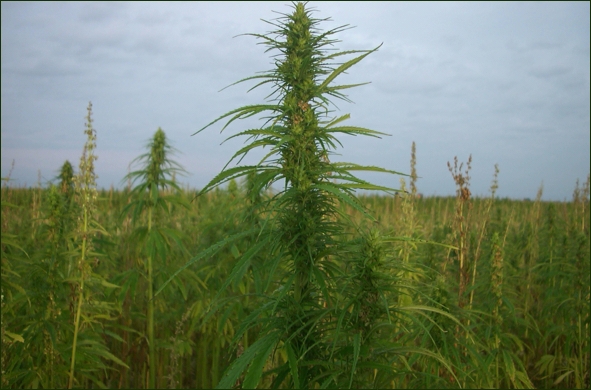
Under the bill, hemp is defined as Cannabis Sativa with a tetrahydrocannabinol, or THC, concentration of 0.3 percent or less. The low-potency form of marijuana is touted in the bill for its long-standing market presence and strength in industries like textiles, clothing, bio-fuel, paper, cosmetics and more.
Rep. Teo Zagar, D-Barnard, supports the bill. “The governor likes to say we have an agricultural renaissance happening, and I think this bill could accelerate that,” Zagar said. “Hemp is an amazingly versatile, valuable and productive crop that could serve a number of needs in Vermont and give farmers a bunch of new tools.”
The House Agriculture Committee re-drafted S.157, which passed out of the Senate at the end of March. The bill would replace a Vermont statute that permits the growing of industrial hemp, but only when federal regulation permits it.
The new provision, however, runs afoul of federal regulations, and House members say Congress must step in to legalize hemp.
“We’ve got to send a message,” said Rep. Carolyn Partridge, D-Windham, who chairs the House Agriculture Committee. “This is the kind of message I think will mean something to the federal delegation, and Sen. Leahy’s committee has a hemp bill before them.”
In January, Sen. Patrick Leahy wrote to the Drug Enforcement Administration asking for information about the way in which the agency regulates hemp. Last week, Leahy received a response from Eric Akers, deputy chief of the DEA, reiterating that cannabis is an illegal, controlled substance.
“Under the Controlled Substances Act, cannabis is a Schedule I controlled substance regardless of potency,” Akers wrote. The DEA allows growers to register for the the legal cultivation of cannabis with a long list of requirements.
Akers wrote that he couldn’t tell the senator how many people had sought to cultivate cannabis for industrial purposes because the administration doesn’t track the information. Since 2000, three of eight applicants were granted permission to grow hemp, according to Akers, and one of the registrations is pending until “required security measures” are taken. The other four applicants were denied because they would not install the feds’ security measures.
“DEA believes the current regulatory framework governing these types of applications … remains adequate,” Akers concluded. “In this vein, please note that even those cannabis plants that have a relatively low THC concentration provide a substantial source of psychoactive material that would be readily exploited by drug seekers — for example, manufacturers of ‘hash oil’ — if inadequate security measures were tolerated.”
The registration process that the State of Vermont would impose under the House bill would be much more lax than the federal law. It would require the grower to submit to the Secretary of Agriculture his or her name and address, a statement that the cannabis variety does not exceed the state potency threshold, and the location and acreage of the hemp parcels. The bill would give the Agriculture Secretary the power to leverage an annual $25 registration fee for administration purposes.
The Vermont registration literature would also come with the following caveat: “Federal prosecution for growing hemp in violation of federal law may include criminal penalties, forfeiture of property, and loss of access to federal agricultural benefits, including agricultural loans, conservation programs, and insurance programs.”
One person who might be willing to risk such penalties is Rep. Will Stevens, I-Shoreham, who owns Golden Russet Farm.
“I’ll look into the option as part of my management plan,” Stevens said. “I’d be happy to look at it as part of our crop rotation. If hemp fits into that, fine. And if we can figure out ways to harvest it and market it, even better.”
Robb Kidd, an organizer for the advocacy group Rural Vermont, said he knows numerous farmers who are interested in the prospect. Rural Vermont has been advocating for the legalization of industrial hemp production for almost a decade. He says the bill that passed out of the House Agriculture Committee is the group’s “ideal, dream bill.”
“Times have changed dramatically,” he said. “Everybody has realized the economic opportunity. They have realized we need to get this moving, and the federal government delay is not helping.”
Correction: Rep. Teo Zagar represents Barnard, not Woodstock.

Sunday, March 24, 2013

Vermont hemp debate positive

Vermont Considers Legal Hemp. So far this year several states are at this stage, or beyond, but the federal government still opposes hemp and must be lobbied. Please remember to sign the petition to the White House at www.minawear.com/about-us/
Below is an article by Mat McDermott:


Image via Hemp Report

For decades Vermont has draped its political feet on either side of the proverbial fence, with one leg being highly progressive and the other highly conservative. If there's one thing that unites the two, it's a sense of craggy individualism and independence. Most recently, that unlikely union manifested in 29 towns voting to oppose tar sands exports, the state enacting a ban on fracking, and two attempts to mandate labeling of GMO ingredients.

And now, a proposed bill (H.490) would, if passed, see industrial hemp cultivation legalized and regulated in the state beginning this July 1. This flouts federal law, of course, which has long forbidden hemp farming, with the DEA apparently unwilling to differentiate between hemp and its cousin, marijuana, costing the nation potentially millions in revenue. Curiously, it's also now legal to import into the United States finished hemp products, from clothing to seed.

Which brings us back to H.490. The bill is being spearheaded by Teo Zagar, a documentary filmmaker now representing the towns of Barnard, Hartford and Pomfret, following the resignation of former Rep. Mark Mitchell in 2011. I had a chance to speak with Zagar* about the motivations for not waiting around for the Feds to approve hemp, the bill's chance of success, and whether Vermont might be joining Washington and Colorado with marijuana legalization anytime soon.

MOTHERBOARD: Since Vermont already had a bill that would regulate hemp production, once the Feds legalized it, why are you introducing this bill--which strips out that delaying language--now?

When I joined the legislature last year, my first day driving to Montpelier, I'm on 89 heading north, not knowing what to expect. I didn't know what committee I'd be on. When I get there, the Speaker calls me into his office and says, "You're on Agriculture." I was surprised, but I was really pleasantly surprised because there's a lot new agriculture in my town. It's been totally transformed by that.

I go into the Ag committee room. There's this poster, from World War II, which says, "Grow Hemp for the War". I asked the committee chair what the deal is, in Vermont, with hemp. Obviously it's illegal federally, so no one does it, but we have a precedent with medical marijuana going around federal laws. So why isn't hemp being grown?

It's just such a commonsense thing to do. You'd think it shouldn't take a lot of work to let it through [at the Federal level]. But I have no faith in that process, that it'll have any good outcome for the state of Vermont, or any other state for that matter. Our relationship with the Feds is challenging, and complicated, and often gets in the way of us being able to do the things that the vast majority of Vermonters want to do and think is right.

I'm not an expert in hemp. I just know that it can be used for so many different things, that it's more environmentally friendly in terms of how it's grown and processed than the alternatives, and—the big reason why it has some chance of success here in Vermont—is because of the economic potential, the jobs.

Hemp for Victory! (1942) called for a sizable bounty increase--50,000 total acres--of hemp for 1943, a 14,000-acre bumper crop over 1942, for everything from shoes to naval tow-lines
Do you think bill represents a chance for Vermont's oftentimes split political personality to unite? It seems to me there should be.

I definitely do. If a good bill comes to the floor, there will be support. It's such common sense. It's completely irrational that it was prohibited in the first place. Our Vice-chair of the Agriculture Committee is a Republican; the Chair is a Democrat. I don't want to speak for them, but there will be Republican support, because it's common sense. It's a no-brainer. It'd be good for Vermont. We have all these deficits and shortfalls in our funding. We're trying to patch things up, going about it in really potentially dangerous ways by raising taxes on certain things. This would have such a positive effect.

OK, so let's assume the bill passes. What do you expect the federal reaction to be?

I think a much greater precedent has been set with medical marijuana. I'm not equating marijuana with hemp, though they're already linked in many people's minds. Hemp is a much less controversial issue. It's far more controversial that it's prohibited in the first place. Turning that around, once there's momentum behind it, will happen. And it'll happen quickly.

The real question is who will be the first one? Who will put themselves out there? Because you're facing possible forfeiture of your land rights, if the Feds choose to follow the rules that are in place.

Let's muddy the waters a bit. Should this pass, what are the chances that Vermont will go down the road that Washington State and Colorado have taken, and legalize marijuana?

There was actually a bill put forward that I signed onto (H.499).

Decriminalization is the first step. That's been in the works for a few years. It was held up last year; it looks like it might have a chance this year. But, the decriminalization issue is controversial enough. There's not enough of a clear political sense of it for there to be enough support for it in the state. The legalization? We can't talk about that until we have some consensus on decriminalization, and have the support of the Vermont people. It's a hugely complicated issue. There's a lot of unknowns. It's common sense. It's another common sense thing.

Who will be the first one? Who will put themselves out there?

The legalization bill, which was really controversial for me to sign--unless you read it, you'd just think I want there to be a free-for-all for drugs, which is the exact opposite. The bill calls for the regulation and taxation of marijuana.

What's happened in other places is that once you end the prohibition of marijuana, once you remove it from a black market that causes far more harm in society--because it shares a market with more harmful drugs, the money going to less savory characters, the Mexican drug cartels and maybe terrorists--if you end prohibition and just regulate it, you're probably going to have a net-positive result, if it's done right. There'd be an age restriction, so it'd still be illegal for kids. It'd probably reduce access for kids, if it's regulated appropriately. But I don't see that happening for years.