Showing posts with label THTC. Show all posts

Monday, February 01, 2010

FARMING TODAY
The BBC has a show called Farming Today, and about once a year they discuss hemp. Recently Peter Tat of the BBC contacted me and picked my brain about the state of the industry in the UK, and I gave him a rough history and told him rather candidly what I thought, which is along these lines:


Hemcore, a company started in the '90s, had the monopoly over seed sales, and the gov regluated which varieties, so only about 19, out of 1,000, could be sold. Basically Hemcore farmers produced low grade fibre for insulation and/or seed for oil. Paper and textiles did not catch on. I know a few people who would like to start these up, notably Jane Pasquill in Cornwall, but this takes more commitment than just chopping up bast for car door insulation. Paper would be easier, but even when I made 3 tons, or rather commissioned 3 tons under the aegis of the well known and colourful character John Hanson of Lyme Regis, we bought French (they are the largest EU hemp growers) hemp and had it pulped in Spain. It got made in Scotland, that was a decade ago. I still have a bit left.
So why are there not more? Most hemp businesses can buy processed goods from China, and most companies in the UK are low budget affairs, I believe Sativa is the most well funded and well run. Two brothers in West London, which became the hub of the hemp industry, with them and THTC, myself and my co-authors, and Bobby Pugh who lives and now warehouses his stock in West London. So Hemcore sold seed, dealt with farmers, did some of the middleman bit, and then went bust I understand, though I cannot in all fairness speak for them. We are sort of on other sides of the fence, as the Guardian article pointed out. We talked and got along, but they did their thing and I did mine. Obviously the issue of farmers not getting paid recently has caused a dent in the overall confidence in the hemp industry, and caused others to state that there ought to be more companies that sell seed. I understand there was a company that did, but it was not well funded.

The future holds a bright possibility - as hemp, without human bickering, politics, etc., is a simple crop - 80-100 days, easy to harvest, etc. My suggestion has always been grow it for seed, as there is a proven market (over 12 seed/oil bottlers in the UK, they seem to do well) and then use the stems for paper, then rough textiles.

Why? Because then a proven product can make the money while other products which require experimentation, milling, etc. can be worked out. Years ago BioRegional made field trials and only went for textile hemp, which as I told them, would not work out. The UK is not a milling country. They could, however, have made coarse matting, rugs, etc., and/or paper.

Peter asked about the future of the hemp industry in the UK, and I told him the future is what we make of it. With greater understanding, and a more realistic and gradual approach, we can make of it an industry that will provide much needed jobs in the UK. I recall also mentioning that there was little support from the Labour government! I got more from the Lib Dems, people like Baroness Jenny Tonge for instance, and the Tories - Boris Johnson took my book and even sent a copy to his illustrious dad, Stanley. Are the Tories going to get in and grow more hemp? I hope so, but we will see. Some of the BBC's questions remain to be answered.

Sunday, May 18, 2008


THIRST AT THE BREWERY

Today the Hemp for Victory tour headed for Brick Lane in East London, where Fashion Made Fair was in its last day. The Black Eagle Brewery was the location, just a stone's throw, incidentally, from Fashion Street. New faces, familiar faces, overall it was a good networking day. Green Knickers was the first stop - like many hemp based manufacturers, it is based in London - St. Julians Farm Road in SE27. Next to their stand was Goodone which uses recycled clothing, including offcuts from The Hemp Trading Co., whose CEO Gav Lawson was on hand. Jenny Ambrose from Enamore was having another successful day, sharing a booth with Equa, which is a shop in London that sells hemp and other natural fibre clothing.

Katherine Hamnett came at noon, dressed in black, to sell her white T shirts which contain not a shred of hemp, made as they are of cotton. After the appearance of the dark clad one I went on stage with my hemp material and a pitcher of water, from which I poured a glass, and then emptied it onto the floor. This, I noted, is what happens when we buy cotton. Then, after some words on the cultivation of hemp, peeling fibres from the stalks I had in hand from the BioRegional Harvest in Essex, the talk went on, with the jar of water intermittently emptied, to illustrate what goes on when we buy cotton. We are destroying the world with frivolous do-gooder ideas, but it feels good, and it makes the journalists go wild. Oh how they love to promote our cotton loving charade - and how some go so far as to degrade hemp because they are stupid.

This is all rather blunt, whether written on a blog or spoken to an audience. It would be easily defused, however, if it were not correct. Not one person could rebut these facts then, not one person has posted a comment in rebuttal on this blog over the years, and not one journalist has penned a riposte. The hacks do mutter under a bit their breath, and one audience member told us stories of their own abuse at the hands of journalists who did not want to hear so far as to criticism. Louisa Pearson of the Scotland on Sunday earlier this year wrote that hemp was the fibre to use, not cotton, and this did not sit well with some of her colleagues, including those at the liberal press which sells out to cotton and SUVs.

By the end of my talk the jar was empty, and I was thirsty; but the water was gone. And this is what has happened in lands where cotton has been grown, but, let's face it, the press gang do not suffer as a result. They can promote the Katherine Hamnett cotton picking crew and make an easy pay cheque. But not for long, as the water is finite, and lack of it is leading to war. Already the Aral Sea is down to less than 50% of its capacity due to cotton cultivation, and other waterways are similarly under threat. But does this matter to Katherine Hamnett? She is cool in the eyes of many - but let them go and live in Central Asia and it won't be long before they are tired of T shirt signings and other stunts designed to promote this pest crop.

Another aspect of cotton cultivation is that textiles made from it wear out sooner than hemp - but this keeps the likes of Sir Phillip Green and Hamnett in business. It also keeps up pressure to use arable land, which comprises but 4-5% of the earth's surface, for threads - mostly consumed by Westerners who do not realise what a farce this is. They do not face the reality of food scarcity, they are not involved in food riots which have gripped other nations so badly these last few months. They do not think for a second about minimising the land used for textile production, as long as they can feel cool and look sexy they think everything is OK. And to add to the irony of this, we label cotton 'organic' and then charge more for what took more water from the farmers. What would Katherine Hamnett say to these facts? Maybe she can quote Marie Antoinette; "let them eat cake."

That is the attitude in the journalistic circles in the West. Food riots are not their problem, and as many journalists have told me, not without annoyance at my persistent warnings on these issues, their job is only to report the events. Like vultures, they profit at others' loss.

Much to the credit of my listeners, my points were heard, and I had a good talk with them afterwards. If there were any journalists in the crowd, maybe I will be pilloried in the press tomorrow - but who cares, I was stabbed by crack dealers and paedophiles in NY when I spoke up, and threatened by pickpockets when I stopped their work. They are no worse than the idiot churnalists who support the likes of Hamnett - in fact, they do more harm than crack dealers since crack does not deplete the water supplies, it does not take diminish our food supply. Not that I want them around either.

One interesting contact was Uscha Pohl, editor of VERY and very-eco.com. We have both lived in NYC, and she updated me on the latest in recycling in the Big Apple: there is no recycling, Mayor Bloomberg just decided to hell with that; as a major player in the press, he is also not in support of hemp. Not surprising that lots of cotton is worn in his city, and that people who have money fill entire apartments with clothes, thus putting a burden on the land, which means that some people will have to starve to death in order to make way for land apportioned to cotton production.

What does the future hold? Do the men take the lead and oust the pests so that we use our land intelligently to produce for our needs, or do idiots hacks and greedy clothing manufacturers gang up with the drug dealers, paedophiles and pickpockets whom I so despised? We cannot be silent and also be real men. The world is under threat from cotton - which is by far the world's most cultivated textile crop - 1m acres alone in California - and this threat needs be addressed. I will be calling on journalists to act - with a view to naming and shaming all those who do not - and this includes the do-gooder but know-nothing hacks who promote whatever has the most money for PR.

Monday, April 21, 2008


REVIEW OF ECO-CHIC: THE FASHION PARADOX

This book, with almost the same name as a book published earlier this year by Matilda Lee of the Ecologist, finally gives a bit of space to hemp. Sandy Black is the author, and she appears to have done a good bit of research, albeit UK-centric, and one might note rather Brighton-centric at that. The bulk of the book is on cotton/organic cotton, and yes there is mention of the fact that cotton drinks up too much water, there is even an image of the Aral Sea, showing its depletion.

Chapters tend to feature specific designers, and as such tend to read as infomercials, complete with full colour pictures from their ads, with some emaciated looking models. This is a paperback coffee table book, but not just all images and breezy text, it serves as a history of the UK eco-fashion industry from the late '90s to the present. The very good resource guide and somewhat good bibliography (it does include Hemp for Victory, which was pointed out to her by Bobby Pugh of The Hemp Shop in Brighton). There is no index, sadly.

Hemp is mentioned on pp. 21, 42, 62, and 126-131. There was a fair amount of effort put into this, going so far as to feature THTC quote Mina Hegaard and Chris Conrad, but marred by the obvious inconsistency of stating on one page that hemp cultivation was illegal in the UK, then talking about hemp cultivation in the UK, along with a picture of such; which those in the know assert is from Bobby Pugh's hemp farm in the mid-'90s.

Sandy Black is well known in the UK for her work in fashion, and this book will be passed around and read by fashionistas from Brighton to Glasgow. What she has had to say about hemp has been basically positive and accurate, but one does wish she had said more, or used images of hemp clothing rather than images of buds, leaves and a farm.

Eco-Chic is published by Black Dog Press, London. 4to, pbck, pp. 256. ISBN- 978 1 906155 09 4

£24.95/$39.95

Monday, December 31, 2007


REVIEW OF 2007
Lots happened this year, hemp was on the increase yet again worldwide. Dave Monson in North Dakota ended up suing the US Gov over his right to grow hemp, a fight which made the front page of the New York Times in July. In South Dakota, the Lakota Indians continued their fight to grow hemp and ended up seceeding from the US, a story the mainstream press does not know what to do with. Good luck to them! White man no damn good...except for me!
Talking of no damn good stupid white men, good old Boy George managed to get corn growers to use their crops for ethanol, the entire plants going to ethanol production, which made the press decide ethanol was no damn good. None of them picked up on the fact that you use the edible part of the plant first then use the waste parts for ethanol. Must have missed science in school.
Others who missed science in school flew around the world in jets telling us not to fly around the world in jets and sold us the global warming scare. Then it was found out that these scaremongers were raking in $50m and treating people like dirt. Those who paid attention in science class posed inconvenient facts, which were ignored by the likes of George Monbiot and the Guardian.
So much nonsense from that paper got some people irked, including a 9-year-old who started jessthekid.blogspot.com Like may people, she is tired of pseudo environmentalists, especially the kind who support cotton. Organic cotton is now turning into a disaster, as it takes up more space and more water then cotton grown with pesticides. Here in the West we take water for granted, and pay lots of money to transport bottled water. You can see them gulping it down at the Guardian offices, where they are helping to destroy the rain forests by refusing to switch to hemp based paper. So for 2008, we are on a mission to put the spotlight on all the newspapers we can - and this includes eco papers as well. Stop using wood paper!
And stop wearing cotton - the writing on the wall reads: "Real Environmentalists Wear Hemp!"
And real environmentalists use hemp bags - a point we made this year with the creation of the hemp bag in answer to all these cotton bags, including the Anya Hindmarch bag. The press was on her, with the Evening Standard taking her to task on the front page in April.
I am still eating the hemp hearts and hemp candy bars that Roger Snow so kindly sent me from Rocky Mountain Grain Products in Canada. I shared them with Cynthia Mckinney when she visited London in September. What a trip that was! There was a bunch of oddballs trying to host her, including the David (the Messianic) Shayler! I make no apology for jumping in and getting her a nice place to stay and some good press, including Big Issue. Its founder, John Bird, was someone who encouraged Mina Hegaard of Minawear when she was just starting that business. They loved McKinney, who wore an orange jump suit outside the US Embassy in protest at Guantanamo Bay, but I doubt she wore it on the plane back (or she would be herself in Guantanama Bay); instead, she had hemp - given to her by Gav Lawson of THTC. While she was here she met with Tony Juniper of Friends of the Earth and also Baroness Jenny Tonge - her ladyship (who hates being addressed so formally - but I like to stand on ceremony) has been a great supporter of the hemp movement here in the UK and we gave her the 100% organic hemp bag mentioned above. The bag, by the way, is basic, I call it ugly, and I am proud of it as a mother owl her chicks. It takes the mick out of every single bag out there because it is hemp!
Later in the year I met a remarkable woman, Jane Pasquill of House of Hemp and saw some really great multi-colour apparel. She wants to harvest hemp next year in Cornwall, and may yet kickstart the UK hemp milling industry.
By email and phone I met also Remy Chevalier, who is Gurdjieff's grandson. His sister lives here in London, the renowned artist CM Chevalier, whom I have yet to meet. We may just do so at the opening to ECO in Chiswick, where hemp sheets by Jilly Cholmondeley will be on sale. Expect it to open in January.
But I am jumping ahead and there is so much more to tell about 2007...maybe just best to suggest you check it out here as I blogged constantly this year. A review of which would not be complete without mentioning Sagar Shah, who is just now in India. He went to visit the famous octogenarian falconer Sirdar Mohamed Osman in Dehra Doon, whose books we publish (on hemp paper) at the Eryr Press. Sagar started his own website for hemp - http://www.hempandnaturalfibres.ning.com/ and will be giving me a report back from India.
So now I can jump ahead again...with a wish to make 2008 the best year ever for hemp - let's kick the press into action and get everyone wearing hemp so we can keep our trees and not use up everyone's water!

Thursday, October 25, 2007


ETHICAL FASHION CONTEST
Today on the hippy shopper site a contest for ethical fashionistas was announced. Contestants must be between 18-30 years of age. Submission starts today until 31 January, 2008. There will be a panel of 9 judges, including Jenny Ambrose of Enamore and the Lawson Brothers of The Hemp Trading Co.
So I'm thinking about lying about my age and entering my ugly hemp bag, which we just love wearing aroung posh spots just to raise awareness of hemp. But would that be ethical? And would the ugly hemp bag win? Could I bribe the judges?
By the way, I am refusing to sell the bag to people I don't like, especially stupid celebrities. Now that's ethics.

Thursday, January 04, 2007


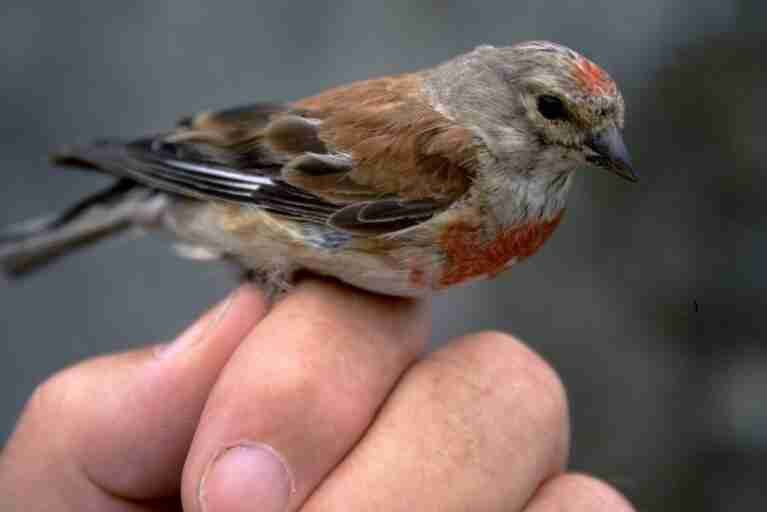
HEMP FOR THE BIRDS

Right and left are images of Carduelis cannabina (adult male). As its name implies, it eats hemp, which is in fact one of the most sought after seeds by graminivorous birds, including finches, buntings, sparrows, quail, crows, pigeons, doves, woodpeckers, thrushes and larks. The Linnet is Palearctic, so you may not see it in North America unless it is a rare migrant, in which case the twitchers well flock like hummingbirds (OK, that's not ornithologically correct, but rather a line stolen from Bernie Taupin, and if one is going to steal a line, it might as well be from Bernie). For those who want to demonstrate their ornithological aptitude, bring some hemp along to the sighting. Hemp is given to birds worldwide, a longstanding practice of which I write in Hemp for Victory.

You might want to show some sartorial eloquence as well; if so, wear hemp threads. Companies such as Minawear in the US and THTC in the UK are now producing T shirts with bird designs.