Showing posts with label Paul Hornback. Show all posts

Friday, May 10, 2013

More from the Huffington Post

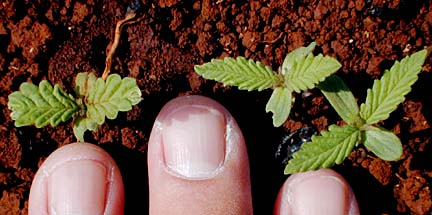
HEMP SPROUTS
Hemp sprouts.

More from the Huffington Post by Ryan Grim and Lucia Graves: This venue started to take up this issue rather late and reluctantly, it is one that we have contacted many times in the past and have been totally ignored, so we do welcome the fact that they are finally working on it, but truth to tell, they only did so when it started to go viral and they had no other choice. They did little more than the mainstream press - in fact less, as the LA Times has had an excellent feature on hemp a few years back and this year in an editorial wholeheartedly endorsed it. But for what (little) it's worth, here is the HP contribution, better late than never...for those of you really willing to work on this, there is a petition to the White House to sign at:
www.minawear.com/about-us/


WASHINGTON -- A chance encounter at last weekend's Kentucky Derby may have given the hemp industry the break it's been looking for since the crop was banned in 1970, when the federal government classified it as a controlled substance related to marijuana.

Kentucky's Commissioner of Agriculture James Comer, a Republican, told The Huffington Post that he was at a private pre-derby party on Saturday when he found himself chatting with House Speaker John Boehner (R-Ohio) and his chief of staff Mike Sommers. Comer talked shop.

The topic at hand was the fate of the hemp industry in Kentucky, which could become the first state in the nation to successfully lobby for federal approval. Boehner and Sommers were interested enough to invite Comer and the chief supporters of the state's legalization bill to a meeting in Washington.

On Tuesday night, Boehner sat down with Comer and the bill's lead backers, Republican state Sen. Paul Hornback and Democrat Jonathan Miller, a former Kentucky state treasurer who currently serves on the Kentucky Industrial Hemp Commission (and who also moonlights as a HuffPost blogger). Sommers confirmed the meeting took place.

According to Comer, Boehner told the trio he would talk with Senate Minority Leader Mitch McConnell (R-Ky.) about how a federal bill might be moved forward to remove hemp from the list of controlled substances. On Thursday, Comer and the Kentucky legislators plan to meet with McConnell, who surprised observers back home by endorsing Hornback's hemp bill, a move that quickly brought the state GOP in line.

The most likely path to passage for hemp legislation runs through the farm bill, as an amendment. That bill goes up for debate in the Senate Agriculture Committee next week -- fortuitous timing for hemp.

"I was impressed with his knowledge of this issue," Comer said of Boehner. "At the end he said, 'This is funny, because this issue's been around a long time. My daughter was talking about this 15 years ago.' So this is something he knows a lot about. And the difference today, as opposed to 10 years ago, is the only people who were pushing this issue 10 years ago were the extreme right or left, or people who wanted to legalize marijuana." Comer spoke with HuffPost and a Roll Call reporter in the office of Sen. Rand Paul (R-Ky.), their home base while they're in Washington, working with the group Vote Hemp, which advocates on behalf of the industry.


Kentucky's hemp bill, Senate Bill 50, became law in April and allows Bluegrass State farmers to grow industrial hemp for the first time in decades. Kentucky Gov. Steve Beshear and local police have expressed concerns that allowing farmers to cultivate hemp would enable them to disguise the cultivation of illegal marijuana, which looks very similar to hemp but contains much higher levels of THC, the psychoactive agent in cannabis. Experts dismissed that argument, noting that cross-pollination between hemp plants and marijuana plants would significantly reduce the potency of the marijuana and devalue the crop. Beshear and Kentucky police remained skeptical, though the governor did not ultimately veto the legislation, letting it become law without his signature.

The chief objection, Miller said, came from a small element of law enforcement who feared "that this is a slippery slope, that they would lose money with marijuana eradication." The Kentucky Chamber of Commerce, however, backed the bill.

Now Kentucky awaits federal action to approve the plant's cultivation. The Drug Enforcement Administration currently classifies hemp as a Schedule I substance with "a high potential for abuse," alongside heroin and LSD, despite the fact that industrial hemp has zero potential for abuse.

Comer said that the DEA has so far declined to meet with him or the Kentucky lawmakers, so they are hoping instead to meet with the Department of Justice, which oversees the DEA. He said that meetings with the Departments of Energy and Agriculture went well.

Paul and McConnell are co-sponsoring federal legislation that would remove the plant from the DEA's list of illegal drugs. A similar effort is also underway in the House, boosted by members of Kentucky's congressional delegation, with the exception of Rep. Harold Rogers (R). Should those efforts fail, the senators have vowed to seek a waiver from the DEA granting Kentucky special dispensation to grow hemp.

Other states that have also passed local laws allowing hemp licensure include Vermont, North Dakota, Maine, Montana, Oregon, Washington, West Virginia and Colorado. While some have sought federal validation of state laws from the DEA, those efforts have been unsuccessful to date.

Huffington Post and the liberals embrace hemp

Hemp is starting to go viral: Doonesbury characters, top GOP leaders, green gurus, yoga practicioners, you name it - this is the year for hemp. The left almost got left out - while the GOP took the lead - and is now trying to jump back in; Jonathan Miller has this to say on the Huffington Post, Ms. Huffington is just now getting on the bandwagon - another rich lefty from the wine and cheese circuit - whose $ ironically comes from oil - after divorcing her rich husband - so I might have some ironic comments after so many years of campaigning so hard and seeing the lefties wait and wait till they can make some $ off of it and try to take credit for what they did not support till others came along and did it. But for what it's worth, here is their rant as another log on the fire, and I welcome it, even if with sceptisism - note that Ms Huffington is NOT wearing any hemp - most of these lefties talk a lot and do nothing. Not that I am in the right - consider me a plain talking take-no-nonsense centrist:


This week, I have the honor and pleasure of joining Kentucky Agriculture Commissioner James Comer as we meet in Washington, D.C. with an impressive swath of Obama Administration officials — from the White House to the U.S. Departments of Agriculture and Energy to the Environmental Protection Agency — to seek their help in securing the federal legalization of industrial hemp.
Think the pairing of this proud progressive and the conservative Comer to be somewhat unusual? Let me further blow your political assumptions: We will be joined in our advocacy by the unlikely alliance of GOP Establishment favorite Senate Minority Leader Mitch McConnell, Tea Party poster child Senator Rand Paul, and liberal Democratic stalwart Congressman John Yarmuth.
This rare burst of No Labels-style Washington bi-partisanship is merely a reflection of the broad, deep and diverse support for hemp’s legalization among Kentuckians of all political persuasions. This March, the Kentucky General Assembly overwhelmingly passed Senate Bill 50 — sponsored by GOP Senate Agriculture Committee Chair Paul Hornback, and strongly championed by Democratic House Minority Leader Rocky Adkins — that establishes an administrative and law enforcement structure for hemp growers should the crop be legalized at the federal level, and would empower Kentucky to jump to the front of the line and establish itself as the national leader on the crop once federal approval was granted.
How have liberals, conservatives and everyone in between found such common ground? It’s because the case for hemp legalization is so compelling:
  • While support for legalizing hemp’s distant cousin, marijuana, remains controversial (I support legal pot; Comer does not), hemp is not marijuana. The two plants are quite distinct in the way that they appear physically and are cultivated agriculturally. Moreover, smoking hemp can’t get you high; it just might make you feel a little stupid that you tried. Industrial hemp has less than one percent THC, while marijuana ranges from 5 to 20 percent THC content.
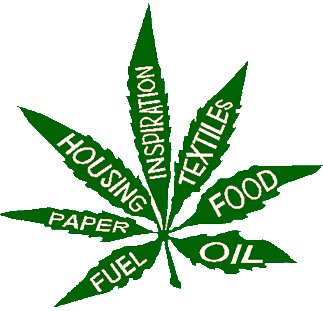
  • Legalized industrial hemp production could emerge as a prolific cash crop that could bring hundreds of millions of dollars of revenue to Kentucky, and many billions of dollars to the United States. There are more than 25,000 uses for the crop, including rope, clothing, automotive paneling and door installation — even makeup.
  • Most exciting to me — as a clean energy advocate — is hemp’s application as a clean-burning alternative fuel. Hemp burns with no carbon emissions and produces twice as much ethanol per acre as corn. While bio-fuels critics have raised alarms at the diversion of food products into fuel production — causing spikes in food prices — hemp has no such negative economic side effects. As the U.S. struggles with the dual enormous challenges of climate change and dependence on foreign oil, industrial hemp could become a powerful weapon in America’s energy independence arsenal.
Only one thing stands in the way of this exciting economic and environmental progress: The U.S. Drug Enforcement Agency (DEA) continues to classify hemp as an illegal, controlled substance, regardless of its THC potency.
Accordingly, Comer and I — and our bipartisan federal delegation — will be lobbying Obama Administration officials this week to provide Kentucky a waiver from the federal regulations; or better yet, to encourage the DEA to reclassify industrial hemp as legal, regulated agricultural crop.
But while our lobbying efforts will hopefully produce some progress, the key power is in your hands. While a majority of Americans now support legalized marijuana — and presumably a much larger majority supports legal hemp — only when you share your support with your elected officials will they feel the political pressure to take action.
Here are three very simple things that you can do — right now, at your computer — to register your support for legalized industrial hemp and pressure Washington to fulfill the people’s will:
  1. Contact your Senators to urge them to co-sponsor and support S. 359, the Industrial Hemp Farming Act of 2013. introduced by Sens. Ron Wyden (D-OR) and Rand Paul (R-KY) that would exclude hemp from the definition of marijuana and allow states to legalize and regulate the product.
  2. Contact your Congressman and urge him or her to co-sponsor the companion bill in the House, H.R. 525, the Industrial Hemp Farming Act of 2013, introduced by Congressman Thomas Massie (R-KY).
  3. Sign the following petition to President Obama, urging his Administration to lift the barriers to legalized hemp: www.minawear.com/about-us/

Tuesday, May 07, 2013

Kentucky hemp movement moves on DC

This year there is more energy than ever in the hemp movement, states are voting overwhelmingly to make it legal - and they are going to Washington to get their rights
respected. The more names we have on the petition to the White House the better - please add yours if you have not already - www.minawear.com/about-us/
Article below is from WDRB in Kentucky:
 
LOUISVILLE, Ky.  -- The push to grow hemp in Kentucky is headed to Washington, DC. starting tomorrow. Hemp supporters will try to convince the feds to allow a new cash crop in Kentucky.
The bill to regulate hemp production in Kentucky passed after a huge fight here at the State Capitol. Now the focus shifts to the Nation's Capitol.
Paul Hornback is a lifelong farmer and a state senator who is pushing for the legalization of industrial hemp.
He's among those who will travel to Washington seeking a federal waiver to allow hemp production in Kentucky.
"Well, I hope that common sense sets in. I hope they'll realize that we sold over 400-million dollars worth of the product here in the U.S. last year. That it's a market that not only our farmers are missing out on but our retailers are missing out on somewhat.There's a lot of opportunity out there," said Hornback.
"We're meeting with the DEA. We're meeting with the U.S. Dept.of Agriculture. We're having meetings with high-ranking people in the Obama Administration," said Kentucky Agriculture Commissioner James Comer.
Comer will argue that producing hemp will produce jobs.
"This will create badly needed tax revenue. We need tax revenue. We're not going to raise taxes, so we've got to generate economic activity. Industrial hemp will do that."
"As a farmer, I'm always looking for opportunities. And I think this is an opportunity for our producers," said Hornback.
Hornback says the hemp effort has bipartisan support from Kentucky's congressional delegation. He's hoping that despite the notorious Washington gridlock, this effort will yield a harvest.
"What are the chances for anything in Washington getting done? Outside of that, I think the chances are pretty good."
"We've got the regulatory framework. We've already identified the processors. They've identified a lot of farmers that want to grow it. So, we're ready to go here in Kentucky. Hopefully we can make a good pitch," added Comer.
Comer hopes to have an answer from the Obama administration by this fall to meet his goal of having a crop in the ground by next spring.

Monday, May 06, 2013

James Comer goes to Washington

Agriculture Commissioner James Comer will lead a bipartisan delegation on a three-day trip to Washington, D.C., this week to urge the federal government to allow industrial hemp production in Kentucky. The group will meet with White House officials, representatives of federal agencies, members of Congress and others.


“My colleagues and I will make the case that industrial hemp has the potential to create revenue and jobs,” Commissioner Comer said. “Thanks to the efforts of the General Assembly, we also can say that Kentucky is ready to set up a regulatory framework that will enable us to not only revive our hemp industry but do it in the right way.”

Comer will be joined by state Sen. Paul Hornback and former state treasurer Jonathan Miller (see Miller’s take on the trip here. Comer and Miller are scheduled to meet with representatives of the U.S. Department of Agriculture and hold a series of meetings with members of Congress, including Kentucky Reps. John Yarmuth and Thomas Massie.

Sen. Hornback is scheduled to join Comer and Miller for meetings with representatives of the White House, the Department of Energy, the Environmental Protection Agency, Sens. Mitch McConnell and Rand Paul, and Reps. Ed Whitfield, Andy Barr, and Brett Guthrie.

Members of Kentucky’s congressional delegation have signed a letter asking the federal Drug Enforcement Administration for clarification of regulations regarding industrial hemp.

Hornback sponsored the legislation that creates an administrative framework, to be managed by the Kentucky Department of Agriculture, for industrial hemp production in Kentucky. The legislation calls for hemp demonstration projects by the University of Kentucky and other public universities that choose to participate. Under the bill, the Kentucky State Police are required to conduct background checks on applicants for licenses to grow industrial hemp.

The bill passed in the final hour of this year’s legislative session in March.

From Kentucky Department of Agriculture

Saturday, April 06, 2013

Kentucky governor allows hemp bill

Today was the day many were waiting for - to see if Kentucky governor Steve Beshear would appove
or veto the hemp bill. He did neither. He took the coward's way out and just let it go. But at least we can't complain. Next step is federal approval, and for that we now have almost 1,000 signatures on the petition to the White House - www.minawear.com/about-us/ Feel free to add your name if you have not already. Below is the article by Joseph Gerth in the Courier-Journal:

Gov. Steve Beshear will allow legislation permitting hemp production in Kentucky to become law without his signature, and supporters of the measure say they plan to turn their attention toward Washington in hopes of knocking down federal barriers to the crop.


The bill will officially become law at the end of the day today but will have no real effect unless the federal government declassifies hemp as an illegal drug or grants Kentucky a waiver that would allow people to start growing the plant, which is native to Kentucky.
“We’re going to be figuring out a strategy about going to Washington and trying to get a waiver or trying to get them to lift the ban,” said state Rep. Paul Hornback, R-Shelbyville, the primary sponsor of the bill.
Agriculture Commissioner James Comer, a key proponent of the legislation, said he plans to talk next week with U.S. Sen. Rand Paul and U.S. Rep. John Yarmuth about how to obtain federal permission to grow the crop. “I hope farmers can start putting seeds in the ground next spring.”
Hemp fiber, oil and seed have a variety of uses, including clothing and fuel. Hornback said the market for hemp products in the United States is more than $400 million annually, which he expects to increase if cultivation resumes in the country.
Hornback and Comer argued that, as one of the first states to allow hemp farming, Kentucky could attract processors they speculate could employ hundreds. Opponents have been concerned that legal hemp would complicate efforts to spot illegal marijuana plants. The two are identical in appearance, but hemp has a fraction of marijuana’s intoxicating ingredient THC.
Hornback hopes to arrange meetings with people from the White House, the U.S. Department of Agriculture and hemp processors to demonstrate how Kentucky would license hemp farmers and conduct tests to make sure they are growing hemp and not marijuana.
Beshear said he was torn between Kentucky’s need for more farm income and concern about hemp’s similarity to marijuana.
“I strongly support efforts to create additional legal cash crops for our farming communities. At the same time we have a tremendous drug problem in Kentucky, and I want to make sure that we don’t do anything that will increase that drug problem,” he said.
Hornback said it’s understandable that Beshear wouldn’t sign the bill because State Police Commissioner Rodney Brewer has opposed the measure, saying that it’s impossible for officers to tell the difference between hemp and marijuana.
“I still share some of the same concerns that our law enforcement officials have about the impact that hemp cultivation may have on our drug eradication efforts,” Beshear said. “But the bottom line is that (Senate Bill) 50 won’t allow industrial hemp to be grown or sold unless and until the federal government takes the very big step of legalizing the crop in some way.”
“I don’t take offense to that,” Hornback said. “I understand his position.”
Comer said he’s not surprised Beshear didn’t sign the bill. “The whole time I’ve been in Frankfort, nobody has rolled out the red carpet for me on this,” he said.
Under the law, the University of Kentucky will house the Kentucky Industrial Hemp Commission, which will oversee hemp production. But the state Department of Agriculture can — at the commission’s request — test industrial hemp to ensure it’s not marijuana, process license requests, coordinate commission meetings and provide financial accounting for the commission.
The plant is still classified the same as marijuana by the federal government and producing hemp in Kentucky would require either a change in that classification or a federal waiver. Kentucky’s two senators, Yarmuth, D-3rd District, and U.S. Rep. Thomas Massie, R-4th District, support changing the classification.
Paul and Yarmuth have promised to work to get a waiver for Kentucky that would allow hemp production to begin when the framework set out by the new law is in place.
Massie has filed a bill that would nullify the federal prohibition of hemp in states that have laws allowing it.
The measure was one of the most contentious of the 2013 legislative session, with Senate Republicans giving strong support in the early days but House Democrats blocking passage until the General Assembly’s final hours.
Democrats argued that the bill wasn’t necessary because an earlier law tied Kentucky’s hemp policy to whatever federal law is at that time.
But the bill, which Comer shepherded through the legislature, passed after a last-minute compromise.

Friday, March 29, 2013

Governor to approve or veto hemp bill in Kentucky


Now that Kentucky has voted for hemp, the governor has a few days to approve or veto; governors of other states have vetoed the hemp bills, including Arnold Schwarzenegger. So let's see...
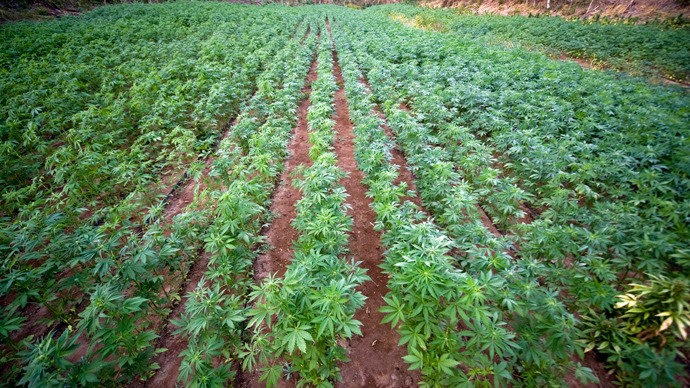
View of a marijuana field (AFP Photo / Alfredo Estrella)

The Kentucky legislature has agreed to allow industrial hemp to be produced within the state’s limits, a minor victory for many that will require the governor’s signature before the next step can occur.
Kentucky Gov. Steve Beshear (D) now has until April 6 to either veto the legislation or sign it into law, but even then the state won’t be allowed to simply start growing the plant to be used for anything from food to fuel: federal legislation outlaws production from coast to coast.
Even with Uncle Sam standing in the way, the state lawmakers that approved the measure say they are optimistic about having Washington overturn the federal ban. The group Vote Hemp says that the states of Colorado, Maine, Montana, North Dakota, Oregon, Vermont, Washington and West Virginia have all previously approved legislation that legalizes hemp production, but the federal mandate has made actually growing the crop impossible everywhere within the US since it is still considered a Schedule I drug. With Kentucky signing on to be the latest state looking to grow, though, things could soon change on a federal level.
“This historic legislation puts Kentucky in position to be first in line if and when the federal government legalizes production of industrial hemp,” Agriculture Commissioner James Comer said in a statement this week. “By passing this bill, the General Assembly has signaled that Kentucky is serious about restoring industrial hemp production to the Commonwealth and doing it in the right way. That will give Kentucky’s congressional delegation more leverage when they seek a federal waiver allowing Kentucky farmers to grow hemp.”
“As soon as the governor signs the bill, I’ll be on the plane to Washington” to seek a waiver, added Comer.
Sen. Rand Paul (R-Kentucky) issued a statement on Wednesday morning after the news was reported in order to thanks his fellow lawmakers for moving forward with something he says will be instrumental in kick-starting his state’s economy.
“I commend the Kentucky General Assembly for final passage of Senate Bill 50. I want to thank Kentucky Commissioner of Agriculture James Comer, Senate Agriculture Committee Chairman Paul Hornback and the members of the Kentucky Industrial Hemp Commission for their leadership and hard work in passing this legislation,” Sen. Paul said.
“Senate Bill 50 is an important step forward in the reintroduction of industrial hemp in Kentucky. I have pledged, along with Rep. John Yarmuth, to seek a waiver when a regulatory framework is in place. I will follow through on that pledge and I hope that Kentucky will soon start growing hemp, creating jobs and leading the nation in this industry again.”
Sen. Mitch McConnell (R-Kentucky.) also went on the record to urge for assistance from Washington as soon as possible to make harvesting hemp a reality.
"I will continue to work with Senator Paul on a federal approach that would enable Kentucky farmers to cultivate and profit from industrial hemp in a way that does not compromise Kentucky law enforcement's marijuana eradication efforts or in any way promote illegal drug use," he said.
Kerri Richardson, a spokesperson for Gov. Beshear, tells the Courier Journal, “The governor is going to review the bill and talk with law enforcement before making any decision.”
Federal restrictions with regards to marijuana began in the early 1900s, but those laws in turn outlawed the production of hemp which, while related to the illegal plant, has a number of desirable qualities and little-to-know detrimental effects.
“While marijuana has a potency range of 3 percent to 20 percent by dry weight of THC, industrial hemp is generally defined as having less than 1.0 percent THC,” says the Arizona Industrial Hemp Council.“Moreover, hemp contains a relatively high percentage of another cannabinoid, CBD, that actually blocks the marijuana high.  Hemp, it turns out, is not only not marijuana; it could be called ‘antimarijuana.’”

Tuesday, March 26, 2013

Last minute compomise possible for Kentucky bill

The struggle for hemp in Kentucky appears to have reached some kind of compromise, as Scott
Wartman in the Cincinnati Enquirer notes in bold below. There is mention of the federal ban, which the state hopes will be lifted - or a waiver for the state - what kind of lobbying is in place for this is not clear, but if this is an option it might be worth noting for others states - Colorado, for instance, has already made hemp legal but is under constraint with the federal ban. While this is all in the works, it is well worth signing the petition to the White House to have the ban lifted for all 50 states - www.minawear.com/about-us/ 


The bill that would establish regulations for an industrial hemp industry in Kentucky appears alive on the final day of the General Assembly.
House Majority Floor Leader Rocky Adkins, D-Sandy Hook, said he’s met with Sen. Paul Hornback,R-Shelbyville, who sponsored the bill, and others to reach an agreement on the bill that would pave the way for an industrial hemp industry in Kentucky should the federal government lift its ban on the crop or give Kentucky a waiver.
Adkins has pushed for a regulatory framework that includes more research of industrial hemp, administrative regulations enforced by the Department of Agriculture and law enforcement background checks for those growing hemp.
“The collaboration between those three components, in my opinion, makes the regulatory framework stronger and gives us the opportunity to be looked at seriously when we do sen an application in asking for a waiver,” Adkins said.

Monday, March 25, 2013

More obstrucion in Kentucky as Democrats add clauses to bill

The Democrats are at it again in Kentucky, sabotaging the opportunity to grow hemp and create jobs, possibly just because the GOP is backing it. That is why we need a Centrist Party in the US - these two parties are sucking the lifeblood out of everyone! And there does seem to be major opposition to this, for some reason, the most read post on this blog is a short one about starting just such a party. Is there that much interest in having a fresh, new party in the US, or are there that many intel agencies trying to prevent it - or both?

At any rate, the people suffer at the hands of both, this time the Democrats, who have not done much for hemp all these years, are to blame - and the overwhelming support for hemp in Kentucky is being disprespected by a handful. Janet Patton in the Herald Leader explains:


FRANKFORT — Supporters of legislation to license Kentucky farmers to grow hemp said the latest proposal by House Democratic leaders contains troubling provisions that could be deal-breakers.
A fourth version of the amendment proposed by House Majority Floor Leader Rocky Adkins, D-Sandy Hook, and Majority Caucus Chairwoman Sannie Overly, D-Paris, moves much of the oversight for hemp to the Kentucky State Police, who have opposed hemp production.
Earlier this month, Adkins attached such language to Senate Bill 50, and he and the bill's sponsor, Sen. Paul Hornback, R-Shelbyville, have been negotiating a potential compromise.
But that could be in jeopardy.
"The fourth draft of the House leadership amendment to SB 50 still hands way too many oversight powers to the KSP," said Tom Murphy, spokesman for Vote Hemp, a lobbying group that has monitored the legislation in Kentucky. "Why would one want to give such powers to KSP given their vehement opposition to hemp farming and their stated misinformation on the subject? ... SB 50 as is looks like the best way to go. It's well drafted and comparable with other states' legislation and laws."
Holly VonLuehrte, chief of staff for Agriculture Commissioner James Comer, said there also are concerns about unfunded mandates made to the University of Kentucky for research projects. The proposed language removes the hemp commission from the state Agriculture Department and attaches it to UK's research center.
Comer, who currently heads the hemp commission, would be become vice chairman.
VonLuehrte said Comer "is willing to step aside as chair, but is unwilling to accept punitive action toward the department or the hemp commission."
In a statement, Comer said: "We are chasing our tails with all these drafts. SB 50 is a simple bill and would pass easily. How much time and effort has been spent toward derailing this simple, very popular bill? And why?"
House Democratic leaders were meeting in caucus and not immediately available for comment, but House Speaker Greg Stumbo, D-Prestonsburg, said earlier that with Kentucky State Police involved, he is more inclined to support the bill.
"As long as the state police, the law enforcement community are satisfied, I think that goes a long way to satisfying a lot of the concerns that we have, people like I have," Stumbo said.
Hornback said earlier that he hoped to review the language by 4 p.m.

Read more here: http://www.kentucky.com/2013/03/25/2573767/hemp-negotiations-heading-for.html#storylink=cpy

Thursday, February 28, 2013

Cincinnati report on Kentucky hemp vote

The events in Kentucky are getting nationwide attention, earlier this month (posted here) there was a New York Times article, and now on www.cincinnati.com Scott Warman is covering the debacle in the Kentucky House where a democrat, that is with a small 'd', is delaying the vote. Read below:


Boos erupted when a vote didn’t happen Wednesday morning in the House Agriculture Committee to provide regulations for an industrial hemp industry.
Ag Committee Chairman Rep. Tom McKee, D-Cynthiana said a vote on Senate Bill 50 might happen this afternoon.
For two hours, members of the House committee heard testimony both for and against the bill that would set up qualifications for licenses to transport and grow hemp and provide GPS coordinates for each hemp field for easy tracking by law enforcement and other regulations. It would only take affect if the federal ban on hemp is lifted.
Then McKee abruptly put the committee in recess citing more questions from lawmakers and said the meeting will resume at 4:30 p.m.
“We ran out of time,” McKee said. “It was not the plan to run out of time. The plan was to vote.”
A committee substitute proposed in the House would scrap the original bill and instead call for more research. It would set up the “Kentucky Agriculture Experiment Station” that would research the potential economic impact and market viability of industrial hemp in Kentucky. Should the federal government lift its ban on industrial hemp or issue a permit to Kentucky, the proposed amended bill would allow the experiment station, in cooperation with the Kentucky Department of Agriculture and Kentucky State Police, to grow two five acre “demonstration fields” and issue a report to lawmakers by Nov. 29.
McKee called the committee substitute more aggressive because it would ensure the growing of some hemp as well as research into Canada’s hemp growing industry.
“We think the committee substitute is more aggressive than the bill itself because we are looking at doing total and complete research, including site visits to Canada and it would include the possibility of getting some in the ground in 2013 at the Agriculture Experiment Station,” McKee said.
McKee wouldn’t say whether the bill could get passed with or without the committee substitute.
“We would certainly look at it, the goal would be to adopt the committee sub,” McKee said. “If that doesn’t happen, I’m not sure what the next course of action is. We had a pretty good discussion. The house has been pretty much left out of these discussions so that’s why there were a lot of questions.”
Some accused the delay or block in vote as political.
“In my opinion, it is mostly political” said Sen. Paul Hornback, R-Shelbyville,the bill’s sponsor “There’s some frustration of mine, not only for this bill, but on other bills of mine. As a farmer, when you have an opportunity, you seize it.”
Ag Commissioner Jamie Comer, who has supported the bill, said he doesn’t know why a bill that enjoys the support of both Sen. Rand Paul and U.S. Rep. John Yarmuth as well as a litany of other support from both parties should become so politicized.
“This issue symbolizes what’s wrong with the Kentucky General Assembly,” Comer said. “The majority of the legislators want to do good things. They want to create jobs. They want to create jobs, want to help farmers, but it gets bogged down in political bickering. If the chairman of the committee would just let the bill be voted on, the bill will pass as is.”

Wednesday, February 27, 2013

Is Tom McKee trying to derail the hemp bill in Kentucky?

All eyes are on Kentucky, where the state overwhelmingly voted to support hemp, after both senators
endorsed it. But then there had to be a hitch, and from the report below, by Janet Patton, we are left to wonder if the democrats are not stooping that low that they would play politics with this and delay it just because it has a lot of GOP support. Let's hope that Tom McKee does not tamper with this and waste any more time.
Below is Patton's report:


The chairman of the state House Agriculture Committee plans to ask for major changes to a hemp bill, including calling for hemp field trials by the University of Kentucky rather than leaving it up to farmers.
Rep. Tom McKee, D-Cynthiana, said Tuesday that he plans to call for a committee substitute Wednesday morning that he said would be "more aggressive than the bill itself."
Advocates for the existing legislation questioned that assertion; neither bill sponsor Sen. Paul Hornback, R-Shelbyville, nor Agriculture Commissioner James Comer had seen the proposed changes before 5 p.m. Tuesday.
"I think it's an attempt to stall the bill," Hornback said of McKee's proposed changes.
Hornback said he met with McKee and was promised a look at the bill before the end of the day but called what he's heard "a travesty" that would kill the opportunity to create jobs in Kentucky.
Animosity over the late substitution erupted Tuesday on the House floor.
House Minority Leader Jeff Hoover, R-Jamestown, criticized McKee on the floor, accusing him of playing "gotcha politics" because Comer is a Republican. Hoover said that Senate Bill 50 received bipartisan support, passing the Senate 31-6, "and we're not even going to give it a fair hearing?"
Hoover called on McKee to have an up-or-down vote on the existing bill.
In response, McKee said the bill was being drafted and wasn't ready. He said he would call Comer as soon as it was available to discuss specifics.
"We feel like the sub moves the issue forward, that the commissioner can embrace it," McKee said. "He'll have a copy."
Earlier in the day, Comer's chief of staff, Holly VonLuehrte, said McKee also had not shared his changes with the Kentucky Industrial Hemp Commission. McKee sits on the hemp commission, which helped craft the language that the Senate passed earlier this month.
"Why play secrets and games with this? Why spring it on everybody at the last minute? Are we not going to get to see the committee sub until the meeting?" VonLuehrte asked. "It is incredibly disrespectful to not consult the body that's been working on this language for at least a year."
Hornback's Senate Bill 50 would set up a licensing framework for Kentucky farmers to grow hemp if federal restrictions are eased or if the Drug Enforcement Administration allows a waiver for the state to grow it.
McKee said his language probably would direct UK to pursue a DEA permit to begin studying the crop, which cannot be grown legally in the United States without a federal license.
"We'd like to see the UK experiment station get some in the ground this year," McKee said. "We're looking for an aggressive study, including some site visits to Canada. ... We very much support the industrial-hemp effort."
UK College of Agriculture Dean Scott Smith, who also is on the hemp commission, prepared a DEA permit a decade ago but never submitted it because the cost was expected to be prohibitively high and no funding was appropriated.
It is unclear how successful UK's application might be, how long it could take, or how much such an effort and research might cost. McKee said he is looking for a way to pay for it.
Smith issued this statement about McKee's proposal: "There are many unanswered questions about the cultivation of hemp in Kentucky, including suitability of various soil conditions and growth potential on various sites. If current legal and cost restrictions were alleviated, research to address those questions would clearly be within the mandated mission of the Kentucky Agricultural Experiment Station at the UK College of Agriculture. We would welcome the opportunity to develop much-needed, evidence-based information for growers and processors."
McKee said he thought the new language probably would receive the votes to pass the House committee Wednesday, and he is optimistic that it would have support on the House floor. Prospects for the hemp bill have been uncertain in the House, in part because of the objections of the Kentucky State Police, who have said that hemp cultivation might complicate marijuana eradication efforts.
Echoing House Speaker Greg Stumbo, D-Prestonsburg, McKee said licensing language in Hornback's bill is probably unnecessary because if federal laws change to distinguish hemp from marijuana, "there probably would be a federal licensing program."
On Friday, Stumbo's office issued a statement saying, "There is no need for additional state bureaucracy involving permits issued by a state Hemp Czar."
McKee said his new language is not an effort to stall the hemp bill that Comer, a Republican, and Hornback have lobbied for.
"Absolutely not," McKee said. "I think there's some things we can do while we wait for (federal) permits. Whether they come this year or not ... I think they're going to come sometime. I think our bill's going to put us in position to take advantage of whatever comes."

Read more here: http://www.kentucky.com/2013/02/26/2532515/mckee-to-amend-hemp-bill-to-call.html#storylink=cpy

Saturday, February 16, 2013

Kentucy votes to make hemp legal

News on hemp is making bigger and bigger waves, this in from USA Today:


Kentucky Senate votes to legalize hemp

A century ago, Kentucky produced the most hemp in the country.

FRANKFORT, Ky. — An effort to allow Kentucky farmers to grow hemp for a variety of products passed the state Senate on Thursday — and took a small step toward federal acceptance as well.
But it still faces steep odds, including skepticism from the governor and Kentucky State Police and the distinct possibility of being gutted in the state House.
STORY: Ky. lawmakers take opposite sides on hemp
BLOG: Hemp on cutting edge of green building
Backers of Kentucky Senate Bill 50 say Thursday's 31-6 vote could make Kentucky among the first in the nation to legalize the crop, potentially creating thousands of hemp-related jobs growing and processing the plant's fiber and seeds.
But Gov. Steve Beshear said he has doubts about legalizing the far weaker relative of marijuana as an industrial crop, citing state police concerns about complicating marijuana enforcement efforts. Even if the state legalizes hemp, the federal government would have to distinguish it from marijuana before cultivation could be allowed.
The federal government took a step in that direction Thursday when Sens. Mitch McConnell and Rand Paul, both Kentucky Republicans, joined Oregon's Democratic senators in sponsoring a bill that would remove hemp from the federal controlled substance list and define it as a nondrug — as long as it contains less than 0.3% tetrahydrocannabinol, better known as THC and the active ingredient in marijuana.
Marijuana has 3% to 15% THC.
"I am extremely proud of the Kentucky state Senate for its commitment to job creation in Kentucky," said Agriculture Commissioner James Comer, who has led the campaign to pass the bill along with Paul.
Kentucky would become the ninth state to remove barriers to the production of industrial hemp, according to Vote Hemp, a national group seeking to legalize the crop. Seven states — Hawaii, Indiana, Kentucky, New Hampshire, New Jersey, Vermont and Washington — have introduced bills have introduced bills so far this year.
"Today's bipartisan vote is the first step toward more opportunities for our farmers and jobs for Kentuckians," Comer said.
The bill now goes to the state House, where Speaker Greg Stumbo said it will have a "tougher time."
House may rewrite
Stumbo has suggested the bill may be overhauled to remove the rules for growing hemp and replace them with an economic impact study. Stumbo, a Democrat from Prestonsburg, Ky., and former state attorney general, has said he doesn't believe hemp has a market.
"It's not that we are saying, 'No,' " he said. "We are saying that the evidence doesn't show enough of a market to override the concerns that the law enforcement community has."
Beshear voiced similar concerns before the Senate vote.
"We really don't know anything about whether there's going to be a market for it yet," Beshear said. "The other concern is law enforcement. ... We've got a big drug problem in Kentucky, and I just want to make sure we don't do anything that will make that problem any worse."
The Kentucky State Police, the most vocal critic of the bill, didn't comment on the vote. The state police argues that allowing hemp production would hamper efforts to eradicate marijuana because the plants look very similar.
"Our position's very well known," Sgt. Rick Saint Blancard said, adding that the agency will enforce whatever laws are passed.
McConnell and Paul's U.S. Senate legislation is similar to a bill filed in the U.S. House last week by Rep. Thomas Massie, R-Ky., who represents much of northern Kentucky.
The House bill has 28 Democratic and Republican co-sponsors.
The debate Thursday on the Kentucky Senate floor mirrored previous arguments, both in Kentucky and across the nation.
"This issue in the big scheme of things is a nonissue," said state Sen. Chris Girdler, a Republican from Somerset, Ky., who questioned its economic benefit in voting against the bill.
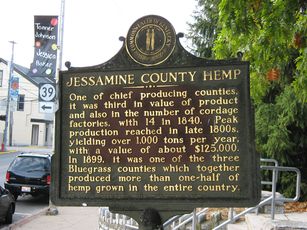
Hemp used to be used for making ropes and sailcloth until the federal government began restricting production after the 1937 Marijuana Tax Act. After World War II, its cultivation was phased out across the country. From the end of the Civil War until 1912, almost all hemp in the U.S. was grown in Kentucky, according to Oregon State University research.
State Sen. David Givens, a Republican from Greensburg, Ky., said he would prefer to approve a small, controlled growing study while the economics of hemp could be analyzed.
Seeking a chance
"Give us the opportunity to see how this works," said bill sponsor Republican Paul Hornback of Shelbyville, Ky., who also is a farmer. He said any study would be limited because growing the product isn't allowed in the United States.
But he said he's already heard from two companies interested in Kentucky taking action, including a Canadian hemp processor that would relocate to Kentucky and another that interested in using hemp fiber for concrete.
STORY: More states want federal OK to grow hemp
"If you're not first, you're probably last," Hornback said. China is the world's largest producer of hemp.
SB 50 would require growers to be licensed annually and undergo an Agriculture Department background check.
Each licensee would be required to plant a minimum of 10 acres, a provision meant to keep licenses from people who are not serious about the effort.
Growers would have to keep sales contracts for three years and provide names of hemp buyers to the department.

Tuesday, January 29, 2013

Hemp bill set for debate 11 Feb. in Kentucky

The fight for hemp is really heating up in Kentucky, the previous post was one about UNITE - a law enforcement group that has decided to go against the good of the state and fight against. One wonders if these cops would arrest George Washington or Thomas Jefferson for what they grew - and what made American then a strong nation?
Americans who love their country are fighting for the likes of Washington and what he knew was good - and are not stupid enough to think that a hemp field is a marijuana field. This is the argument that is put out to stall debate at every level - it causes political cowardice while the US goes broke. China is most likely laughing at this as they produce just about everything in Walmart - and of course, they grow hemp!
Please support Kentucky in any way you can - and also sign the petition to the White House at www.minawear.com/about-us/ so this issue can be settled for the good of the people in this country.
Below is the latest article by Bruce Schreiner of the Associated Press:


FRANKFORT, Ky. (AP) — The chairman of Kentucky's Senate Agriculture Committee sounded upbeat Monday about prospects for his bill that would regulate industrial hemp production in the state if the federal government lifts its decades-long ban on the crop that once was a Bluegrass state staple.
Republican Sen. Paul Hornback of Shelbyville said Monday he intends to bring the hemp bill up for a vote in his committee, which is expected to review the legislation at a Feb. 11 hearing. Hemp proponent U.S. Sen. Rand Paul is scheduled to appear at the hearing and put his political weight behind the measure.
"I feel very good about it getting through the Senate Ag Committee," Hornback said in an interview prior to a meeting of the Kentucky Industrial Hemp Commission. "I feel very good about (its prospects in) the full Senate."
The state General Assembly resumes its regular 2013 session next week. The hemp bill's outlook in the House is less clear. House Speaker Greg Stumbo, D-Prestonsburg, said recently it would be difficult to pass any bill that doesn't have the support of Kentucky State Police.
State police oppose the bill, raising concerns about law enforcement being able to distinguish between hemp and its cousin, marijuana.
Hemp and marijuana are the same species, cannabis sativa, but are genetically distinct. Hemp has a negligible content of THC, the psychoactive compound that gives marijuana users a high.
Later Monday, several anti-drug groups issued a release criticizing efforts to re-establish hemp in Kentucky. They expressed concerns that people would pose as hemp producers to further marijuana operations.
"It would be very enticing for someone to obtain a license to grow hemp, then divert a small part of their fields to growing illegal marijuana," said Jere Hopson, director of the South Central Kentucky Drug Task Force. "Law enforcement wouldn't be able to tell the difference without testing, and how would you even know which plants to test?"
Hemp supporters say that marijuana growers would not want to try to conceal their pot crop in a hemp field because cross-pollination would greatly weaken the potency of the marijuana.
Dan Smoot, vice president of Operation UNITE, an anti-drug group in southern and eastern Kentucky, said hemp advocates are "looking through rose-colored glasses" in promoting the plant's potential to boost the state's economy.
"Hemp is not in demand, would cause more problems than benefits," he said in the release.
Hornback, a tobacco farmer, said he would like to find common ground with law enforcement skeptics of hemp. He said he understands their position opposing a crop that for now is banned by the federal government.
"Until the federal law changes, they should be opposed to it," Hornback said "That's their job."
Kentucky has the ideal climate and soils to grow hemp, he said, and the crop offers "an opportunity for niche markets." he said.
The versatile crop could create jobs in processing and manufacturing, Hornback said. At least a couple of Kentucky companies — a tobacco processor and a seed supplier — have expressed interest in branching out into hemp if the crop becomes legal again.
Hemp can be turned into paper, clothing, food, biofuels, auto parts, lotions and many other products.
Senate President Robert Stivers, R-Manchester, has signaled that it is up to Hornback to decide whether to call for a committee vote on the bill.
Stivers' spokeswoman, Lourdes Baez-Schrader, said that state Agriculture Commissioner James Comer and state police representatives have been invited to speak to Senate Republicans at a caucus meeting next week. Comer, a Republican, has championed the effort to re-establish hemp as a legal crop in Kentucky.
Comer said Monday that hemp legislation is supported by both House and Senate majorities.
"There's a desperate need out there to create some jobs and this is one bill that will do that," he said.
Asked about Stivers' position on the bill, Baez-Schrader said, "He knows that some members have concerns about industrial hemp and understands those concerns."
The bill has an ally in Senate Majority Floor Leader Damon Thayer, R-Georgetown, who has signed on as a co-sponsor.
"I do think the hemp bill has some momentum but there are still some members who have questions," Thayer said recently. "I think a hearing will be able to help answer many of those questions."
Hornback's hemp bill would set up a framework to regulate the crop if the federal government gives its blessing for it to be grown legally in Kentucky.
Under the bill, the Kentucky agriculture department would license growers and inspect production. Growers would undergo criminal background checks and give GPS coordinates for their fields. Licenses would be valid for one year and would be recorded with state police. Anyone convicted of a felony within the last 10 years would not be eligible for a license to grow hemp.
Comer said the bill would put Kentucky at the forefront of the hemp movement if the crop is legalized by the federal government.
"If this bill passes, for the first time in a long time Kentucky will be the first state to do something and not the last," Comer said.

Bad cops in Kentucky


Lexington herald-Leader


Two law enforcement groups on Monday criticized efforts to revive hemp production in Kentucky as economically unsound.
In a joint news release, the Kentucky Narcotic Officers' Association and Operation UNITE said they opposed Senate Bill 50 and House Bill 33, both of which would license farmers to grow industrial hemp.
"All the rhetoric you're hearing from the small group of proponents seeking to reintroduce hemp cultivation is based on desired outcomes, not reality," said Dan Smoot, vice president of Operation UNITE, an anti-drug organization covering 32 counties in southern and Eastern Kentucky. Its name is an acronym for Unlawful Narcotics Investigations, Treatment and Education.
Agriculture Commissioner James Comer has been lobbying for SB 50, sponsored by Senate Agriculture Committee chairman Paul Hornback. U.S. Sen. Rand Paul, R-Bowling Green, will testify.
In a statement, Comer said he was very concerned about the law enforcement groups' stance.
"Senate Bill 50 does not legalize industrial hemp. It sets up a framework if there's movement on the federal level," said Comer's chief of staff, Holly VonLuehrte.
The Kentucky Industrial Hemp Commission, chaired by Comer, on Monday authorized a study by the University of Kentucky College of Agriculture to assess hemp's economic potential. The study should be ready by early summer.
Comer said the law enforcement officials "stepped way out of their lane" by attacking the economics of hemp.
"When you've got marijuana growers and certain members of law enforcement on the same side, there's a problem," Comer said in a statement.
He and officials from the Kentucky State Police will address the Senate Republican caucus next week in advance of a Feb. 11 hearing in Hornback's committee.
The law enforcement officials said in their news release that more information was needed on how good hemp might be for the state and how bad it might be for drug-enforcement efforts.
"You have some prominent people supporting Senate Bill 50 and House Bill 33, but they are looking through rose-colored glasses if they believe hemp production would be a good alternative crop or provide an economic boom," Smoot said in the release. "Hemp is not in demand, would cause more problems than benefits, and is currently not permitted under federal law."
Smoot and others are skeptical that hemp could create thousands of jobs, as Comer has said.
"Is there a limited market for industrial hemp? Probably so, but the market is not going to be as great as they're proposing it to be," said Sheriff Kevin Johnson of Clay County.
Under federal law enforcement restrictions, hemp may not be grown because it is the same basic plant as marijuana. Paul has filed legislation to distinguish between them based on the low level of the drug THC in hemp.
But Kentucky law enforcement officers expressed concerns that hemp cultivation would hurt their efforts to eradicate marijuana.
"I believe this is just the first step in the process to legalize marijuana, which I'm definitely against," Johnson said. "it has the potential of creating mass confusion and problems for law enforcement."
According to the news release, more than 370 members of the Kentucky Narcotics Officers' Association voted unanimously in November to oppose hemp legislation. The Kentucky Chamber of Commerce supports the bills.

Read more here: http://www.miamiherald.com/2013/01/29/3206482/drug-enforcement-groups-criticize.html#storylink=cpy

Thursday, January 24, 2013

Kentucky Courier article on hemp

Effort to legalize hemp gains new life in Kentucky

FRANKFORT, Ky. -- With support from some of the state's top politicians and claims that it would create thousands of jobs, an effort to legalize industrial hemp — the less-potent cousin of marijuana — may have its best chance of passing the Kentucky General Assembly.
Opposition from the Kentucky State Police helped kill earlier efforts to legalize hemp, which can be processed into fiber for clothing or provide an oil used in skin- and hair-care products. Once legal, hemp production in the United States was centered in Kentucky. Production fell nationally after the mid-1800s, as cotton surged.
State police still oppose legalizing hemp, arguing in part that because the plants look virtually the same as marijuana it could impede drug enforcement efforts.
But the proposal to legalize hemp has gained momentum from the alliance of Kentucky Agriculture Commissioner James Comer, state Senate Agriculture Committee Chairman Paul Hornback, U.S. Sen. Rand Paul and the Kentucky Chamber of Commerce.
"This is something that you don't have to borrow any money (for) that will have an immediate impact of thousands of jobs," Comer said, based on an assumption that processors and manufacturers would locate in Kentucky if it is one of the first states to approve it. "We're ahead at something that relates to economic development for once, so let's pursue it."
Comer and Paul say the state police concerns are unfounded because growers of industrial hemp would be licensed and global-positioning system devices would identify legal crops and reveal others as illegal.
Comer's Senate Bill 50, sponsored by Hornback, a Republican from Shelbyville, was filed earlier this month just before the legislature adjourned until February.
The bill would require growers to be licensed annually and have their backgrounds checked by the Agriculture Department. Each licensee would be required to plant a minimum of 10 acres to eliminate people who aren't serious from getting licenses.
Growers would have to keep sales contracts for three years and provide names of hemp buyers to the department.
Hemp seeds produce plants with less than 1 percent THC, the active ingredient in marijuana, which has between 3 percent and 15 percent THC.
Comer said he believes there are 22 votes in the 38-member Senate in favor of the bill. But if it isn't assigned to Hornback's committee by Senate President Robert Stivers and other Senate leaders, it may never get to the floor.
"I'm afraid I see problems in the Senate," Comer said.
Stivers, a Republican from Manchester, said some members are uncomfortable with the bill.
If the measure passes the Senate, it likely will face an even tougher battle in the House, where Agriculture Committee Chairman Tom McKee, a Democrat from Cynthiana, has blocked similar bills from getting a vote in the past
McKee has said the state police concerns resonate with him.
"I think we have some questions to answer, but I certainly don't want to close any opportunity for viable agriculture," McKee said earlier this month.
Gov. Steve Beshear said on a Lexington radio call-in show recently that his "only hesitation" is law enforcement concerns.
Even if an industrial hemp bill passed in Kentucky, it would still need federal approval. Federal drug policy effectively bans growing it, although other countries, such as Canada, allow it.
Paul, a Bowling Green Republican, has supported federal legislation to enable hemp production by classifying it separately from marijuana. Paul and Comer appeared together at the Kentucky State Fair last year to talk about their support for industrial hemp.
If legalized, Comer said he doesn't see corn and soybean growers in Western Kentucky switching to industrial hemp, but he said it would be a profitable alternative for growers in hillier areas whose land is now used for grazing and pasture.

Sunday, January 20, 2013

Associated Press article on hemp in Kentucky


— Industrial hemp's repositioning toward mainstream status gained ground with a timely endorsement from the Kentucky Chamber of Commerce. But the plant's proponents have more work to do in cultivating support to legalize a crop that once was a Bluegrass state staple.
The chamber said recently that provided there's adequate regulatory oversight, it supports legislation to position Kentucky as a leader in the production and commercialization of industrial hemp. The position was hailed by hemp backers, noting the chamber's political clout.
"When Kentucky's leading voice for small businesses and economic development endorses a piece of legislation, lawmakers sit up and listen," said state Agriculture Commissioner James Comer, a former state lawmaker.
Comer is leading the comeback campaign for the versatile crop outlawed for decades due to its association with its cousin, marijuana. Hemp has a negligible content of THC, the psychoactive compound that gives marijuana users a high.
Comer, a farmer himself, touts hemp's potential while crisscrossing the state, saying Kentucky can become a hub of hemp production and manufacturing. The crop can be turned into paper, clothing, food, biofuel, lotions and other products.
"We could be the Silicon Valley of industrial hemp manufacturing right here in Kentucky," Comer said recently.
Bills aimed at legalizing the crop have been introduced in the Kentucky House and Senate, and lawmakers are expected to debate the issue when they return to the State Capitol in Frankfort next month to resume the 2013 session.
But hemp backers acknowledge challenges remain, namely resistance from Kentucky State Police. And that opposition could have a spillover effect with lawmakers hesitant to oppose the state's top law enforcement agency.
State Police Commissioner Rodney Brewer last month restated the agency's opposition, saying law enforcement may have difficulty distinguishing between hemp and marijuana.
Comer met with Brewer following a meeting of the Kentucky Industrial Hemp Commission late last year, but the commissioner said they've had no follow-up discussions. Comer said he'd like to have state police support but sees the agency's resistance as a "non-factor."
"I was a state representative for 11 years and very few bills ever passed without somebody being opposed to them," he said.
Republican Sen. Paul Hornback of Shelbyville, lead sponsor of one of the hemp bills, said state police opposition will be an obstacle. But he said the state chamber's support for legalizing the crop helps reshape the crop's image.
"Everybody has to feel comfortable with the bill," said Hornback, a tobacco farmer who once was lukewarm to hemp. "With the stature that the state chamber has, I think it does legitimize it. It brings credibility to the issue."
Supporters say there's a ready-made market for hemp, pointing to industry estimates that U.S. retail sales of hemp products exceed $400 million. Hemp is grown legally in Canada and many other countries, and imports into the U.S. include finished hemp products.
At least a couple of Kentucky companies - a tobacco processor and a seed supplier - have expressed interest in branching out into hemp. Hemp supporters say that could lead to jobs, especially in rural areas.
But the resistance of state police could be a sticking point for some lawmakers, including the top House leader.
"It will be difficult to pass any legislation that doesn't have the support of the Kentucky State Police and Kentucky's law enforcement community," said House Speaker Greg Stumbo, D-Prestonsburg. "As long as they have reservations, I have reservations."
Another potentially key player in the debate, Rep. Tom McKee, D-Cynthiana, said the biggest impediments to hemp's comeback are the federal ban on hemp and the concerns of state police.
But McKee, chairman of the House Agriculture and Small Business Committee, hasn't yet staked out a position on the issue.
"We don't want to close a door on any viable agricultural crop that is profitable and would be well-accepted," he said.
Under Hornback's bill, hemp growers would need licenses, and applicants would have to pass criminal background checks.
U.S. Sen. Rand Paul said he would seek a waiver from the federal ban on hemp for Kentucky if state lawmakers vote to legalize the crop. Paul also has pushed for federal legislation to remove restrictions on hemp cultivation. The Kentucky Republican said hemp supporters need to persuade law enforcement skeptics that the crop "won't make the drug problem worse."
"We live in a modern world where we have GPS," he said in a recent speech in Frankfort. "Couldn't a farmer or anybody who wants to grow it just get a simple one-page permit and say these are my GPS coordinates where it's being grown and it could be checked?"
As for Comer, the agriculture commissioner has said he won't defy the federal government on the issue.
The crop hasn't been grown in the U.S. since the 1950s. Kentucky once was a leading producer of industrial hemp. During World War II, the U.S. government encouraged farmers to grow hemp for the war effort because other industrial fibers, often imported from overseas, were in short supply.
Because it can thrive in small, sloping plots, Comer said hemp could be a viable crop on marginal land in central and eastern Kentucky.
"A decade from now, someone will look back and think, 'You mean there were people opposed to growing industrial hemp?'" he said.

Read more here: http://www.kentucky.com/2013/01/20/2483327/hemp-supporters-gain-big-endorsement.html#storylink=cpy