Showing posts with label David Monson. Show all posts

Friday, February 01, 2013

Bloomberg News on Hemp for the US

The news of Mitch McConnell's backing of hemp has also hit Bloomberg, expect it in the NYT soon! Below is the article by Margaret Newkirk:


Cannabis Farming Has Kentucky Republicans Seeing Economic Boost

 
Roger Alford/AP Photo
Kentucky State Police and Kentucky National Guard troops wade through acres of dense Chinese silvergrass as they search for marijuana plants near Barbourville, Kentucky.
Kentucky Republicans and business leaders are promoting an unlikely way to boost the state’s economic development: Grow cannabis.
Kentucky leaders want their state to become the king of hemp, a plant that comes from the same species as marijuana, though doesn’t contain enough of the intoxicating ingredient to cause a high.
They want to help state farmers overcome the federal government’s treatment of hemp as an illegal drug, and produce it on an industrial scale, for use in items such as soap, horse bedding, building materials and auto body parts. Kentucky is one of at least five states, including Indiana and Vermont, where lawmakers have introduced measures allowing hemp farming.
The Kentucky effort is supported by legislative leaders, the state chamber of commerce, Republican U.S. Senator Rand Paul and agricultural commissioner James Comer, a Republican who campaigned on bringing the crop to his state.
“It could produce thousands of jobs,” Comer said in an interview.“Industrial hemp is totally different than marijuana. It should be treated like corn or soybeans.”
U.S. retail sales of products with imported hemp were more than $452 million in 2011, according to an estimate by the Hemp Industries Association, based in Summerland, California.
All One God Faith Inc., a closely held company in Escondido, California, that markets Dr. Bronner’s soaps, is considering expanding to Kentucky if hemp is grown there, said David Bronner, the company’s chief executive officer. The soaps contain hemp.

Passing Laws

Since 1996, at least eight states have passed laws removing legal barriers to hemp farming, according to a report last year by the Congressional Research Service in Washington. Colorado voters in November signed off on hemp farming.
Even in those states, anyone who wants to grow hemp needs a permit from the U.S. Drug Enforcement Administration, said Dawn Dearden, an agency spokeswoman. Dearden said she didn’t know when the agency, which doesn’t distinguish between hemp and marijuana, last issued a permit and referred a question on the matter to the Justice Department. A telephone message left with the department’s press office wasn’t immediately returned.
The hemp association is aware of only one DEA permit issued, for a now-ended research project in Hawaii, said Eric Steenstra, the group’s executive director.

Importing Hemp

U.S. businesses import hemp, usually from Canada and China. The plant is also grown in Europe, and is approaching harvest now in the Southern hemisphere.
Hemp has been a source of oilseed and fiber for centuries, according to the congressional report. It was grown in the U.S. from the colonial period until the mid-1800s, when cotton became more competitive as a clothing fabric. More than 30 countries grow hemp as an agricultural commodity.
The Kentucky State Police oppose growing hemp, saying fields could be used to hide marijuana and that pot growers will claim their plants are hemp, requiring state police to prove otherwise in overburdened state labs.
“It would be a nightmare,” said Trooper Michael Webb, a police spokesman. “You can’t look at the plants and tell the difference between the two.”
Kentucky Governor Steve Beshear, a Democrat, has said law enforcement concerns must be satisfied before he would support allowing hemp.

Cannabis Plant

The cannabis plants used for hemp typically look different from those cultivated for marijuana. Hemp grows taller and in a single main stalk with few leaves. Marijuana usually is bushy with leaves and branches to promote flowers and buds, according to the research service report.
The chemistry of the plants is more distinct. Marijuana typically contains about 10 percent tetrahydrocannabinol, or THC, which gives users a high, compared to less than 1 percent THC in hemp, according to the congressional service report.
A smoker would need a hemp joint the size of a telephone pole to get high, said Michael Bowman, a wheat farmer in Colorado. Bowman, 53, said he plans to plant hemp on 100 acres in April -- without a permit. He said he doesn’t anticipate being prosecuted.
The law restricting hemp farming is the 1970 Controlled Substances Act. Those who raise hemp without a DEA permit risk as much as 20 years in prison and forfeiture of their property, according to federal guidelines.

Permit Application

An application for a DEA hemp permit is identical to asking for permission to grow pot.
Representative David Monson, a Republican in the North Dakota House and a wheat farmer, is among those who have unsuccessfully sought permission.
In 1999, Monson watched hemp growing across the Canada border, at a time when a disease was ruining wheat and barley. Rotating those crops with fast-growing, disease-resistant hemp was a way to fight the blight, Monson said in an interview.
North Dakota created a hemp farm licensing program. Two farmers applied, including Monson. Both got state permits and applied unsuccessfully to the DEA. The application process included a criminal background check and a questionnaire that asked questions like “Where are you going to sell this drug?” and “Will you have a 12-foot high chain link fence with guards and razor wire?”
Monson said he planted no hemp.
“I wasn’t going to do it without a permit,” he said. “They could threaten to take my farm.”
Comer and Bronner said that as more states approve hemp production, the DEA may be forced to change its approach.
“It’s becoming increasingly ridiculous that the non-drug form of cannabis is still caught up in this prohibition,” said Bronner, 39, in an interview.

Thursday, June 21, 2007


HEMP AND THE LAW

For thousands of years everyone grew hemp, and the law was on the side of the hemp farmers. Then in 1937 a law was dishonestly created which made hemp farmers criminals. In 1942 they were again on the right side of the law as the US government encouraged them to grow hemp, making a film titled Hemp for Victory to rally support. The war over, the same farmers were again criminals. Soon after 1945, Nazi criminals were welcomed in the US and given honours as they began to operate paedophile rings and mind control games. Maybe law enforcement was too busy to chase them down as they spent lots of time on eradicating wild hemp.

Today hemp is again a focus of legal actions. In the UK, the Rural Payments Agency will be demanding that all hemp seed imported into the UK be radiated. But what is the point, as anyone can legally buy all the skunk seeds one wants? Obviously, many people would rather not have their food nuked, but many people were not consulted. So far, every hemp business I've talked to has not been consulted, and this law could put some of them out of business. In the long run it could increase UK acreage of hemp, as hemp seed oil manufacturers will be keen to buy local hemp (or just lie and not tell their customers they are eating nuked food). The British Isles Hemp & Natural Fibres Industries Association was definitely not consulted on this one, though it may be that RPA consulted some of the large firms who would stand to benefit if this law put their competitors under stress. One would hope that a government agency would consult as many of the hemp businesses as possible, or at least the Industries Association. We will be following up with the RPA. Their number is o845 603 7777. Their email is: enquiries@rpa.gsi.gov.uk.

In the US legal wrangling will take place when two citizens, also not consulted by their government, go to court. David Monson and Wayne Hauge of North Dakota have filed civil action 4:07-CV-042, a Complaint for Declaratory Judgment, naming the DEA and the US Dept. of Justice as plaintiffs. Interestingly enough, Monson is House Majority leader for the Republican Party in his state. He has been persistant and may just be the David that fells the Goliath in the USA.

Monday, March 12, 2007


MORE ON HEMP IN NORTH DAKOTA

The saga of North Dakota vs. the DEA continues, with Roger Johnson, the state Agriculture Commissioner in Bismarck, sending a letter to DEA adminstrator Karen Tandy. For those of you not familiar with the US, there is an issue between states' rights and the federal government, which often results in tension and nothing getting done. In this case, it sounds as if North Dakota is getting tired of the folks in DC, and Johnson is prodding them not to waste time. Two farmers in that state, David Monson (also the House Majority leader, a Republican from Osnabrock) and Wayne Hauge from Ray, already have the permits, and want to plant hemp this year. Johnson states that granting registration after the planting season is tantamount to denying registration: "...we believe there is no reason why DEA cannot issue a decision in time for this year's planting," he wrote in his letter.

He also asserts that the DEA is not free to simpy ignore the applications. Right he is, but does he know who he is talking to? To be continued...

Wednesday, February 21, 2007


ELDERLY AMERICANS CALL GOVERNMENT SILLY

This blog has been following the progress of the hemp movement around the world, and perhaps the most interesting one is about North Dakota. There the people involved are not the usual environmental activists; they have no interest in pot; none are hippies. One, David Monson, is the ND House Majority speaker - his party is none other than the GOP. Many others are mainstream farmers, and they are pushing for hemp bacause it makes a good crop, and brings in cash. Two of them, an elderly couple from Stark County, George and Earlene Frank, asserted that the fears on the part of law enforcement officials were "silly".

Right on. Listen to your elders! It's time we got over the Hearst induced hysteria of the '30s and put hemp back in the farm, like it always was in America. Young whippersnappers cooked up a bunch of lies about hemp and got it published in the Hearst press, and in so doing, they have ripped America off. Interestingly, I was just reading that in the Nuremberg trials, they not only hung soldiers and top Nazis, but a few journalists as well, as they realised the dishonest reporting was much a part of the war. Earlier this week I met an Italian journlist who told me there is a bar for the press in her country, so they eliminate some of the problem. That is a great idea! Too often I open the paper here and read utter nonsense, sometimes put out by icons like George Monbiot, and I wonder if they are descendants of the Hearst and his Nazi friends. Incidentally, hemp makes a good rope, the hangman's noose was called in former times the "hemp horse". It's time a few people took a ride and we got on with farming this crop.

Tuesday, January 30, 2007


HEMP AND POTATOES

Somebody in Idaho wants to grow more than just spuds. Tom Trail, a Republican state legistlature from Moscow, is putting through bills to legalise hemp in his state, right on the heels of David Monson's intiative in North Dakota. Both states border Canada, and their farmers are watching Canadian farmers make money from hemp. Idaho is an agricultural state, which topographically resembles Afghanistan (without the deserts), so let's hope they don't send in troops to shoot down this bill. More likely there will be hemming and hawing about hemp farmers being the devil's spawn and someone will find one of those 1930s articles in the Hearst press about teenagers killing their folks after one puff, and next thing we know George Washington will be called a terrorist because he grew hemp. The state troopers will be looking for an old guy in a wig.

Incidentally, there seems to be more Repulican support than Democrat support for hemp legalisation these days. In California, Sam Clauser campaigns for hemp among farmers and young Republicans and in North Carolina, it's 50/50 with both senators, one red and one blue, supporting hemp. If they had a third senator, what colour would they be and would they support hemp?

Monday, January 22, 2007


REPUBLICAN BEATS ARNIE IN HEMP RACE

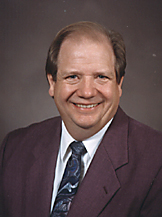
Image left is of North Dakota legislature and farmer David Monson, who has lobbied for the rights of his constituents to grow hemp. He is intending to grow a 10 acre plot, although one last hurdle is approval by the DEA, which may decide not to allow it. To hell with America is the attitude in many of the lawmakers who have infiltrated the system in the land of the free, so we wait to see if this is going to actually bear fruit or not. In the meantine, Monson is paying hefty filing fees and getting fingerprinted to exercise his right to the crop that Washington and Jefferson used to harvest regularly.

If he gets his rights, then we might see hemp this year in Cavalier County, North Dakota, and with this in place, we might expect to see this set a precedent. For anyone interested in growing hemp in North Dakota, contact the North Dakota Department of Agriculture (NDDA) at: 600 E. Boulevard Ave., Dept. 602, Bismarck, ND, 58505-0020; phone: (701) 328-2231; e-mail: ndda@nd.gov

[related post on this site, along with a map of North Dakota, was posted on 28 Dec. 2006]