Showing posts with label Journal of Industrial Hemp. Show all posts

Tuesday, March 10, 2009


HEMP AS A FEEDSTOCK FOR
BIOMASS-TO-ENERGY CONVERSION
This article, by Bernard Rice, appears (pp. 145-156) in the Journal of Industrial Hemp Vol. 13 #2, 2009. An abstract is as follows:
An increase in the demand for biomass for conversion to heat by combustion is likely. The potential role for hemp in supplying this demand is discussed in this article. For hemp, key characteristics such as net calorific value, ash content, and melting behavior, and the risk of corrosion or polluting emissions, are all favorable. Low bulk density and size reduction difficulties might limit its use for pellet production and in small boilers; its use in electricity generating plants and medium-to-large boilers would have better prospects. To mazimize profitability, an agronomy program to achieve high yields at the lowest cost is required. In the Irish climate, this would entail early sowing (late March/early April), a low seed rate (~30kg/ha), and variety selection for maximum stem yields over 10t/ha is attainable. Cost analysis shows that an energy price of about Euros6/GJ is required to achieve a profit level similar to conventional food enterprises. Arable farmers would welcome a break crop in rotation with cereals. Processors needing a year-round fuel supply might be expected to welcome an autumn-harvested crop as part of a mix with spring-harvested crops such as miscanthus and willows. A mix of energy crop species would improve biodiversity and visual impact. Hemp should be a strong contender to be part of the energy crop mix.

The varieties studied were Kompolti, Ferimon, and Fedrina 74. They had stem yields of 12.6t/ha, 11.7 t/ha and 11.6 t/ha respectively. A comparison of the net calorific value of hemp to other cellolusic biomass showed each as follows:
Hemp 13.4
Wood residues 10.0
Straw 13.0
Peat 8.9

(the gross values, respectively, were: 18.5, 19.7, 18.0, 21.5).

Bernard Rice is Principal Research Officer, Teagasc, Crops Research Centre, Oak Park, Carlow, Ireland.


Friday, January 02, 2009


CONTENTS TO JOURNAL OF
INDUSTRIAL HEMP
VOL 13 # 2

Northern Limits to Fiber Hemp Production in Europe
Katri Pahkala, Elina Pahkala, and Heidi Syrjala
A More Reliable Evaluation of Hemp THC Levels is Necessary and Possible
J.C. Callaway
Hemp as a Feedstock for Biomass-to Energy Conversion
Bernard Rice
Environmental costs of Hemp Prohibition in the United States
Skaidra Smith-Heisters
Nostrums, Quackery, and Vision of Grandeur
Michael Krawitz
Bibliotheca Cannabinacea
Kenyon Gibson

Early Iconography of Cannabis sativa and Cannabis indica
John M. McPartland and Karl W. Hillig
Summer Menu: Hemp Pizzas, Morrocan Prawns, Chocolate Hemp Brownies
Kenyon Gibson


Monday, December 08, 2008

HEMP IN THAILAND

An article in the Journal of Industrial Hemp in Vol. 13 # 1 covers hemp in Thailand - written by Thitivara Sengloung, Lily Kaveeta and Jorg Mussig, and titled " Physical Properties of Traditional Thai Hemp Fiber (Cannabis sativa L.)" (pp. 20-36). The authors looked at a traditional variety used by the Hmong, grown in Chaing Mai, in the north. Fibre fineness, strength, length, and lignin content were all studied, from stems aged 60-125 days. Results showed finest fibres were from the top of the stem and the strongest from the middle.
The hemp in the study was grown at an altitude of over 1,000 m, and planted on 10 July, 2004 both sloping and flat areas of the hill.
Among the hilltribesmen, hemp is a traditional cloth. It is usually coarsely woven, and sold in 50cm strips, and used for such items as handbags.
This is the first ethnobotanic study of Thai hemp. Presently Thailand is not a major producer, and even imports some hemp cloth from China.

Monday, November 24, 2008


SANI HEMP FROM YUNNAN HIGHLANDS

Robert Clarke, as usual, has graced the pages of the Journal of Industrial Hemp with a story about hemp in farflung places. This year he has done an article titled "Four Generations of Sani Hemp Satchels", which appears on pp. 58-72. The Sani live some 40 miles east of Kunming, the capital city of Yunnan Provice, People's Republic of China, which is in the southwest corner of the nation. The Sani have for a long time produced both food and fibre from Cannabis sativa, but production declined after the Communist takeover. The seeds are sown during the summer rainy season, at an elevation of just over a mile. Clarke notes that the fields are red clay, with lots of limestone boulders, which are a defining feature of the landscape. It has been noted that hemp does like a good amount of calcium, so the presence of limestone may be a good thing for the hemp. In the UK hemp farmers like to use oyster shell.

Male plants are harvested mid-summer as they begin to flower. They provide the highest quality fibre for yarn, twine and cloth. A portion of the males are left in the ground to pollinate the female seed plants, which are harvested in autumn. Their fibre is coarser, and is used for such things as cordage for tobacco bales. Softening and bleaching is accomplished by boiling in mineral lime or ash.

The article goes into exquisite detail on the patterns and history of certain hemp fabrics. It appears that some of the knowledge is already a lost art, with the older pieces being collectors' items.

It is one more example of an unbroken tradition of Chinese hemp cultivation and processing. Recently a rather ignorant American journalist exhorted that we not use hemp as it comes from China, forgetting that cotton does as well, and is quite often processed there even if it is grown, say, in America. It is articles like these, written by people who really go and look at hemp production, that rebut such ignorance. Hopefully, though, more countries will pick up on hemp production, and we will produce more in the West, but that is not to cut China out. In the hemp world, and in many other realms, China will always hold the honour of having been there first and taught the West.


CONTENTS TO VOLUME 13 # 1 (2008)

Welcome to the Journal of Industrial Hemp. Robert C. Clarke, David Watson, and Hayo van der Werf.

Flowering Dynamics in Monoecious and Diecious Hemp Genotypes. Stefano Amaducci, Michele Colauzzi, Alessandro Zatta, and Gianpietro Venturi.

Physical Properties of Traditional Thai Hemp Fiber (Cannabis sativa L.). Thitivara Sengloung, Lily Kaveeta, and Jorg Mussig.

Industrial Hemp as a Raw Material for Energy Production. Henryk Burczyk, Lidia Grabowska, Jacek Kowodziej, and Mawgorzata Strybe.

Canadian Hemp Update 2007. Arthur Hanks.

Four Generations of Sani Hemp Satchels. Robert C. Clarke.

The Bag Idea. Kenyon Gibson.

Differentiating Powdery Mildew from False Powdery Mildew. John M. McPartland and Karl W. Hillig.

Spring Menu: Spring Salad, Chicken Lucia, Linguine with Eggplant Hemp Tofu, Hempaglione. Kenyon Gibson

Hemp and Flax: The Smoothie. David W. Pate

In Memoriam: Michael John Sutherland. Robert C. Clarke

Sunday, August 03, 2008

HEMP LIME
A comment on a previous post about women in the hemp business suggested I include some information a hemp blogspot run by an Irish woman named Phoebe. I had a look at it and it does have some very fun and detailed information, Phoebe teaches at the Centre for Environmental Living in Co Clare. It has links to Steve Allin's work - he is the author of Building with Hemp, reviewed here and also by me in the Journal of Industrial Hemp.
Using hemp as a building material has been on the increase lately, such use will increase the per acre value for the farmer as the hurds, that inner pithy part, have a higher market value.

Saturday, August 02, 2008

#

PLANE STUPID FLYING LOW

The folks at plane stupid are at it again. Dan Glass made an ass of himself on their behalf late last month when he glued himself to Gordon Brown's sleeve. His congeners in the climate change camp then went to Kingsnorth in Kent to protest a coal powered energy plant, after meeting up at Heathrow, scene of previous anarchy on their part. Granted though, coal power is not ideal, but we cannot have all our eggs in the petrol basket - and that is what we are being forced into by these silly protests. Better some diversity than none, and also better to keep your own citizens employed. Activists on the dole may not grasp the economic concept that if their fellow citizens do not have jobs, they do not get their dole dosh.

They are not the only ones to miss simple concepts. In Recea, Romania Florina Serban was arrested for cannabis after police found hemp plants which she was growing for fibre to be used for carpets. The 71-year-old told the police what she was doing, but they did not listen. The pensioner assserted: "I don't know what cannabis is. For me it's just a plant to make carpets of." The Daily Mail ran the story but ommitted such details, as is usual for the press. Maybe we'll send them a copy of the September issue of the Ecologist in which there will be plenty of information for them to take on board.

In other news, Kim Hough of Australia has been cultivating 'baby hemp'. Years ago I told the hemp world that we ought to harvest hemp when it is young, to see if we can get finer fibres. And voila, here we are. BioRegional, instead of listening, spent obscene amounts of money on field trials in 2005 for mature hemp, and has not produced any clothing from it yet. There are also a number of retting techniques that I hope to experiment with, and between the harvesting time and the retting we are going to see hemp much improved. It does not take that much to come up with these ideas. What holds back progress is the idiot brigade of naysayers and poorly informed protesters who cause confusion in their desire to pull off stupid stunts.

If enough of us keep plowing away on real research, such as can be found in the Ecologist, the Journal of Industrial Hemp, Journal of Natural Fibres, etc., we will be making more than just carpets with coarse Romanian fibre. Expect garments as fine as silk, as earlier authors noted of hemp.

Monday, March 10, 2008


CHANVRE
France is today the leader in European hemp production. This plant was much a part of its history, as discussed in previous posts. A recent article by Estelle Garnier, Martino Nieddu, Marc Barbier and Bernard Kurek titled "The Dynamics of the French Hemp System and Its Stakeholders" in the Journal of Industrial Hemp Vol. 12 #2 (2007) assesses the present situation. Hemp comes under the aegis of an organisation dedicated to the paper industry. However, the current context (saturation of the principal outlet and uncertainty regarding the maintenance of the European Union subsidies), makes it necessary to enhance the added value of the hemp crop by diversifying its outlets and by using the whole plant.
As the hemp industry has grown, a number of organisations have come into the picture to facilitate investment, networking and research. These include: La Federation Nationale des Producteurs de Chanvre (FNPC); La Cooperative Centrale des Producteurs de Chanvre (CCPSC), and; Le Comite Economique Agricole de la Production du Chanvre (CEAPC).
The first of these (FNPC) is both a national union of hemp producers and the only structure to have an activity of breeding of new varieties of hemp which can be registered on the European list of officially authorised varieties.
The second (CCPSC) is the only cooperative multiplying French hemp seed, and also intervenes in the process of certifying varieties.
The third (CEAPC) is an association consisting of the FNPC and all departmental unions which carry out checks of the THC content in the hemp crop on behalf of the administration and which collects duties according to the conventions for the control of contents.
These three are national structuring organisations, as are Interchanvre, L'Institut Technique du Chanvre (ITC) and L'Union des Transformateurs (UTC).
On a more international level, there are two structuring organisations: La Confederation Europeenne du Lin et du Chanvre (CELC) and L'Association Europeenne du Chanvre Industriel (EIHA).
The former of these is based in Paris, and was created in 1951 under the name of the CILC. The latter is more recent, having been founded in 2000 in Wolfsburg, Germany. It brought together all or most of the European primary processors, but a number of the large French processors have left.
All of these are closely linked and indeed there is some degree of overlap, with personnel of one group serving at another.
After the structuring organisations, there are 13 primary transformers mentioned in the article, which are: Belon, Assoc Appro Fibre 47, Daifa, Bio Midi-Pyre, Grpe Limousin, Chanvre Mellois, Grpe Loire A, Grpe Dodogne, Assoc pour le Chanver Industriel, Terrachanvre, PDM, Eurochanvre, and LCDA.
Next there are research organisations, which number around 20. None of them are primarily dedicated to hemp, with all or most working also on flax and other natural fibres. These include: Apollor, Universite Chateau-Malabry, Universite de Nantes, Universite Limoges, Universite de Bretagne, Institut Francais du Textile et de Habillement, Ecole Superieure des Technologies et Industrie de Bois, Ecole National des Travaux Publics de l'Etat, Centre de Recherche des Macromolecules Vegetales, Centre Technique du Papier, and Institute National de le Recherche Agronomique.
Research has increased much with the new millenium, as evidenced by the average number of patents for hemp processing rising from 2.4 per annum from 1990-2000 to 6.4 per annum from 2001-2005.
There are hundreds of hemp producers, with 9,000-10,000 ha grown yearly. This, however, amounts for only a small amount of agriculture, as the total land mass under cultivation is 29,556,652 ha.
There are also a number of French internet sites in service to the hemp industry, which include:
www.chanvre.oxatis.com
www.chanvre-diffusion.com
www.terrachanvre.com
lechanvre.buzzkompany.net
www.chanvrebio.fr
www.daifa.fr
www.cr-poitou-charentes.fr
www.cttm-lemans.com
www.aft-plasturgie.com
www.poleplasturgie.net
www.valagro-rd.com
www.construction-chanvre.asso.fr
www.entpe.fr

Monday, January 07, 2008


CONTENTS TO JOURNAL OF INDUSTRIAL HEMP

Vol. 12 #2 (2007)

Influence of Temperature on the Water Retting Process of Hemp (Cannabis sativa L.) Cultivated Under Swedish Climate Conditions Karin Magnusson and Bengt Svennerstedt

Traditional Cannabis Cultivation in Darchula District, Nepal - Seed, Resin and Textiles Robert C. Clarke

The Production Chain of Hemp and Flax Textile Yarn and Its Environmental Impact Lea Turunen and Hayo M.G. van der Werf

The Dynamics of the French Hemp System and Its Stakeholders Estelle Garnier et al.

Fourth International Hemp Conference: Hemp Industry on a Global Course of Expansion Michael Carus

Traditional Nepali Hemp Textiles Robert C. Clarke

Hemp Paper: 2,000 Years On Kenyon Gibson

Longhorn Beetles and Botryosphaeria: A Future Epidemic? John M. McPartland and Karl W. Hillig

Winter Menu Kenyon Gibson

Building With Hemp (Review) Kenyon Gibson

Thursday, August 02, 2007


HEMP IN THE CZECH REPUBLIC

Image to the left is Konopinka, as depicted on p. 92 of the Journal of Industrial Hemp Vol. 12 # 1 (2007). It is one of many brands shown in Prague on 29 March of last year at an event organised by the Hemp Association of the Czech Republic (KSCR). A full report on this was submitted to the JIH by Marie Siroka and has been published in the above-mentioned issue (pp. 87-93). Siroka is also the co-author, along with Vaclav Sladky, of a related article in the same: "Czech Hemp and National Industry Program" (pp.81-86).

The two articles show that there is a thriving hemp movement in that nation, including a new hemp based cosmetics firm, Parenteral Hradec Kralove. They claim that a unique way of oil extraction is responsible for a top quality product - they use carbon dioxide rather than cold-pressing. This means that the oil has less protein, and therefore a longer shelf life, but more essential acids, including a unique occurence of arachin acid. They envision using raw hemp oil as a replacement for blood plasma.


CONTENTS OF THE

JOURNAL OF INDUSTRIAL HEMP VOL. 12 #1

The first issue of the JIH 2007 includes the following:

"A Study of Cotyledon Assymetry in Cannabis sativa L"

Ernest Small, Tanya Antle

"Apparent Increase in Biomass and Seed Productivity in Hemp (Cannabis sativa) Resulting from Branch Proliferation Caused by the European Corn Borer (Ostirnia lubalilis)

Ernest Small, David Marcus, Gail Butler, A.R. McElroy

"Comparative Study of Hemp Fiber for Nonwoven Composites"

Yan Chen, Lianfeng Sun, Ioan Negulescu, Qinglin Wu, Gregg Henderson

"Collectible Cannabis in Art"

Michael Krawitz

"Skin Deep Beauty"

Kenyon Gibson

"Jahniella bohemica Part II: Mistaken Identity with Septoria cannabis Infesting Hemp Stalks"

John M. McPartland, Karl W. Hillig

"Hemp Recipes"

Kenyon Gibson

"Czech Hemp and National Industry Program"

Vaclav Sladky, Marie Siroka

"The Colloquium 'Growing and Utilisation of Cannabis sativa in the Czech Republic - Year 2006"

Marie Siroka

"In Memorium: Professor Dr. Roland Richard Theimer"

Helga Molleken

"Book Review: Le Chanvre Industriel, Production et Utilisations [ed. by Pierre Bouloc]

Hayo M.G. van der Werf

Monday, February 26, 2007

CONTENTS OF VOLUME 11 #2, 2006

Welcome to the Journal of Industrial Hemp. Robert Clarke, David Watson, Hayo van der Werf

The Effects of Organic and Inorganic Nitrogen Fertilizer on the Morphology and Anatomy of Cannabis sativa "Fedrina" (Industrial Fibre Hemp) Grown in Northern British Columbia, Canada. Charlene Forrest, Jane P. Young

A Technical and Economic Feasibility Study of Green Decortication of Hemp Fibre for Textile Use. Sue Riddlestone, Emily Stott, Kim Blackburn, James Brighton

Hemp in the British Isles. Kenyon Gibson

Official Founding of the "European Industrial Hemp Association (EIHA)" and Third International Hemp Conference. Michael Karus

Searching for Hempen Treasures-Field Indentification of Hemp Fibre in Markets, Museums and Private Collections. Robert C. Clarke

The Flow of Oil. Kenyon Gibson

Jahniella bohemica: A Rediscovered Species that Infests Hemp Stalks. John M. McPartland, Karl W. Hillig

Contents of the previous volume is posted to this site, use key word search to take you there instantly.

Friday, January 12, 2007


WASHING THE BRAIN

Just got a call from Suzanne at the Cornwall Soap Box, who is looking to add Cornish grown hemp to her soap. The search was not as easy as it seemed, turns out the big companies in the UK have a large demand for hemp oil (with its Omega 3,6 and 9 oils) and keep the growers busy. Hemp has been grown recently in Cornwall, but much of this is for fibre, such as insulation and cigarette paper.

Suzanne is a bit of a purist, insisting on fair trade and natural ingredients, she gets her shea butter direct from Togo and palm oil from a fair trade plantation in Colombia. The bars are then wrapped in mulberry paper made in a non-sweatshop in Thailand.

She shared with me some basic facts about soap making. It turns out this is a harder process than I thought. Firstly the fats or oils are mixed with lye (sodium hydroxide) in a ratio based on the saponification value of the fat or oil. Then essential oils and/or colouring agents are added. (She does not use colouring agents). Her technique on adding the hemp oil is to add it a bit later in the process so it is not totally absorbed in. The soap then has to cure for six weeks.

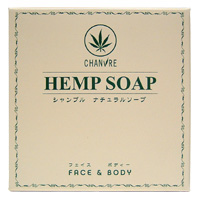
Turns out that hemp is a very popular ingredient in specialty soaps, a web search turns up dozens, including the Taimado brand pictured above. The Body Shop has made hemp soap (a green bar with a hemp leaf design), but I suspect they are not as purist as many of these small outfits. In fact, many of their products have lots of chemical in them, as noted in an upcoming Journal of Industrial Hemp article.

It's good to see hemp being used in soap, this is a traditional use of it, and I read somewhere that Polish soaps made with hemp had a slightly green tint. A good range of hemp skin care products can be found at The Hemp Shop in Brighton.

Saturday, November 25, 2006

Thursday, September 07, 2006


HEMP IN KOREA

A recent article in the Journal of Industrial Hemp, vol. 11, # 1 [2006], written by Robert C. Clarke, gives us a fascinating look at hemp in Korea, mainly South Korea/Republic of Korea.

Production levels are much less than what they were in the past, but cultivation and processing still go on, to an extent, mainly in the Andong, Boseong, Jeongseon, Geochang, Muju and Gokseong regions.

As recently as 1963, hemp (known as sambe) was grown in every province, although 82% or more was grown in the above mentioned regions.

Whilst there is no mention of hemp having ever been totally outlawed, Clarke states that hemp gorwers must now have a government permit. Landraces are entirely dioecious, moderately branched and reach 8-13' (2.5-4.0m) in height at maturity, with a lower seed yield than European varities. Some taxonomists consider Korean and other Asian broad-leafed hemp varieties to be a seperate species. Herbicides and pesticides are rarely used, although there is an 1960s record of 0.1% Endrin sparying used to control stem borers. At present, only one pest is deemed to cause economic damage, the hemp flea beetle.

Fibre yields are 1-1.4 tons/hectare (bast fibre only, dry, processed weight). A unique method of processing hemp fibre in Korea is steaming, which Clarke notes to be "faster, more controllable and less polluting than water retting in open ponds." Traditional steaming cabinets are heated from below, using brush and hemp hurds from the previous harvest. After steaming and and hour of cooling, the wet fibres are removed by hand.

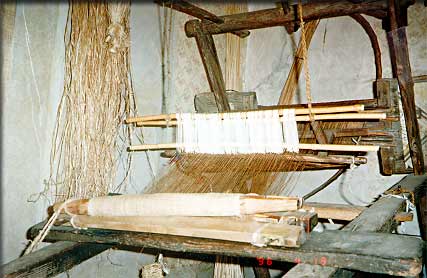
Most of the work, including scutching (carried out with a blunt knife called a sam top) and weaving are carried out by hand. (Above is an image of a Korean loom used for weaving).

The hemp industry is seen as a part of the culture and is thus encouraged, with hemp weaving designated an Intangible Cultural Asset No. 1 in the Andong City District, and ICA No. 32 in the Jeollanam Province. Nonetheless, foreign competition, mostly from China, has placed great strain on the market, and some Korean hemp enterprises have been forced to close their doors.

Wednesday, June 14, 2006

WRITINGS ON HEMP
Much as hemp has been part of our world for millenia, it is only to be expected that there is a large body of literature on the subject. Early pharmacopeia, Pliny, Moschion, Dioscorides and Rabelais all mention hemp. After the printing press developed, and agricultural treatises were published, these too included mention of hemp, with many devoted to the issue, such as G.A. Berti's La Coltivazione della Canape, ca. 1657. Just over a century later M. Marcandier wrote his own treatise on hemp, Traite du Chanvre. Both are now rare books, with the Berti perhaps surviving only as single copies here and there. The Marcandier was more popular, and was in the eighteenth century translated into English and German. Recently, John Hanson of the UK reprinted this, from a copy in the British Library that was owned by Sir Joseph Banks.
Another popular hemp book was published n 1804; On the Cultivation and Preparation of Hemp, written by Robert Wissett, a clerk of the British East India Co. In it he compared the various authorities, including Marcandier, to give the farmer a good overview of the subject. This was reprinted in 1808 with a letter by Lord Somerville. At the time it cost £1, 11 shillings and 6pence; this was a fortune back then, but they managed to get good reviews and sell out nonetheless. Try to get a copy now, and you'll find that it has appreciated well despite the high initial price.
In 1900, a farmer in New York wrote HEMP, which was the seminal work for his generation. It was published by Orange Judd & Co., who reprinted it in 1912. A year later Lyster H. Dewey of the US Department of Agriculture wrote a lenghty article in the USDA Yearbook. For decades to follow, any information about hemp was usually found as an article rather than as a book all to itself.
Jack Frazier in 1974 rediscovered hemp in America and wrote his short book The Marijuana Farmers. This too was reprinted, over a decade later, though with a different title: The Great American Hemp Industry.
By that time Jack Herer had also rediscovered hemp, and his book, The Emperor Wears no Clothes, was to become a classic, which is today into its eleventh edition. Both Frazier and Herer had many references to marijuana, and while each had a cult following, they did not persuade the lawmakers to relegalise hemp in the US. Three of Herer's compatriots in California also wrote on hemp in the 1990s, Chris Conrad, John Roulac and Ed Rosenthal. Each of their works have advanced the hemp cause much and continue to be of value as reference books. Rowan Robinson's 1996 tome The Great Book of Hemp gave the public a lot of new information, with a rather pleasing layout to boot. Since then one genre that has included a number of well-produced works is the cookbook category, including Denis Cicero's The Galaxy Global Eatery Hemp Cookbook, published in 2002.
While Cannabis sativa does get a lot of press attention, it is usually about marijuana or the medical cannabis issue. Some press was generated when John Roulac and Denis Cicero fought to keep hemp foods legal. One thing that became apparent from reading newspaper and magazine articles was that reporters often knew next to nothing about hemp or could care less. Therefore, the articles were often short and useless, or tinged with doper jokes.
Perhaps the best article written so far on hemp is Lee Green's "The Demonized Seed", which appeared in the Los Angeles Times Magazine on 18 January, 2004.
The hemp movement has itself issued its own press, including Hemp Times in the 1990s and Hemphasis rather recently. Both have ceased publishing. Two peer reviewed periodicals that are cover hemp are the Journal of Natural Fibres and The Journal of Industrial Hemp. Both are published by the Haworth Press in New York State. The former is edited in France, the latter in Poland. Both will have up-to-date scientific information and are the backbone of hemp literature for the industry. Another industry publication is the newsletter of the Hemp Industries Association, based in California.
In this internet age, it is not surprising to find hundreds of sites on google which have some hemp related content. They vary from the more newsworthy and scientific to the poorly written diatribes on skunk.
There is a select bibliography at the end of Hemp for Victory, including a number of websites. An exhaustive annotated bibliography is in the works for future release, presently containing hundreds of books and hundreds of articles.
For anyone interested in gathering information for articles or building a hemp book library, feel free to contact Yves de Saussure at: cannabissatival@hotmail.com

Friday, June 09, 2006

ANALYSIS OF HEMP OIL
Hemp oil is considered to be one of nature's healthiest oils. It is known to contain therapeutic compounds, and for this reason is used both in medicine and in cosmetics. It has a high antioxidant quality and contains linoleic acids. These acids, along with eicosanoids, tocopherols, tocotrienols, Omega 3,6,&9 EFAs and all eight essential amino acids, make hemp oil a top item in health food shops.
Eicosanoids are hormone-like compounds which play a crucial role in vital processes including control of inflammation, maintaining vascualar tone and the intiation of contractions during delivery.
Tocopherols and tocotrienols are natural antioxidants which help preserve the oil and help reduce the risk of cancer and cardiovascular diseases.
Amino acids are the basic building blocks of protein, with essential and non-essential, the former being those the human body cannot produce, the latter those which it can.
Field trials conducted in 2000 and 2001 were written up with a view to recording the amount of these substances in different varieties of hemp; the results were publsihed in an article in the Journal of Industrial Hemp, Vol. 10, #2, 2005, in a report by Bertrand Matthaus et al.
Their report takes into account a number of factors, including mean average temperature and rainfall, using a number of varieties, including: Juso-14, Beniko, P60, Glera, CAN22, Bialo, Blu-46, Felina, P59, Fedrina74, Helvetica, Epsilon, CAN31, Futura, Zolo11, P54, CAN33, UNIKO-B, CAN30, Fedora19, CAN28, P57, Lipko, Kompolti, CAN21, 52092, CAN21, CAn29, Juso-31, CAn20, RAMO, USO-14, Fibrimon56, Glu-33,P53, CAN36, Lovrin110, CAN27, P52, CAN32, CAN24, P52, CAN32, CAN24, CAN26, P51, D.o.-14, CAN18, Fasamo, CAN16, CAN23, Ferimon, & CAN17.
For each of the above varieties, analysis is made of their palmitic acid, stearic acid, oleic acid, linoleic acid, gamma-linolenic acid, alpha linolenic acid, and stearodinic acid content.
The highest variety for palmitic acid was Juso-14, with 6.5 g/100gm in 2000, and 5.9 in 2001; for stearic acid, Juso-31, with 2.8 in 2000 and 2.6 in 2001; for oleic acid, Epsilon, with 11.7 in 2000 and 8.8 in 2001; for linoleic acid, Juso 14, with 58.0 in 2000 and 52.2 in 2001; for gamma-linolenic acid, Juso-14, with 4.1 in 2000 and 2.6 in 2001; for alpha-linolenic acid, CAN17, with 24.7 in 2000 and 21.2 in 2001; and for stearodinic acid, USO-14, with 1.5 in 2000 and 1.4 in 2001. Most levels were lower in 2001; the rainfall was 370mm for 2000, and 340mm for 2001 with an avearge temperature of 16.2 Celsius in 2000 and 15,7 Celsius in 2001.
From these and many other peer reviewed reports published recently, we can see that hemp is a major source of these compounds. As this information is made avaiable to the press and the public, we can expect to benefit from the use of hemp oil in food, medicine and cosmetics. As much of this information is recent however, there are still a number of journalists and even doctors who lack this basic knowledge and ignore hemp, often in favour of the more well known flax oil and fish oils. Recent articles, in such progressive papers as The Independent on Omega 3,6 & 9 oils have been completely neglectful of hemp oil, due perhaps to such ignorance.